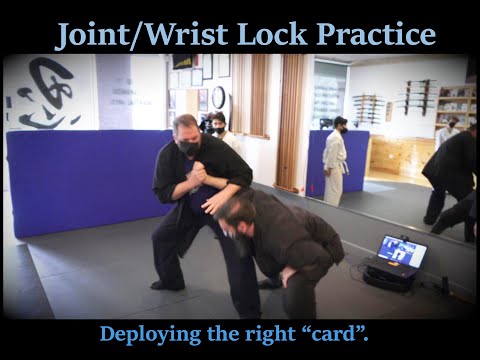
Joint/Wrist Lock Practice and self-defense applications
0
Joint Lock·The Dojo Martial Arts - Budo Taijutsu, Mason, Ohio
In this quick class clip, the reversal technique Hon Gyaku is discussed and put into use against certain type of attacks…
関節技(Kansetsu-waza)
TraditionalTranslation: Joint Locking Techniques
Joint locks are submission techniques that isolate a joint — elbow, shoulder, knee, ankle, hip, wrist, or spine — and apply force to hyperextend, hyperrotate, or compress it beyond its anatomical range of motion. [10] The attacker controls the limb on either side of the target joint and uses leverage (typically a fulcrum point such as the hips, thigh, or forearm) to generate mechanical advantage that the defender cannot resist through strength alone. [3] Joint locks are classified by the target joint: elbow locks (armbar, kimura, americana), shoulder locks (kimura, omoplata), knee locks (kneebar), ankle locks (straight ankle lock, toe hold), heel hooks (inside and outside), hip locks, wrist locks, and spine locks. [6],[7] The danger rating varies significantly by joint: elbow hyperextension provides a gradual pain signal before structural failure, while heel hooks attack the knee's rotational ligaments (ACL, MCL) with minimal pain warning before catastrophic injury. [10] In judo competition, only elbow locks (kansetsu-waza) are permitted [1]; Brazilian Jiu-Jitsu permits all joint locks at advanced belt levels [2]; IBJJF rules restrict heel hooks and knee reaping until brown and black belt no-gi divisions; ADCC and most professional submission grappling events permit all joint locks. In MMA under Unified Rules, all joint locks are legal except small-joint manipulation (fingers and toes).
Joint locking techniques are documented in the oldest known martial arts manuscripts. Japanese jujutsu schools of the Edo period developed elaborate kansetsu-waza systems; the Takenouchi-ryū (1532) is considered the oldest jujutsu school and included joint-breaking techniques (gyaku-waza). [6] Jigoro Kano incorporated joint locks into Kodokan Judo's katame-waza division in 1882, though he restricted competition application to elbow locks for safety — a rule that persists in modern judo. [13],[1] European historical combat manuals also document joint locks extensively: Fiore dei Liberi's 'Fior di Battaglia' (1409) illustrates numerous arm locks, wrist locks, and joint-breaking techniques within the Abrazare (wrestling) sections. [11] Fabian von Auerswald's 'Ringer-Kunst' (1539), the first printed European wrestling manual, depicts sophisticated joint lock applications recognizable in modern grappling. [14] Soviet sambo, developed in the 1920s–1930s, became particularly known for leg lock expertise — knee bars, ankle locks, and calf slicers that were de-emphasized in judo but central to sambo competition. [4],[12] The modern leg lock revolution in submission grappling (2010s), led by John Danaher's systematization of heel hook and ashi garami (leg entanglement) sequences, fundamentally transformed competitive BJJ and no-gi grappling. [10]
Joint locks are submissions that isolate a joint and force it beyond its natural range of motion, causing pain and risk of structural damage to ligaments, tendons, and the joint capsule. [1] They are the most diverse category of submission, targeting the elbow, shoulder, knee, ankle, wrist, spine, and fingers. [1],[2]
Kansetsu-waza (関節技, joint techniques) is one of the three pillars of Kodokan Judo's katame-waza alongside osaekomi-waza (pins) and shime-waza (strangles). [1] Catch wrestling, sambo, and traditional jujutsu all developed extensive joint lock systems. [2] Brazilian Jiu-Jitsu, through Gracie transmission of Maeda's judo, expanded the application of joint locks from guard positions, which was revolutionary. [3]
No images yet for this technique.
Sign in to suggest an image.
In this quick class clip, the reversal technique Hon Gyaku is discussed and put into use against certain type of attacks…
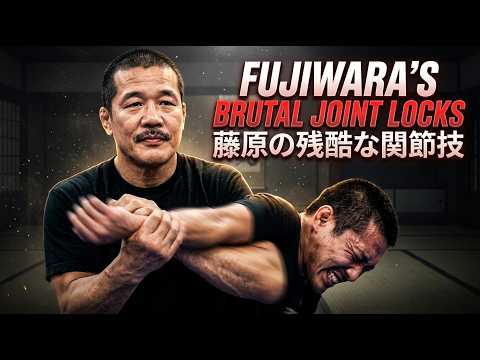
What makes old school catch wrestling so dangerous? In this rare technical breakdown, Yoshiaki Fujiwara demonstrates br…
No instructional courses yet for this technique.
Sign in to suggest a course.
Risk of injury to the person this technique is applied to
Joint locks risk ligament tears and fractures if resistance continues past the submission point
Skill level needed to execute this technique reliably
Whether this technique is allowed under major competition rule sets
Kodokan Judo — Jigoro Kano (1986)
Kansetsu-waza classification, elbow lock only rule
Sambo leg lock methodology and competition rules
Medieval joint lock illustrations in Abrazare sections
First printed European wrestling manual with joint locks
Modern BJJ joint lock technique documentation
Alias sources — [1] Kodokan Judo (Kano, 1986) [2] Brazilian Jiu-Jitsu: Theory & Technique (Gracie et al., 2001) [3] Brazilian Jiu-Jitsu: Theory & Technique (Gracie et al., 2001)
Effectiveness sources — [1] Kodokan Judo (Kano, 1986) [2] Jiu-Jitsu University (Ribeiro, 2008)
Official Kodokan ground technique classification system
Standard Japanese martial arts terminology (kanji/hiragana)
Established Japanese martial arts naming convention — native Japanese term (和語/漢語)
Kansetsu-waza classification, elbow lock only rule
Sambo leg lock methodology and competition rules
Medieval joint lock illustrations in Abrazare sections
First printed European wrestling manual with joint locks
Modern BJJ joint lock technique documentation
Alias sources — [1] Kodokan Judo (Kano, 1986) [2] Brazilian Jiu-Jitsu: Theory & Technique (Gracie et al., 2001) [3] Brazilian Jiu-Jitsu: Theory & Technique (Gracie et al., 2001)
Effectiveness sources — [1] Kodokan Judo (Kano, 1986) [2] Jiu-Jitsu University (Ribeiro, 2008)
hip flexibility, hip bridge power, leg clamping strength
long legs for controlling the opponent's torso
hip extensors (glutes), adductors, quadriceps, hamstrings
The 10th Planet Joint Lock family covers joint lock submissions developed within Eddie Bravo's 10th Planet Jiu-Jitsu system — locks designed for no-gi grappling that are applied from the system's proprietary positions (Rubber Guard, Lockdown, Truck) and use unique entanglement pathways unavailable in traditional BJJ. [1] The most notable 10th Planet joint locks include the Twister (a devastating spinal crank applied from the Truck position), the Electric Chair (a groin/hip stretch submission from the Lockdown), the Banana Split (a leg-splitting submission from the Truck), and various arm locks entered through Rubber Guard transitional positions. [1,2] These locks exploit body configurations unique to the 10th Planet system — the Truck's leg and arm entanglement, the Lockdown's figure-four leg control, and the Rubber Guard's overhook positioning create submission opportunities that don't exist in standard BJJ guard play. [2,3] While requiring system-specific positional knowledge, these locks have produced numerous submission victories at EBI, ADCC, and in MMA competition. [3]
Ankle locks are submissions that attack the ankle joint — primarily by hyperextending the talocrural joint (straight ankle lock) or rotating the subtalar joint (toe hold). [1,3] The straight ankle lock (ashi-garami / achilles lock) uses a figure-four grip around the opponent's foot to lever the ankle into hyperextension, stressing the anterior talofibular ligament. [4] The toe hold applies rotational force to the foot, stressing the ankle and knee simultaneously. Ankle locks are entry-level leg attacks — the straight ankle lock is the first leg lock permitted under IBJJF rules (legal at all belt levels in no-gi). [1] They serve as foundational techniques in leg lock systems, often used to create reactions that expose the heel for more advanced attacks. [5]
The Arm Lock family encompasses all joint lock submissions that target the shoulder, elbow, or wrist — hyperextending, rotating, or compressing these joints beyond their normal range of motion to force a submission. [1] This is the largest and most diverse submission family in BJJ, containing the armbar (juji gatame — the single most iconic submission in martial arts), the kimura (double wristlock / gyaku ude garami), the americana (ude garami), and dozens of variations. [1,2] Arm locks are the most fundamental and highest-percentage submissions across all grappling arts — the armbar alone has decided more competitive matches than any other single submission technique in BJJ, judo, and MMA combined. [2,3] Jigoro Kano formalised arm lock techniques (kansetsu waza) in Kodokan judo, recognising the elbow as the only joint that could be safely attacked in competition; BJJ later expanded this to include shoulder locks (kimura, americana) and wrist locks. [3]
Elbow locks are joint lock submissions that hyperextend or hyperrotate the elbow joint, attacking the ligaments and tendons that hold the forearm to the upper arm. [1] The armbar (juji-gatame) — isolating the arm between the legs and hipping upward to hyperextend the elbow — is the most fundamental and highest-percentage elbow lock in all of grappling. Other elbow locks include the Americana (ude-garami with outward shoulder rotation), the kimura (ude-garami with inward rotation), the omoplata (shoulder lock using the legs), and various mounted, guard-based, and back-control armlock variations. [2,3] Elbow locks are the only joint locks permitted in judo (kansetsu-waza), reflecting their relative safety — the elbow provides clear pain feedback before structural failure, allowing controlled submission. [1] In BJJ, MMA, and ADCC, elbow locks are unrestricted at all levels.
Heel hooks are among the most powerful and dangerous joint lock submissions in grappling, attacking the knee's rotational ligaments (ACL, MCL, LCL, meniscus) by controlling the heel and twisting the lower leg while the upper leg is immobilized. [1,2] The inside heel hook rotates the foot inward (medially), primarily attacking the LCL and ACL; the outside heel hook rotates outward (laterally), primarily attacking the MCL. Heel hooks are considered the highest-danger submission in grappling because the knee's rotational ligaments provide minimal pain feedback before catastrophic tearing — opponents often suffer serious injury before feeling sufficient pain to tap. [1] Heel hooks are prohibited at most belt levels in IBJJF gi competition; they are legal in IBJJF no-gi at brown/black belt, in ADCC, and in MMA under Unified Rules. [3]
Hip locks target the coxofemoral (hip) joint by forcing extreme abduction, adduction, or rotation of the femur within the hip socket. [1,2] The hip is an inherently stable ball-and-socket joint with deep muscular support, making hip locks among the least common submissions in competition. Techniques include the electric chair (forcing hip abduction from lockdown half guard), hip compression locks from certain leg entanglements, and various hip-rotation attacks from back control or saddle positions. [3,4] Hip locks are legal in most competition formats since they are not specifically prohibited, but their rarity reflects the difficulty of isolating and attacking such a well-protected joint.
The kneebar is a joint lock that hyperextends the knee by isolating the opponent's leg and using the hips as a fulcrum against the knee joint, similar to how an armbar uses the hips against the elbow. [1,2] The attacker controls the opponent's lower leg (typically hugging it to the chest) and bridges or hip-extends to straighten the knee beyond its anatomical range, stressing the ACL, PCL, and posterior knee capsule. Kneebars are entered from leg entanglements (ashi garami positions), from top positions when passing, and as transitions from other leg attacks. [3] In IBJJF competition, kneebars are restricted to brown and black belt in no-gi; in ADCC and MMA, they are unrestricted.
The Leg Lock family encompasses all joint lock submissions targeting the hip, knee, or ankle joints of the lower extremity — including heel hooks, kneebars, toe holds, calf slicers, and straight ankle locks. [1] Once considered a secondary or even disreputable area of BJJ (traditionalists called leg lockers 'lazy' for attacking the legs instead of passing guard), leg locks underwent a dramatic renaissance in the 2010s through the work of John Danaher and the Danaher Death Squad (Gordon Ryan, Garry Tonon, Eddie Cummings, Nicky Ryan), who demonstrated that a systematic approach to leg entanglements could dominate the world's best grapplers. [1,2] The modern leg lock game is built around the ashi garami positional hierarchy — a system of leg entanglement positions (inside sankaku, outside ashi, 50/50, cross ashi) from which specific submissions are applied based on the control configuration. [2,3] Heel hooks — particularly the inside heel hook — are now considered the most dangerous and highest-percentage submission in no-gi grappling, capable of destroying the knee's ligaments (ACL, MCL, meniscus) with minimal force and warning. [3]
The Neck Lock family covers joint lock submissions that target the cervical spine through cranking, twisting, or compressing the neck beyond its normal range of motion — among the most dangerous and controversial techniques in grappling. [1] Unlike chokes that restrict blood or air flow, neck cranks attack the vertebral joints and surrounding ligaments of the cervical spine, causing intense pain and the risk of serious spinal injury including disc herniation, vertebral fracture, and nerve damage. [1,2] The most well-known neck cranks include the can opener (pulling the head forward from inside guard), the Twister (10th Planet spinal crank from the Truck position), the neck crank from back control, and various cervical spine attacks from cradle positions. [2,3] Due to the severity of potential injuries, neck cranks are banned or restricted in many competition formats — they are illegal in IBJJF gi competition, controversial in no-gi, and permitted in MMA and some submission grappling formats. [3]
Shoulder locks are submissions that attack the glenohumeral joint (shoulder socket) by forcing the arm into extreme internal rotation, external rotation, or abduction. [1,2] The shoulder is the most mobile joint in the body, which makes it vulnerable to rotational attacks from multiple angles. Primary shoulder locks include the kimura (ude-garami with inward rotation), the Americana (ude-garami with outward rotation), the omoplata (using the legs to rotate the shoulder), and various hammerlock and chicken wing variations. [1] Shoulder locks are effective from virtually every grappling position — mount, guard, side control, back control, half guard, and standing. [3,4] They also serve as powerful positional tools: a threatened kimura grip can be used to sweep, take the back, or transition to other submissions even when the lock itself doesn't finish.
Spine locks target the vertebral column — cervical, thoracic, or lumbar spine — by applying compression, torsion, or hyperextension forces to the spinal segments. [1,2] These are among the most dangerous submission techniques because the spinal cord and nerve roots are directly at risk; structural damage to the spine can cause paralysis or death. Spine locks include the twister (lateral spinal rotation), can opener (cervical compression), Boston crab (lumbar hyperextension), and various neck cranks that primarily target vertebral structures. [3] Due to extreme injury risk, spine locks are heavily restricted in competition: IBJJF prohibits cervical locks at all levels; judo prohibits all spinal attacks; ADCC and MMA permit some spine lock variations. [4,5] Spine locks applied by slamming or spiking are universally prohibited.
Wrist locks target the radiocarpal and midcarpal joints of the wrist, applying hyperflexion, hyperextension, radial deviation, ulnar deviation, or rotational (pronation/supination) force to submit the opponent. [1,2] The wrist is relatively fragile compared to larger joints and has a small range of motion, making wrist locks effective but quick to cause injury. Common wrist lock categories include flexion locks (bending the wrist toward the forearm), extension locks (gooseneck, bending backward), figure-four wrist locks, and rotational (Z-lock, torsion) variations. [3,4] Wrist locks are legal in IBJJF from blue belt and above, legal in ADCC and MMA, but prohibited in judo competition. In aikido (kote-gaeshi, nikkyo, sankyo), wrist locks are central techniques. [2,5]
Joint locks attack the body's joints through hyperextension, hyperflexion, or rotation beyond normal range of motion. Arm bar appears in 481 passages across 60 books. In judo, only elbow locks are legal (kansetsu-waza); all other joints are prohibited. In BJJ and ADCC, virtually all joint locks are legal at advanced levels. (60+ books; Kano, Kodokan Judo; IBJJF Rules v6.0)
Joint locks typically present themselves when an opponent is pushing or grabbing you rather than actively punching. As The Dojo Martial Arts Mason Ohio explains, the technique will often 'find you' during these grabbing moments—you won't successfully apply it against someone keeping their fist closed while punching.
Yes, joint locks can be applied from multiple angles depending on how your opponent grabs you. The Dojo Martial Arts Mason Ohio demonstrates that whether they grab at chest level, apply a choke, or use a kumi uchi grip, you can adapt the lock by moving and repositioning to take it to where you need it to be.
Joint locks are submission techniques that isolate a joint — elbow, shoulder, knee, ankle, hip, wrist, or spine — and apply force to hyperextend, hyperrotate, or compress it beyond its anatomical range of motion. The attacker controls the limb on either side of the target joint and uses leverage (typically a fulcrum point such as the hips, thigh, or forearm) to generate mechanical advantage that the defender cannot resist through strength alone.
Joint locking techniques are documented in the oldest known martial arts manuscripts. Japanese jujutsu schools of the Edo period developed elaborate kansetsu-waza systems; the Takenouchi-ryū (1532) is considered the oldest jujutsu school and included joint-breaking techniques (gyaku-waza).
IBJJF: legal — Legal at all belt levels; IJF: banned — Only elbow joint locks (kansetsu-waza) permitted in judo — all other joint lo…; ADCC: legal — Legal — all submissions legal in ADCC; Unified MMA: legal — Legal submission technique; FIAS Sport Sambo: legal — Legal; FIAS Combat Sambo: legal — Legal
Danger rating 7/10. Joint locks risk ligament tears and fractures if resistance continues past the submission point
The standard setup chain: Control the Arm → Position the Hips → Pinch Knees → Extend for the Finish.
Standard counters include: Clasp Hands — grip own wrist to prevent arm extension / Stack — drive forward to compress the attacker and relieve elbow pressure / Hitchhiker Escape — rotate the thumb toward the mat and roll to extract the arm.
Common variants: Standard armbar (hips drive upward against the extended arm with legs clam…); Belly-down armbar (rolling to face the mat to prevent the opponent from stac…); S-mount armbar (transitioned from S-mount position for tighter control be…); Spinning armbar (rapid pivot from guard or side to catch the arm during tr…).
Joint locks are the second most common submission category (after chokes) in both BJJ competition and MMA, with armbars leading the count.
Top errors to watch for: Applying joint locks without positional control — the opponent escapes most joint locks simply by moving their body; … / Using strength to force a joint lock — proper mechanics create overwhelming leverage; if you're muscling it, the tech… / Attacking joints at full speed in training — joint locks cause immediate damage; controlled application gives the par… / Holding a failed joint lock attempt — if the lock is defended, transition to another attack or improve position; hold….
The Joint Lock is also known as Kansetsu-waza, Joint Locks, Locks.