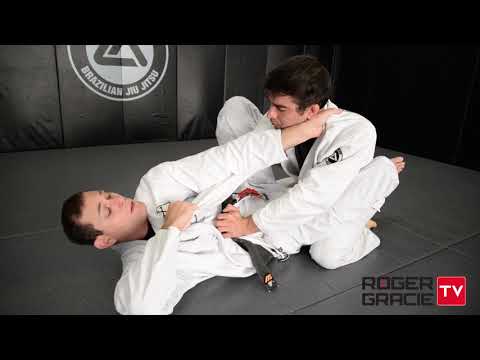
Closed Guard Arm Lock Finish Details
0
Arm Lock·Roger Gracie TV
🔥 FREE CONTENT 🔥 for Youtube Subscribers https://rogergracietv.com/yt/755-free-content
Translation: Arm joint technique
The Arm Lock family encompasses all joint lock submissions that target the shoulder, elbow, or wrist — hyperextending, rotating, or compressing these joints beyond their normal range of motion to force a submission. [1] This is the largest and most diverse submission family in BJJ, containing the armbar (juji gatame — the single most iconic submission in martial arts), the kimura (double wristlock / gyaku ude garami), the americana (ude garami), and dozens of variations. [1],[2] Arm locks are the most fundamental and highest-percentage submissions across all grappling arts — the armbar alone has decided more competitive matches than any other single submission technique in BJJ, judo, and MMA combined. [2],[3] Jigoro Kano formalised arm lock techniques (kansetsu waza) in Kodokan judo, recognising the elbow as the only joint that could be safely attacked in competition; BJJ later expanded this to include shoulder locks (kimura, americana) and wrist locks. [3]
Arm locks have existed in combat systems since ancient times — Greek pankration and Indian wrestling traditions both included elbow hyperextension techniques. [1] Jigoro Kano formalised arm locks in Kodokan judo as kansetsu waza, restricting competition locks to the elbow joint for safety. [1],[2] Brazilian Jiu-Jitsu expanded the arm lock curriculum to include shoulder locks (kimura, americana) and wrist locks, creating the most comprehensive arm-attacking system in martial arts. [2],[3] The kimura is named after judoka Masahiko Kimura, who broke Hélio Gracie's arm with gyaku ude garami in their famous 1951 match. [3]
Arm locks are the most commonly finished submission category in both BJJ and MMA. [1] The armbar is the single most successful submission in IBJJF competition history and one of the top three finishes in UFC history. [2] Ronda Rousey built her entire MMA career on the armbar, finishing 9 of her 12 wins by arm lock. [3]
No images yet for this technique.
Sign in to suggest an image.
🔥 FREE CONTENT 🔥 for Youtube Subscribers https://rogergracietv.com/yt/755-free-content
No instructional courses yet for this technique.
Sign in to suggest a course.
Risk of injury to the person this technique is applied to
Arm locks can cause severe joint injuries: armbar hyperextension can rupture the elbow ligaments and dislocate the joint; kimura and americana can dislocate or fracture the shoulder; wrist locks can damage the carpal ligaments; these injuries can require surgery and months of recovery; always tap early in training
Skill level needed to execute this technique reliably
Whether this technique is allowed under major competition rule sets
Jiu-Jitsu University (Saulo Ribeiro, 2008)
Description sources — [1] Jiu-Jitsu University (Ribeiro, 2008) on armbar fundamentals [2] Mastering Jujitsu (Gracie & Danaher, 2003) on submission hierarchy [3] Kimura vs Gracie 1951 historical match
History sources — [1] Ancient arm lock traditions [2] Kodokan Judo (Kano, 1986) on kansetsu waza [3] Kimura-Gracie match
Official Kodokan ground technique classification system
Description sources — [1] Jiu-Jitsu University (Ribeiro, 2008) on armbar fundamentals [2] Mastering Jujitsu (Gracie & Danaher, 2003) on submission hierarchy [3] Kimura vs Gracie 1951 historical match
History sources — [1] Ancient arm lock traditions [2] Kodokan Judo (Kano, 1986) on kansetsu waza [3] Kimura-Gracie match
hip dexterity (the hips are the engine of the armbar), grip strength (controlling the wrist for kimura and americana), leg control (squeezing to maintain armbar position)
long legs (easier to reach across the opponent's face for armbar), strong hips (hyperextension power), flexible hips (angle creation for arm locks from various positions)
hip flexors (armbar hip thrust), adductors (squeezing the armbar), forearms (grip for figure-four locks), core (maintaining position during the submission)
Every move, in any martial art, shares a few universal traits. Mix and match below to pinpoint the right tool — or compare equivalents across styles.
The Extreme Upper Body Submission targets unconventional upper body joints including the wrist, fingers, and shoulder in configurations not commonly seen in sport grappling. [1]
The Pankration Arm Lock is an arm hyperextension technique documented from the ancient Greek pankration tradition, predating modern armbar variations by over 2,000 years. [1]
Royler's Armbar is a fast armbar transition from side control, named after Royler Gracie's signature execution. [1] The technique emphasises speed and pressure over positional establishment. [1]
The S-Mount Armbar is executed from the S-mount position (a high mount with one leg hooked under the opponent's shoulder), providing superior control for the armbar finish. [1] The S-mount eliminates the space needed for common armbar escapes. [1]
The Spinning Armbar to Kimura is a combination technique where a spinning armbar attempt that encounters defence transitions directly into a kimura grip. [1] Ribeiro demonstrates this chain as a fundamental submission flow from side control. [1]
Striking to Americana uses ground-and-pound strikes to force the opponent to defend their face, then transitions to an americana shoulder lock when the opponent's arms are displaced by the strikes. [1]
Striking to Kimura uses ground strikes to create the opening for a kimura grip, capitalising on the opponent's defensive arm movements to isolate the arm. [1]
Ude Gatame is a straight arm lock in judo and jujutsu where the attacker controls the opponent's arm in an extended position and applies pressure against the elbow joint using the hands, forearms, or body. [1] Unlike juji gatame (cross arm lock) which uses the hips, ude gatame applies pressure primarily with the arms and upper body against the hyperextended elbow. [1] It is one of the nine officially recognized kansetsu waza (joint techniques) in Kodokan judo and is classified as ude-hishigi-ude-gatame (arm crush arm hold) in the formal nomenclature. [1] The technique can be applied from standing, guard, mount, or side control positions. [2]
The Walk-Around Armbar is executed from side control by walking the legs around the opponent's head while maintaining arm control, transitioning into an armbar without needing to mount first. [1] This fluid transition exploits the opponent's defensive focus on preventing the mount. [1]
Juji-gatame (cross arm lock) is the most common armlock submission in MMA history and the second most common submission overall after the rear naked choke. (UFC Stats; Ribeiro, Jiu-Jitsu University)
According to Roger Gracie, the most important first step is to secure and hold the arm firmly before anything else. This creates immediate tension that prevents your opponent from pulling their arm back or escaping, making the rest of the technique much more effective.
Roger Gracie emphasizes that you must secure the arm first and create tension on it—if they try to push up, you move with them, but keep the arm locked securely against your chest. As you shift your position, angle your elbow so it's difficult for them to extract their arm.
Roger Gracie teaches that you should pull the elbow back and adjust your position by climbing and holding before raising your hips to finish. This positioning keeps their arm on the outside of your legs where you maintain control.
The Arm Lock family encompasses all joint lock submissions that target the shoulder, elbow, or wrist — hyperextending, rotating, or compressing these joints beyond their normal range of motion to force a submission. This is the largest and most diverse submission family in BJJ, containing the armbar (juji gatame — the single most iconic submission in martial arts), the kimura (double wristlock / gyaku ude garami), the americana (ude garami), and dozens of variations.
Arm locks have existed in combat systems since ancient times — Greek pankration and Indian wrestling traditions both included elbow hyperextension techniques. Jigoro Kano formalised arm locks in Kodokan judo as kansetsu waza, restricting competition locks to the elbow joint for safety.
IBJJF: legal — Legal at all belt levels, gi and no-gi; IJF: legal — Legal — elbow joint lock (kansetsu-waza), one of the permitted submission cat…; ADCC: legal — Legal — all submissions legal in ADCC; Unified MMA: legal — Legal submission technique; FIAS Sport Sambo: legal — Legal; FIAS Combat Sambo: legal — Legal
Danger rating 8/10. High — arm locks can cause severe joint injuries: armbar hyperextension can rupture the elbow ligaments and dislocate the joint; kimura and americana can dislocate or fracture the shoulder; wrist locks can damage the carpal ligaments; these injuries can require surgery and months of recovery; always tap early in training
The standard setup chain: Achieve Position → Identify the Target Arm → Isolate the Arm → Secure the Lock → Apply Pressure → Finish.
Standard counters include: Clasping Hands (Gable Grip) — grabbing the attacked hand with the free hand to prevent arm isolation / Hitchhiker Escape — rotating the body in the direction of the trapped thumb to relieve armbar pressure / Stack Defence — driving forward to stack the opponent during the armbar, compressing their body and reducing leverage / Elbow-In — keeping elbows tight to the body to prevent arm isolation.
Common variants: Armbar (juji gatame) (the most fundamental arm lock; hyperextending the elbow u…); Kimura (gyaku ude garami / double wristlock) (figure-four shoulder lock rotating the arm behind the bac…); Americana (ude garami) (figure-four shoulder lock pushing the arm toward the mat;…); Omoplata (shoulder lock using the legs; entered from guard positions); Straight armbar (armbar applied by gripping the wrist and driving the elbo…); Baratoplata (hybrid between armbar and omoplata); Wrist lock (various) (flexion, extension, or rotation attacks on the wrist); Monoplata (shoulder lock variation using a single leg).
Arm locks (particularly armbars) are the most commonly finished submission in IBJJF history. In the UFC, the armbar is one of the top three most common submission finishes.
Top errors to watch for: Not isolating the arm before applying the lock — attempting an armbar or kimura while the opponent's arm is connected… / Crossing the feet during the armbar — in many situations, crossed feet allow the opponent to roll and escape; keep fe… / Americana with the elbow off the mat — the americana requires the opponent's elbow to be pinned to the mat as the ful… / Kimura with hips too far away — the kimura requires the attacker's body to be close to the opponent's shoulder; too m….
The Arm Lock is also known as Armlock, Arm Joint Lock, Upper Limb Lock, Ude Kansetsu Waza.