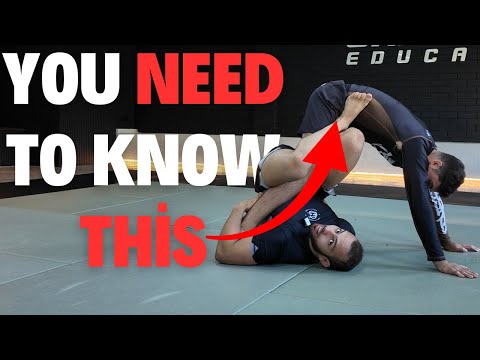
5 Leg Lock Entries You NEED TO KNOW
0
Leg Lock·Ebsayz
Join my skool community to work one on one with me to absolutely smash your jiu jitsu goals and progress way faster: htt…
Translation: Leg joint technique
The Leg Lock family encompasses all joint lock submissions targeting the hip, knee, or ankle joints of the lower extremity — including heel hooks, kneebars, toe holds, calf slicers, and straight ankle locks. [1] Once considered a secondary or even disreputable area of BJJ (traditionalists called leg lockers 'lazy' for attacking the legs instead of passing guard), leg locks underwent a dramatic renaissance in the 2010s through the work of John Danaher and the Danaher Death Squad (Gordon Ryan, Garry Tonon, Eddie Cummings, Nicky Ryan), who demonstrated that a systematic approach to leg entanglements could dominate the world's best grapplers. [1],[2] The modern leg lock game is built around the ashi garami positional hierarchy — a system of leg entanglement positions (inside sankaku, outside ashi, 50/50, cross ashi) from which specific submissions are applied based on the control configuration. [2],[3] Heel hooks — particularly the inside heel hook — are now considered the most dangerous and highest-percentage submission in no-gi grappling, capable of destroying the knee's ligaments (ACL, MCL, meniscus) with minimal force and warning. [3]
Leg locks have deep roots in catch wrestling (where 'hooking' the legs was a primary technique category) and sambo (where leg locks are central to the throwing and ground curriculum). [1] In traditional BJJ, leg locks were historically de-emphasised — Hélio Gracie's system focused on chokes and arm locks, and many BJJ schools considered leg lock attacks to be lower-status techniques. [1],[2] The modern leg lock revolution began around 2014-2015 when John Danaher's students (the 'Danaher Death Squad' — Eddie Cummings, Garry Tonon, Gordon Ryan, Nicky Ryan) began dominating EBI and ADCC competition with a systematic leg lock game built around the ashi garami positional hierarchy. [2],[3] Gordon Ryan's dominance of ADCC (2019 and 2022 absolute champion) cemented the leg lock game as an essential component of elite no-gi grappling. [3]
Leg locks — particularly heel hooks — are the most effective submissions in modern no-gi grappling; the inside heel hook is the most commonly finished submission at ADCC and EBI. [1] The Danaher Death Squad's competitive record demonstrated that a systematic leg lock game can overcome even the world's best guard passers and top players. [2] In MMA, leg locks have become increasingly common, with fighters like Ryan Hall, Charles Oliveira, and Paul Craig finishing opponents with heel hooks and kneebars from positions that were previously considered neutral or defensive. [3]
No images yet for this technique.
Sign in to suggest an image.
Join my skool community to work one on one with me to absolutely smash your jiu jitsu goals and progress way faster: htt…
PLEASE Click the links below to SUPPORT the TeachMeGrappling Channel!!! This video I breakdown how to finish the leg la…
No instructional courses yet for this technique.
Sign in to suggest a course.
Risk of injury to the person this technique is applied to
Maximum — heel hooks are the most dangerous legal submission in grappling; they attack the knee ligaments (ACL, MCL, meniscus) which have no pain warning before catastrophic failure; unlike arm locks where increasing pain signals the joint's limit, heel hooks can destroy the knee before the opponent feels significant pain; kneebars can also cause severe ligament damage; even ankle locks and toe holds carry significant injury risk; leg locks have ended more competitive grappling careers through injury than any other submission category
Skill level needed to execute this technique reliably
Whether this technique is allowed under major competition rule sets
Leg Lock Anthology (John Danaher, BJJ Fanatics instructional)
Description sources — [1] Danaher's Leg Lock Anthology system [2] Danaher Death Squad competitive records [3] ADCC and EBI competition analysis
History sources — [1] Catch wrestling and sambo leg lock traditions [2] BJJ's historical de-emphasis of leg locks [3] The Danaher revolution 2014-present
Description sources — [1] Danaher's Leg Lock Anthology system [2] Danaher Death Squad competitive records [3] ADCC and EBI competition analysis
History sources — [1] Catch wrestling and sambo leg lock traditions [2] BJJ's historical de-emphasis of leg locks [3] The Danaher revolution 2014-present
leg dexterity (entangling and controlling the opponent's legs), hip control (maintaining ashi garami positions), grip strength (controlling the heel or foot for submission)
long legs (easier to entangle), flexible hips (maintaining and adjusting ashi garami positions), strong grip (maintaining the heel control)
adductors (squeezing the ashi garami), forearms (grip on the heel or ankle), hip flexors (maintaining position), core (controlling the hip line and adjusting body angle for the finish)
Every move, in any martial art, shares a few universal traits. Mix and match below to pinpoint the right tool — or compare equivalents across styles.
The Catch Wrestling Toe Hold is a foot lock that rotates the foot against the ankle and knee joints, originating from the catch-as-catch-can wrestling tradition. [1]
Hiza Garami is a knee lock technique in judo and jujutsu that attacks the knee joint by entangling the opponent's leg and applying rotational or hyperextension force. [1] The attacker controls the opponent's leg and uses a figure-four or wrapping grip to isolate the knee, then applies pressure that forces the joint beyond its natural range of motion. [1] In Kodokan judo, it is classified under ashi garami (leg entanglement) techniques and is generally prohibited in competition due to the high risk of knee ligament damage. [1] In BJJ and submission grappling, similar knee attacks form the foundation of modern leg lock systems. [2]
Leg locks appear in our corpus across 93 books under 'leg lock' and related terms. The Danaher Death Squad (Gordon Ryan, Garry Tonon, Eddie Cummings) revolutionized leg lock grappling from 2015-2019, elevating heel hooks and knee bars from niche techniques to the dominant submission category in no-gi competition. (93 books; Danaher, Enter the System; ADCC/EBI records)
According to Ebsayz, the key mistake people make is grabbing the leg in the space between their knee and elbow, which gives your opponent an easy underhook. Instead, position your elbow on the inside of your knee to prevent this escape.
Ebsayz emphasizes that your knee must connect to your heel at your opponent's hip. If there's no connection between these points, your entry is incomplete and vulnerable.
Ebsayz stresses that if you can't control both legs, make sure your opponent's knee goes outside their foot, and positioning yourself perpendicular to their spine makes it much harder for them to keep their legs away from you.
Coach Brian from TeachMeGrappling explains that you must keep your legs locked tightly so the top leg can't escape, and hook behind your opponent's knee to prevent them from fitting their leg out of the trap.
The Leg Lock family encompasses all joint lock submissions targeting the hip, knee, or ankle joints of the lower extremity — including heel hooks, kneebars, toe holds, calf slicers, and straight ankle locks. Once considered a secondary or even disreputable area of BJJ (traditionalists called leg lockers 'lazy' for attacking the legs instead of passing guard), leg locks underwent a dramatic renaissance in the 2010s through the work of John Danaher and the Danaher Death Squad (Gordon Ryan, Garry Tonon, Eddie Cummings, Nicky Ryan), who demonstrated that a systematic approach to leg entanglements could dominate the world's best grapplers.
Leg locks have deep roots in catch wrestling (where 'hooking' the legs was a primary technique category) and sambo (where leg locks are central to the throwing and ground curriculum). In traditional BJJ, leg locks were historically de-emphasised — Hélio Gracie's system focused on chokes and arm locks, and many BJJ schools considered leg lock attacks to be lower-status techniques.
IBJJF: restricted — Brown and black belt only; IJF: banned — Only elbow joint locks (kansetsu-waza) permitted in judo — all other joint lo…; ADCC: legal — Legal — all submissions legal in ADCC; Unified MMA: legal — Legal submission technique; FIAS Sport Sambo: legal — Legal; FIAS Combat Sambo: legal — Legal
Danger rating 10/10. Maximum — heel hooks are the most dangerous legal submission in grappling; they attack the knee ligaments (ACL, MCL, meniscus) which have no pain warning before catastrophic failure; unlike arm locks where increasing pain signals the joint's limit, heel hooks can destroy the knee before the opponent feels significant pain; kneebars can also cause severe ligament damage; even ankle locks and toe holds carry significant injury risk; leg locks have ended more competitive grappling careers through injury than any other submission category
The standard setup chain: Enter Leg Entanglement → Identify Position → Control the Hip Line → Secure the Heel/Foot → Apply Submission → Finish.
Standard counters include: Boot (heel slip) — pointing the toes and rotating the heel out of the attacker's grip / Hip Escape from Ashi Garami — clearing the hips past the knee line to extract the leg / Leg Pummeling — fighting with the legs to disentangle from ashi garami / Rolling — rolling in the direction of the heel hook rotation to relieve rotational pressure.
Common variants: Inside heel hook (the most dangerous submission; rotates the heel outward, …); Outside heel hook (rotates the heel inward; attacks different ligaments than…); Straight ankle lock (the most fundamental leg lock; hyperextends the ankle usi…); Kneebar (hyperextends the knee using the same mechanics as an armb…); Toe hold (figure-four grip on the foot, rotating and extending to s…); Calf slicer (calf crusher) (compressing the calf muscle against the knee joint from b…); Estima lock (foot lock applied during guard passing); 50/50 heel hook (heel hook applied from the 50/50 entanglement position); Outside ashi ankle lock (straight ankle lock from the outside ashi garami position).
Heel hooks are the most common submission at ADCC and EBI. Gordon Ryan (2x ADCC absolute champion) and the Danaher Death Squad built careers on the leg lock game.
Top errors to watch for: Applying heel hooks at full speed in training — this is the most dangerous mistake in all of grappling; heel hooks mu… / Not tapping to heel hooks early enough — unlike arm locks where pain precedes joint failure, heel hooks can damage th… / Ignoring the positional game — attempting heel hooks without first establishing proper ashi garami control results in… / Crossing the knees incorrectly in ashi garami — the inside leg (nearest to the opponent's hip) should be on top in mo….
The Leg Lock is also known as Leglock, Lower Limb Lock, Leg Submission, Ashi Kansetsu Waza.