Anaconda Choke from Tortuga - BJJ Basics for MMA
0
Anaconda Choke From Turtle·Peter Mettler Martial Arts
Anaconda Choke from Tortuga - Classic BJJ Basics & Catch Wrestling essentials. Learn the crucial details to get the tech…
Translation: Anaconda Choke (katakana loanword)
The anaconda choke from turtle targets an opponent in the turtle position by the attacker threading the choking arm around the neck and under the far-side arm from a front-facing or side-facing angle, then locking the figure-four and executing a gator roll. [1],[2] The turtle position exposes the head for the neck-wrap and arms for the arm thread, and the gator roll dismantles the opponent's base by rolling them onto their back or side. [1] The attacker ends in a controlling position with the choke locked, using chest pressure and the roll's momentum to complete the submission. [1],[2]
Attacking the turtle with the anaconda choke became a competitive staple as turtling became a common defensive response to guard passes and scrambles. [1],[2] The turtle position's inherent vulnerability to front headlock attacks made it a natural target for anaconda entries, and the gator roll proved particularly effective at breaking down the turtle base. [1] This turtle-to-anaconda chain is now a standard part of the competitive grappler's turtle attack curriculum. [1],[2]
The anaconda from turtle exploits the turtle's vulnerability — the head-down, arms-planted posture opens the neck-arm gap needed for threading. The turtle paradoxically protects the back but exposes the neck. [1]
The turtle anaconda bridges wrestling turtle attacks (cradles, Nelsons) with BJJ arm-triangle submissions. A fundamental technique in modern submission grappling's turtle-attacking system. [1]
Increasingly common in competition as turtle defence has become more prevalent. Competitors use the anaconda as one of several turtle attacks alongside crucifix, clock choke, and back take. [1]
No images yet for this technique.
Sign in to suggest an image.
Anaconda Choke from Tortuga - Classic BJJ Basics & Catch Wrestling essentials. Learn the crucial details to get the tech…
Like Our Videos or Subscribe to Our Channel to See New Demonstrations and Techniques. 3 Part Technique — Marcelo Garcia…
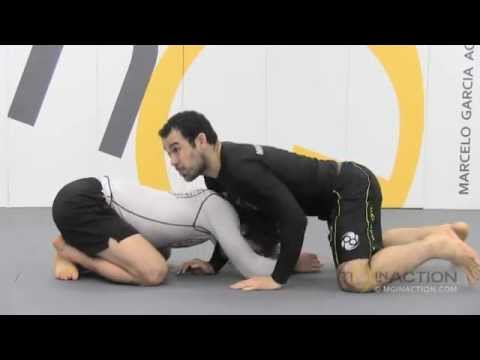
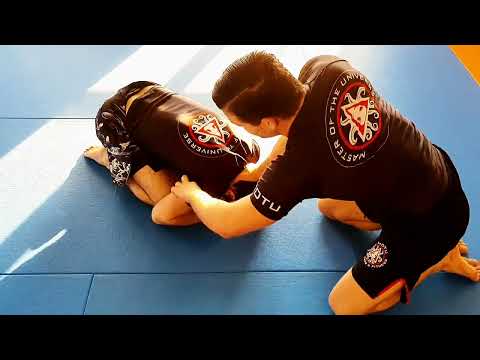
The anaconda choke from turtle position is executed by first establishing control of the opponent's head and arm while they are in the turtle position, preventing them from grabbing the attacker's legs. Peter Mettler Martial Arts emphasizes initial hand placement: forking fingers down the neck while controlling the triceps-to-shoulder junction with the other hand, then dropping the shoulder onto the opponent's chest and grabbing the chin. Both instructors stress the critical transition of moving the inside hand to the outside position quickly before the opponent can defend. MGInActionVideos (Marcelo Garcia) and Mettler agree on the importance of getting the arm as deep as possible across the opponent's neck, with the non-choking arm controlling the opponent's arm to prevent escape. The roll itself—performed like an anaconda constricting—is central to both teachings: the attacker rolls the opponent toward the side where their arm is positioned, using hip and body pressure against the opponent's head. Mettler emphasizes elbows-in positioning and scapular retraction for maximum squeeze efficiency. Garcia details managing the opponent's posture by controlling which direction they can balance, and provides a fallback to a modified knife choke if the standard grip cannot be achieved. Both instructors stress maintaining arm compression and preventing the opponent from opening their elbows during the roll and finish phases.
Synthesized from 2 instructors
No instructional courses yet for this technique.
Sign in to suggest a course.
Risk of injury to the person this technique is applied to
Anaconda/gator-roll chokes use a rolling motion to tighten the arm-in head-and-arm strangle
Skill level needed to execute this technique reliably
Whether this technique is allowed under major competition rule sets
Tri-force BJJ Academy (triforce-bjj.com); Tri-force Shiki BJJ (tfshiki-bjj.com); Aoki Shinya (note.com/a_ok_i)
Japan's largest BJJ academy chain — Japanese technique terminology
Japanese BJJ technique naming conventions article (2019)
Top Japanese MMA fighter — BJJ technique terminology
Standard katakana transliteration of Western martial arts terminology (外来語) — used in Japanese MMA, boxing, and BJJ communities
Japanese terminology sourced from Tri-force BJJ Academy (triforce-bjj.com); Tri-force Shiki BJJ (tfshiki-bjj.com); Aoki Shinya (note.com/a_ok_i)
long arms for head-and-arm wrap, core strength for gator roll
longer limbs, athletic build
biceps, deltoids, core rotators, hip flexors
Every move, in any martial art, shares a few universal traits. Mix and match below to pinpoint the right tool — or compare equivalents across styles.
Peter Mettler emphasizes using your forearm and the edge of your hand on the opponent's neck and biceps rather than just your fingertips, as this provides better control on sweaty skin.
Roll your opponent over so their neck sits on your bicep, then move your inside hand to the outside quickly before they can grab or create space with their trapped arm.
Marcelo Garcia emphasizes going as deep as possible with your top hand and controlling the opponent's elbow with your outside hand; once you feel the squeeze building, reach for your own arm to complete the grip.
Don't let your opponent roll over you or open their arms to create space; keep your position strong and maintain control over their trapped arm.
The anaconda choke from turtle targets an opponent in the turtle position by the attacker threading the choking arm around the neck and under the far-side arm from a front-facing or side-facing angle, then locking the figure-four and executing a gator roll. The turtle position exposes the head for the neck-wrap and arms for the arm thread, and the gator roll dismantles the opponent's base by rolling them onto their back or side.
Attacking the turtle with the anaconda choke became a competitive staple as turtling became a common defensive response to guard passes and scrambles. The turtle position's inherent vulnerability to front headlock attacks made it a natural target for anaconda entries, and the gator roll proved particularly effective at breaking down the turtle base.
IBJJF: legal — Legal at all belt levels, gi and no-gi — chokes are the safest submission cat…; IJF: legal — Legal (shime-waza) — strangulation techniques are one of three permitted subm…; ADCC: legal — Legal; Unified MMA: legal — Legal — choke submissions are among the most common finishes in MMA; FIAS Sport Sambo: banned — All chokes prohibited in Sport Sambo; FIAS Combat Sambo: legal — Legal
Danger rating 9/10. Anaconda/gator-roll chokes use a rolling motion to tighten the arm-in head-and-arm strangle
The standard setup chain: Achieve Controlling Position → Isolate the Neck → Set the Grip → Apply Pressure.
Standard counters include: Tuck Chin — protect the neck by lowering the chin to prevent the choke from sinking / Two-on-One Grip Fight — use both hands to strip the choking grip before it locks / Turn Into — rotate toward the choking arm to relieve carotid pressure / Posture Up — straighten the spine and create distance to break the choking angle.
Common variants: Standard anaconda (arm threaded under the neck and over the far arm, finishe…); No-roll anaconda (finished in place without the gator roll by sprawling and…); Anaconda from guard (applied from bottom position when the opponent's head is low).
Increasingly common in competition as turtle defence has become more prevalent. Competitors use the anaconda as one of several turtle attacks alongside crucifix, clock choke, and back take.
Top errors to watch for: Approaching from directly behind — the anaconda requires a side approach; from behind, the neck-arm gap is inaccessible / Threading over the near arm instead of the far arm — the far arm creates the correct arm-triangle geometry; near-arm … / Not connecting the hands before attempting to finish — the loop must be closed; attempting to finish with an open gri… / Attempting from a kneeling position too far away — get close to the opponent with chest contact before threading.
The Anaconda Choke From Turtle is also known as Anakonda Chōku, Turtle Anaconda, Anaconda from Turtle Top.