How To Do The Guillotine Choke | The Jiu Jitsu Class
0
Guillotine Choke·ROYDEAN
Jiu Jitsu Instructionals: https://roydeanacademy.com One Channel. Every Instructional: https://roydean.vhx.tv/browse S…
前首絞(Mae-kubi-jime)
TraditionalTranslation: Front Neck Strangle
The guillotine choke is a front headlock strangle where the attacker wraps one arm around the opponent's neck from the front, clasps the hands together, and squeezes upward while pulling the head down. [1],[2] The forearm blade presses into the throat (air choke) or carotid arteries (blood choke) depending on arm placement. [1] The guillotine can be applied standing, from closed guard, half guard, or during scrambles. [1],[3] Modern variations include the arm-in guillotine, high-elbow guillotine, and Marcelotine, each with distinct finishing mechanics. [1],[4]
The guillotine choke has ancient origins in wrestling and folk grappling across multiple cultures. [1],[2] In judo, mae-hadaka-jime (front naked strangle) established the basic mechanic. [2],[3] The technique became central to MMA and BJJ through fighters like Marcelo Garcia, who revolutionized the high-elbow guillotine in the 2000s and made it one of the most feared submissions in grappling. [1],[4]
The guillotine choke is one of the highest-percentage submissions in MMA, effective from standing clinch and guard positions. [1] Marcelo Garcia identifies the guillotine as a primary attack whenever the opponent's head drops below chest level, noting that the arm-in and no-arm variations create complementary threats. [2] The mechanics compress the trachea or carotid arteries depending on grip variation (high-elbow vs. arm-in), and the technique can finish opponents who are actively shooting takedowns. [1],[3]
The guillotine choke has roots in catch wrestling's front headlock and in judo's mae-hadaka-jime. [1] In Brazilian Jiu-Jitsu, the Gracie family refined the guillotine from closed guard as a counter to takedown attempts. [2] Marcelo Garcia's competitive success elevated the arm-in guillotine, and John Danaher later systematized the high-elbow ('Marcelotine') variation at Renzo Gracie Academy. [3]
The guillotine choke is consistently among the top three submission finishes in UFC history, accounting for approximately 14% of all submission victories. [1] Notable UFC guillotine finishes include Charles Oliveira, who holds the UFC record for most submission wins, many via guillotine. [1] In ADCC, Marcelo Garcia used the guillotine extensively in his 2003–2009 title runs. [2]
No images yet for this technique.
Sign in to suggest an image.
Jiu Jitsu Instructionals: https://roydeanacademy.com One Channel. Every Instructional: https://roydean.vhx.tv/browse S…
Join My Online Academy to Improve Your Jiu Jitsu FAST!!! https://www.skool.com/mattarroyojiujitsu/about Buy my complet…
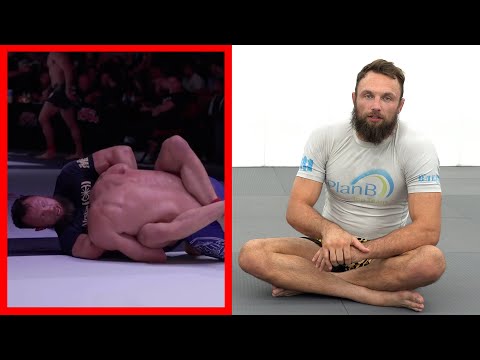
Craig Jones shows the guillotine choke he used to submit Kyle Boehm at ADCC 2022. Instructionals: https://bjjfanatics.…
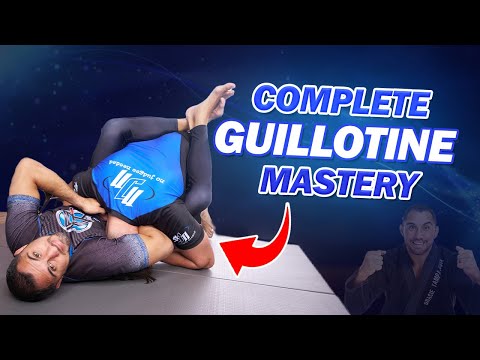
The guillotine choke is a front-headlock submission that occludes the carotid arteries and renders an opponent unconscious within six to seven seconds if maintained; it ranked among the top three most-used finishing submissions at recent ADCC tournaments. Matt Arroyo Jiu Jitsu emphasizes the mechanistic principle of either squeezing the neck (analogous to pinching a garden hose) or crimping it by bending the head toward the torso. In the arm-out guillotine, the elbow drives over the opponent's shoulder while the forearm blade positions itself in the space where the chin meets the neck, followed by a squeeze-and-push finish. In the arm-in guillotine, the opponent's arm blocks the over-the-shoulder elbow position, so the finish instead relies on a crunch motion that pulls the opponent's head into their own lower body, collapsing the neck and restricting blood flow. Craig Jones (B-Team) describes initiating the choke from a wrestling exchange by scooping the hands under the chin and collapsing the top of the head before the opponent lands, then securing a closed guard to prevent escape; he notes that early neck bending before ground contact creates a tighter position. ROYDEAN offers setup variations including the hip-bump escape and subsequent guillotine transition, the shoulder-slip from clinch positions, and chaining the guillotine to triangle or Kimura submissions if the opponent defends the initial choke. All three instructors stress proper hand placement (wrist and forearm blade touching the jaw-to-neck junction), hip positioning (on the same side as the opponent's head to maintain leverage), and the timing of shoulder placement to prevent the opponent's head from slipping out.
Synthesized from 3 instructors
No instructional courses yet for this technique.
Sign in to suggest a course.
Risk of injury to the person this technique is applied to
The guillotine is one of the most common submissions in MMA; combines tracheal and vascular pressure
Skill level needed to execute this technique reliably
Whether this technique is allowed under major competition rule sets
Classical Jujutsu (Tenjin Shin'yo-ryu); Shooto terminology
Japanese MMA pioneer organization — technique terminology
Standard Japanese martial arts terminology (kanji/hiragana)
Established Japanese martial arts naming convention — native Japanese term (和語/漢語)
Japanese terminology sourced from Classical Jujutsu (Tenjin Shin'yo-ryu); Shooto terminology
forearm and grip strength, hip flexibility for guard retention
longer arms for deeper chin-strap wrap
forearm flexors, biceps, hip flexors
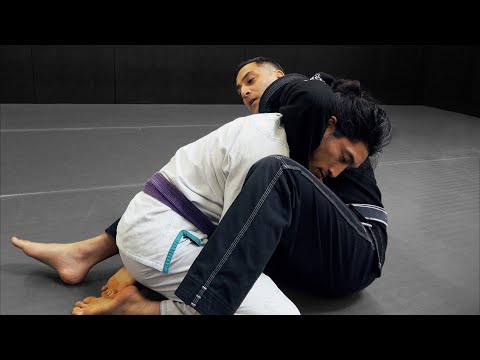
The guillotine choke from closed guard is applied by wrapping one arm around the opponent's neck from the front, locking the hands together, and squeezing while using the closed guard to prevent the opponent from posturing up or pulling their head free. [1,2] The guard player typically catches the guillotine as the opponent shoots or dives into the guard, then closes the legs to secure the position. [1] Hip elevation and a slight angle to the choking side increase leverage and direct the forearm blade more precisely into the carotid artery. [1,2,3]
The guillotine choke from front-headlock sprawl is applied after the attacker sprawls to defend a takedown attempt, catching the opponent's head in a front headlock and wrapping the arm around the neck. [1,2] The sprawl provides hip distance and downward pressure that prevent the opponent from completing the takedown, while the wrapped arm compresses the neck. [1] The attacker may finish standing with a squeeze, pull guard to add leg control, or transition to a seated position to tighten the choke. [1,2]
The ten-finger guillotine from standing snap-down is a no-arm-trapped variant where the attacker clasps all ten fingers together around the opponent's neck without trapping an arm inside the loop. [1] After snapping the opponent's head down, the attacker wraps the neck with one arm and locks both hands together in an interlocking ten-finger grip (gable or S-grip), creating a pure neck guillotine. [1,2] Without an arm trapped inside, the choking loop is tighter and smaller, concentrating all pressure directly on the throat and carotid arteries. [2] The ten-finger grip is extremely strong but requires precise neck isolation to prevent the opponent from posturing out. [2,3]
The guillotine choke from top half-guard is applied when the top player wraps the bottom player's neck in a guillotine grip while the bottom player retains a half-guard. [1,2] The top player typically catches the guillotine when the bottom player dives for an underhook or attempts to come to a single-leg, then maintains the grip while working to free the trapped leg. [1] The attacker can finish by sprawling the hips to increase pressure, or by stepping over to mount or full guard while maintaining the neck wrap. [1,2]
The Marcelotine is a guillotine choke performed without the opponent's arm trapped inside, using a high elbow position over the opponent's trapezius to create direct blade-of-wrist pressure on the trachea and carotid arteries. [1] Perfected by Marcelo Garcia (5x ADCC champion, one of BJJ's greatest competitors) as his signature submission. The name was coined by the BJJ community in his honor. [2] Unlike the arm-in guillotine which requires crunching to the side, the Marcelotine finishes by pulling elbows back and pulling legs back from butterfly guard to increase throat pressure.
Your arm should be positioned right underneath the chin, with about three inches of space beneath it. Matt Arroyo emphasizes that this placement is critical, following the Marcello Garcia style with the elbow positioned on the side.
If your hips are straight to the ceiling, you don't have proper leverage and the head will slip out. Instead, position your shoulder over the opponent's neck so you don't see any hair, keep your hips on the same side as their head (like a DDT), and maintain everything forward rather than arching back.
Pull your wrist through the opponent's neck while pushing your forearm into their shoulder simultaneously to maintain steady pressure. Alternatively, you can slide their head into their own belly while crimping down, which creates the choke effect like squeezing a hose to stop water flow.
Keep your shoulder at the base of the opponent's spine and maintain everything forward. Avoid landing flat on your back or keeping your head too far from theirs, as arching back creates a good chance for the head to slip out. Once tight, pull to the side and work to secure closed guard.
The guillotine choke is a front headlock strangle where the attacker wraps one arm around the opponent's neck from the front, clasps the hands together, and squeezes upward while pulling the head down. The forearm blade presses into the throat (air choke) or carotid arteries (blood choke) depending on arm placement.
The guillotine choke has ancient origins in wrestling and folk grappling across multiple cultures. In judo, mae-hadaka-jime (front naked strangle) established the basic mechanic.
IBJJF: legal — Legal at all belt levels, gi and no-gi — chokes are the safest submission cat…; IJF: legal — Legal (shime-waza) — strangulation techniques are one of three permitted subm…; ADCC: legal — Legal; Unified MMA: legal — Legal — choke submissions are among the most common finishes in MMA; FIAS Sport Sambo: banned — All chokes prohibited in Sport Sambo; FIAS Combat Sambo: legal — Legal
Danger rating 9/10. The guillotine is one of the most common submissions in MMA; combines tracheal and vascular pressure
The standard setup chain: Achieve Controlling Position → Isolate the Neck → Set the Grip → Apply Pressure.
Standard counters include: Tuck Chin — protect the neck by lowering the chin to prevent the choke from sinking / Two-on-One Grip Fight — use both hands to strip the choking grip before it locks / Turn Into — rotate toward the choking arm to relieve carotid pressure / Posture Up — straighten the spine and create distance to break the choking angle.
Common variants: Arm-in guillotine (traps the opponent's arm inside the choke for additional …); High-elbow guillotine (Marcelotine) (elevates the elbow above the head for stronger carotid co…); Standing guillotine (finished from the feet without pulling guard); Power guillotine (chin-strap grip with a rear-naked-choke-style finish for …).
The guillotine choke is consistently among the top three submission finishes in UFC history, accounting for approximately 14% of all submission victories. Notable UFC guillotine finishes include Charles Oliveira, who holds the UFC record for most submission wins, many via guillotine.
Top errors to watch for: Squeezing the trachea with a straight wrist — curl the wrist and angle the forearm to target the carotid arteries; st… / Not controlling the opponent's body — the guillotine requires the opponent's body to be close; without hip control or… / Falling to the back without securing guard — if you sit to guillotine without hooks or closed guard, the opponent pas… / Applying the guillotine with the arm too deep — the wrist should be at the neck, not reaching past the shoulder; over….
The Guillotine Choke is also known as Mae-kubi-jime, Mae-hadaka-jime, Front Naked Choke, Guilhotina.
Arm-in guillotine (opponent's arm trapped inside): the opponent's own shoulder helps compress one side of the neck. Finish by crunching to the side. More secure, harder to escape, but slightly slower to finish. Arm-out guillotine (Marcelotine/high-elbow): direct blade-of-wrist pressure on the throat with the elbow elevated over the trapezius. More aggressive, faster finish, but the opponent can escape by passing to side control.
The Von Flue choke happens when you hold a loose guillotine from bottom while they pass to side control. Prevention: (1) Never hold a guillotine from bottom side control — either finish immediately or let go. (2) Keep your guard closed or establish butterfly hooks to prevent the pass. (3) If they do pass, immediately release the guillotine and frame to escape side control.
Guillotine when you have front headlock control (they shoot a takedown, you sprawl). Triangle when you have guard control (they are inside your guard with one arm isolated). The guillotine is a standing/sprawl weapon; the triangle is a guard weapon. Some positions allow both — from butterfly guard, you can threaten both depending on their reaction.