Guillotine Submission From Top Half Guard - BJJ
0
Guillotine Choke From Top Half-Guard·Jon Foster
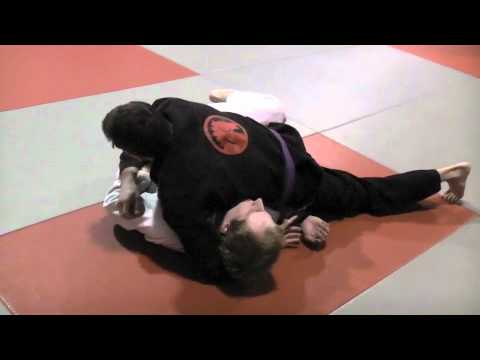
A guillotine submission from top half guard position for Brazilian Jiu-Jitsu, submission grappling or MMA. This set up c…
Translation: Guillotine Choke (katakana loanword); also フロントチョーク
The guillotine choke from top half-guard is applied when the top player wraps the bottom player's neck in a guillotine grip while the bottom player retains a half-guard. [1],[2] The top player typically catches the guillotine when the bottom player dives for an underhook or attempts to come to a single-leg, then maintains the grip while working to free the trapped leg. [1] The attacker can finish by sprawling the hips to increase pressure, or by stepping over to mount or full guard while maintaining the neck wrap. [1],[2]
Guillotine attacks from half-guard top developed in competitive no-gi grappling and MMA as practitioners recognized the submission opportunity created when half-guard players dive headfirst for underhooks. [1],[2] The technique became increasingly common in the 2010s as half-guard became the dominant guard in MMA, creating frequent exposure of the neck during the underhook battle. [1] This positional variant bridges the guard-passing game with front headlock submissions. [1],[2]
The guillotine from top half guard catches opponents during underhook battles — the head naturally enters guillotine range when fighting for the underhook. The leg entanglement prevents escape. [1]
Evolved as half guard became a dominant guard position in modern BJJ. The guillotine counter to the underhook attempt developed as a systematic response to aggressive bottom half guard play. [1]
Increasingly common in competition as half guard play has become more sophisticated. Both gi and no-gi competitors use the top half guard guillotine as a primary guard-passing weapon. [1]
No images yet for this technique.
Sign in to suggest an image.
A guillotine submission from top half guard position for Brazilian Jiu-Jitsu, submission grappling or MMA. This set up c…
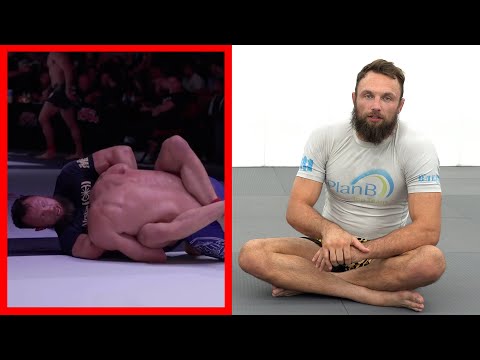
Craig Jones shows the guillotine choke he used to submit Kyle Boehm at ADCC 2022. Instructionals: https://bjjfanatics.…
The guillotine choke from top half-guard is executed by first establishing heavy pressure and control while in the top position. Jon Foster emphasizes sprawling the far leg back to maintain base and prevent sweeps, then using rib pressure on the opponent's face to force the chin upward and create space for arm insertion. The critical technical detail both instructors stress is achieving deep arm penetration: Foster describes threading the inside of the elbow to a specific point on the neck, with the thumb wrapping to the far side. The B-Team's Craig Jones describes the same principle using a "chin strap" initial grip before scooping the hands over the top to collapse the neck. Both instructors note that the defending arm creates the primary obstacle—if the opponent blocks the submission arm, the attacker must work to get the hand inside, maintaining pressure while forcing the grip around both sides of the neck to attack both carotid arteries. The B-Team emphasizes avoiding a flat-back position and instead pulling to the side while securing closed guard to prevent the opponent from turning and escaping. Foster focuses on keeping elbows tight throughout to deny underhook opportunities. Both instructors present the submission as high-percentage when executed from scrambling exchanges where the opponent extends during a takedown attempt.
Synthesized from 2 instructors
No instructional courses yet for this technique.
Sign in to suggest a course.
Risk of injury to the person this technique is applied to
Guillotine variants compress the trachea and carotids from front headlock control
Skill level needed to execute this technique reliably
Whether this technique is allowed under major competition rule sets
柔術B (jiujitsu-b.com); gentle-world.tech; Yahoo知恵袋; Wikipedia ja (フロントチョーク)
Major Japanese BJJ publication — comprehensive technique lists
Japanese BJJ submission guide
Japanese Q&A community — BJJ technique name verification
Japanese Wikipedia — martial arts technique articles
Standard katakana transliteration of Western martial arts terminology (外来語) — used in Japanese MMA, boxing, and BJJ communities
Japanese terminology sourced from 柔術B (jiujitsu-b.com); gentle-world.tech; Yahoo知恵袋; Wikipedia ja (フロントチョーク)
forearm and grip strength, hip flexibility for guard retention
longer arms for deeper chin-strap wrap
forearm flexors, biceps, hip flexors
Every move, in any martial art, shares a few universal traits. Mix and match below to pinpoint the right tool — or compare equivalents across styles.
Craig Jones emphasizes that when your opponent shoots for a takedown without proper setup, they become extended and vulnerable. At that moment, you have a choice: sprawl to stuff the takedown or capitalize on the submission threat by getting around their neck and trapping an arm before they fully establish control.
According to Craig Jones, always start with a chin strap grip, then connect your hands over the top. The key is to scoop your hands upward and collapse the top of the opponent's head while their posture is still extended—timing this before they hit the ground allows you to bend their neck tight.
Craig Jones notes that if you apply the choke too late after your opponent has shot, they can put their forehead on the floor and maintain good posture, making it much harder for you to bend their neck and finish the submission.
Keep your shoulder at the base of their spine and maintain everything forward rather than arching back, which allows their head to slip out. Pull to the side, tighten everything, and secure closed guard to prevent them from turning out of the choke.
The guillotine choke from top half-guard is applied when the top player wraps the bottom player's neck in a guillotine grip while the bottom player retains a half-guard. The top player typically catches the guillotine when the bottom player dives for an underhook or attempts to come to a single-leg, then maintains the grip while working to free the trapped leg.
Guillotine attacks from half-guard top developed in competitive no-gi grappling and MMA as practitioners recognized the submission opportunity created when half-guard players dive headfirst for underhooks. The technique became increasingly common in the 2010s as half-guard became the dominant guard in MMA, creating frequent exposure of the neck during the underhook battle.
IBJJF: legal — Legal at all belt levels, gi and no-gi — chokes are the safest submission cat…; IJF: legal — Legal (shime-waza) — strangulation techniques are one of three permitted subm…; ADCC: legal — Legal; Unified MMA: legal — Legal — choke submissions are among the most common finishes in MMA; FIAS Sport Sambo: banned — All chokes prohibited in Sport Sambo; FIAS Combat Sambo: legal — Legal
Danger rating 9/10. Guillotine variants compress the trachea and carotids from front headlock control
The standard setup chain: Achieve Controlling Position → Isolate the Neck → Set the Grip → Apply Pressure.
Standard counters include: Tuck Chin — protect the neck by lowering the chin to prevent the choke from sinking / Two-on-One Grip Fight — use both hands to strip the choking grip before it locks / Turn Into — rotate toward the choking arm to relieve carotid pressure / Posture Up — straighten the spine and create distance to break the choking angle.
Common variants: Arm-in guillotine (traps the opponent's arm inside the choke for additional …); High-elbow guillotine (Marcelotine) (elevates the elbow above the head for stronger carotid co…); Standing guillotine (finished from the feet without pulling guard); Power guillotine (chin-strap grip with a rear-naked-choke-style finish for …).
Increasingly common in competition as half guard play has become more sophisticated. Both gi and no-gi competitors use the top half guard guillotine as a primary guard-passing weapon.
Top errors to watch for: Not recognising the guillotine opportunity when it appears — the window opens when the opponent reaches for the under… / Wrapping the neck without controlling the opponent's body — half guard position must be maintained; if they escape ha… / Not deciding between top and guard finish — hesitating between the two options results in a weak attempt from neither… / Attempting the guillotine while the opponent has a strong underhook — their underhook gives them leverage to posture;….
The Guillotine Choke From Top Half-Guard is also known as Girochin Chōku, Top Half-Guard Guillotine, Half-Guard Guilhotina.