LEAD HOOK What Does it do? How to Throw a Lead Hook & When to throw a lead hook punch 🥊 🦅
0
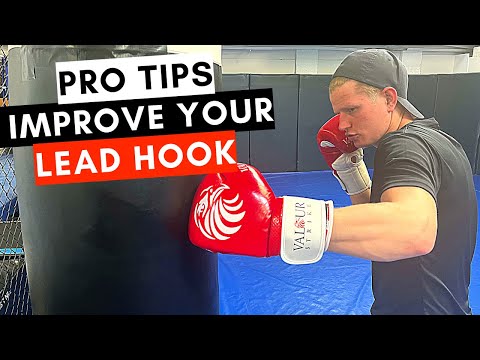
Lead Hook To Body·Valour Strike
The lead hook is an amazing tool when used right. However when used wrong it can leave you desperately vulnerable. Rob…
Translation: lead hook to body
The lead hook to the body targets the ribcage, liver, and floating ribs, and is considered one of the most strategically important punches in boxing. [1] Dempsey devoted specific attention to body hooks in Championship Fighting, describing the technique of dipping slightly and driving the hook upward into the body with full hip rotation. [1] Body hooks became a defining element of boxing strategy in the early 20th century, with fighters like Henry Armstrong and later Roberto Duran building their styles around relentless body attack. [2] The Sweet Science documented how skilled body punchers systematically break down opponents over multiple rounds. [3]
The lead hook to the body targets the liver and ribs from the front hand. [1]
A fundamental boxing body shot. [1]
Body hooks are a critical scoring and finishing tool in boxing and MMA. [1]
No images yet for this technique.
Sign in to suggest an image.
The lead hook is an amazing tool when used right. However when used wrong it can leave you desperately vulnerable. Rob…
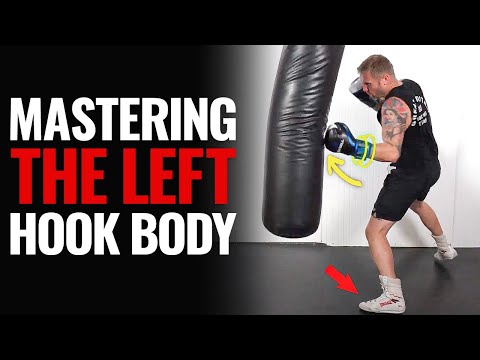
The lead hook to the body is not the same as the lead hook to the head. In this video, I show you the proper ways to thr…
Tony Jeffries shares the perfect technique of throwing the lead or left hook to the body. Lead hook is one of my favorit…
The lead hook to the body is a high-impact striking technique that combines elements of the hook and uppercut to target the torso, particularly the liver on an orthodox fighter's right side. All three instructors emphasize that proper execution requires controlled hip and shoulder rotation rather than arm-dominant movement. Valour Strike stresses keeping hands tight and the elbow level with or slightly above the knuckles, advocating for thumb-down rotation at longer ranges to land with the top two knuckles, and warns against over-rotating the foot in kickboxing to protect against leg kicks. Tony Jeffries prioritizes weight transfer to the front foot while rotating the hips—specifically the back hip—without dropping the rear heel, and introduces a tactical secret: removing the slip entirely and throwing close-range body shots, sometimes after setting up with upstairs punches to move the opponent's hands. Coach Pillow Fists distinguishes between two delivery angles—a more upright, quicker inside variant and a deeper hook-like outside variant—and provides angle-cutting strategies, including stepping simultaneously with a lead hook to the head feint and using a double-hook setup to access the liver around the opponent's elbow. All instructors agree the technique requires practice and discipline to avoid telegraphing, with emphasis on economical movement and maintaining defensive posture throughout execution.
Synthesized from 3 instructors
No instructional courses yet for this technique.
Sign in to suggest a course.
Risk of injury to the person this technique is applied to
Hooks/uppercuts; generate rotational force, high KO rate (Walilko et al. 2005)
Skill level needed to execute this technique reliably
Whether this technique is allowed under major competition rule sets
Muay Thai: The Art of Fighting (Yod Ruerngsa, Khun Kao Charuad & James Cartmell, 2002)
Alias sources — [1] Championship Fighting (Dempsey, 1950) [2] Boxing (Fleischer, 1958) [3] The Sweet Science (Liebling, 1956)
History sources — [1] Championship Fighting (Dempsey, 1950) [2] Boxing's Greatest Fighters (Sugar, 2006) [3] The Sweet Science (Liebling, 1956)
Mixed Japanese-Western terminology — combines traditional Japanese terms with katakana loanwords
Alias sources — [1] Championship Fighting (Dempsey, 1950) [2] Boxing (Fleischer, 1958) [3] The Sweet Science (Liebling, 1956)
History sources — [1] Championship Fighting (Dempsey, 1950) [2] Boxing's Greatest Fighters (Sugar, 2006) [3] The Sweet Science (Liebling, 1956)
hip rotation, horizontal arm acceleration, tight elbow angle
compact build for short-range hooks, strong core
obliques, hip rotators, pectorals, biceps, forearms
Every move, in any martial art, shares a few universal traits. Mix and match below to pinpoint the right tool — or compare equivalents across styles.
According to Tony Jeffries, power comes from twisting your hip while keeping your back heel off the ground—think of it as 'squishing a bug.' The key is moving your foot and throwing the punch at the same time, not sequentially, so the arm follows the hip rotation.
Tony Jeffries emphasizes that you must keep your hands up and not drop your lead hand off your face too early. Many fighters slip and then bring their hand down before throwing, which is too late and leaves them exposed.
According to Valour Strike, once your elbow reaches directly in front of your shoulder or face, pull the punch back in—don't extend too far forward or you'll leave yourself exposed to counterattacks. This is especially important in kickboxing where you can be hit or kicked from multiple angles.
Valour Strike explains that at short range keep your thumb up or in, at mid-range keep it in, and at long range rotate your thumb all the way down to land with your top two knuckles—without this rotation at distance you'll end up slapping instead of punching.
Tony Jeffries notes that the best body punches are those your opponent never sees, since obvious body shots leave you vulnerable. He suggests using setup techniques to disguise the punch and ensure landing success.
A lead hook targeting the opponent's ribcage or midsection, thrown with a lower trajectory and often accompanied by bending the knees.
The lead hook to the body targets the ribcage, liver, and floating ribs, and is considered one of the most strategically important punches in boxing. Dempsey devoted specific attention to body hooks in Championship Fighting, describing the technique of dipping slightly and driving the hook upward into the body with full hip rotation.
Unified MMA: legal — Legal striking technique; WBC/Boxing: legal — Legal — punches are the core technique of boxing; WKF: legal — Legal, jodan/chudan punch scores 1 point (yuko) — controlled contact required; Kyokushin: restricted — Body punches legal at full power, head punches banned; WT: restricted — Punches to trunk only (1 point), punches to head banned; ITF: legal — Legal — hand techniques to head and body both permitted; WAKO: legal — Legal in Full Contact and Low Kick formats; K: legal — 1/GLORY — Legal — full power punches to head and body; IFMA: legal — Legal
Danger rating 6/10. High — hooks/uppercuts; generate rotational force, high KO rate (Walilko et al. 2005)
The standard setup chain: Setup with Straight Punch → Pivot the Lead Foot → Arc the Arm → Follow Through.
Standard counters include: Slip — move the head off the centre line to evade the punch / Parry — deflect the incoming punch with a quick hand redirection / Counter Cross — time a straight punch over the incoming attack.
Common variants: Standard lead hook (short-arc punch targeting the jaw with lead hand); Check hook (pivoting away while throwing the hook as the opponent adv…); Shovel hook (upward-angled hook targeting the body at close range); Long-range hook (extended arm hook for catching opponents at distance).
Body hooks are a critical scoring and finishing tool in boxing and MMA.
Top errors to watch for: Bending at the waist to reach the body instead of dropping the knees — your head ends up at their fist level / Not changing level first and trying to sneak the hook low from head height — the arm drops and the punch is obvious / Dropping the rear hand while going low, leaving the head completely unguarded on the open side / Hitting the hip bone or the elbow instead of targeting the soft area between the bottom rib and the hip.
The Lead Hook To Body is also known as Rīdo Fukku (Bodi), Left Hook to the Body, Lead Body Hook, Hook Downstairs.