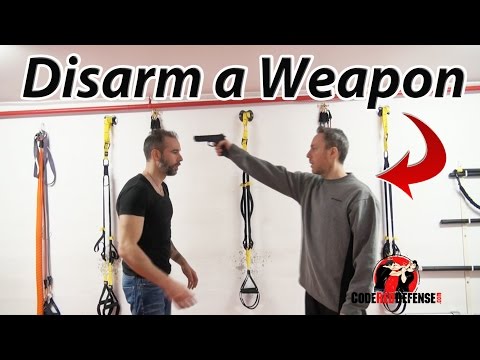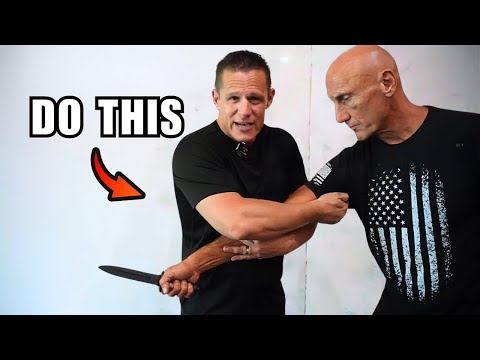
3 Practical Tips to Disarm a Weapon
0
Weapon Defence·Matt Numrich
Most people never train the right moves until it is too late. I'll teach you the 10 Best Self-Defense Moves, in 10 Days…
Translation: weapon defence
The Weapon Defence group encompasses defensive techniques against armed attacks, including knife defence, gun defence, and stick/baton defence. [1] Weapon defence is the most serious self-defence scenario because armed attacks carry the highest risk of lethal injury — the defender must neutralise the threat of the weapon while managing the extreme danger of close-range engagement with an armed attacker. [1],[2] This group addresses the three most common weapon categories encountered in self-defence situations: edged weapons (knives), firearms (guns), and impact weapons (sticks, batons). [2],[3] It is important to note that all weapon defences carry significant risk and the primary recommendation in any armed encounter is to escape if possible. [3]
Weapon defence techniques have been taught in martial arts since antiquity, with Japanese jujutsu systems including specific kata for defending against sword, knife, and staff attacks. [1] Filipino martial arts (Kali/Escrima/Arnis) developed the most comprehensive weapon defence curriculum, treating weapon defence as inseparable from weapon offence. [2] Modern self-defence systems like Krav Maga, developed for the Israeli military by Imi Lichtenfeld, systematised weapon defence for modern threats including firearms. [2],[3]
Weapon defence is primarily a self-defence discipline; it is not typically featured in sport competition. [1]
No images yet for this technique.
Sign in to suggest an image.
Most people never train the right moves until it is too late. I'll teach you the 10 Best Self-Defense Moves, in 10 Days…
Get a Free Self-Defense video: ► https://www.codereddefense.com/newsletter/ Learning how to disarm a gunman is extremel…
No instructional courses yet for this technique.
Sign in to suggest a course.
Risk of injury to the person this technique is applied to
Weapon defence scenarios involve lethal threats; failure risk is catastrophic
Skill level needed to execute this technique reliably
Whether this technique is allowed under major competition rule sets
Bubishi: The Classic Manual of Combat (Patrick McCarthy, 2008)
Alias sources — [1] MMA Instruction Manual (UFC, 2008) [2] MMA Instruction Manual (UFC, 2008) [3] MMA Instruction Manual (UFC, 2008)
Effectiveness sources — [1] Comprehensive Asian Fighting Arts (Draeger & Smith, 1969) [2] Mastering Jujitsu (Gracie & Danaher, 2003)
Official karate technique names (和語/漢語)
Established Japanese martial arts naming convention — native Japanese term (和語/漢語)
Alias sources — [1] MMA Instruction Manual (UFC, 2008) [2] MMA Instruction Manual (UFC, 2008) [3] MMA Instruction Manual (UFC, 2008)
Effectiveness sources — [1] Comprehensive Asian Fighting Arts (Draeger & Smith, 1969) [2] Mastering Jujitsu (Gracie & Danaher, 2003)
reaction speed, structural body mechanics, defensive awareness
quick reflexes and conditioned defensive surfaces
varies — forearms (blocking), legs (movement), core (stability)
Every move, in any martial art, shares a few universal traits. Mix and match below to pinpoint the right tool — or compare equivalents across styles.
The Fencing Parry family covers the system of blade deflections used in fencing to redirect an opponent's attacking blade away from the valid target area — the sword-fighting equivalent of blocking in unarmed combat, but executed with the blade itself. [1] Modern fencing recognises eight primary parries (prime through octave), each protecting a specific sector of the body by positioning the blade to intercept attacks from different directions. [1,2] Parries are the foundation of defensive fencing and are always followed by an immediate riposte (return attack) — the parry-riposte sequence is fencing's fundamental defensive-offensive unit, conceptually identical to the block-counter in boxing. [2,3] The parry system was formalised in the French and Italian fencing schools of the 17th–18th centuries and remains the standard teaching methodology in modern Olympic fencing across all three weapons (foil, épée, sabre). [3]
The Gun Defence family covers defensive techniques against firearm threats, including disarms and redirections at close range. [1] Gun defence is the most extreme self-defence scenario and should only be attempted when escape is impossible and the threat of harm is imminent — compliance is generally the safest response when avoidance is not possible. [1,2] Gun defence techniques focus on redirecting the muzzle away from the body, controlling the weapon hand, and executing a disarm before the attacker can fire or recover control. [2,3]
The Knife Defence family covers defensive techniques against edged weapon attacks, including slashing and stabbing attacks with knives, blades, and other edged weapons. [1] Knife defence is extremely challenging because edged weapons require minimal skill to inflict serious injury, the attacker can change angles rapidly, and the defender is likely to sustain cuts even in a successful defence. [1,2] Knife defence techniques focus on controlling the weapon hand, redirecting the blade, and creating distance or executing a disarm when escape is not possible. [2,3]
The Krav Maga Weapon Defence family covers techniques for defending against armed attacks — knife threats, gun threats, stick attacks, and other weapons — designed for life-or-death self-defence scenarios where disengagement is not possible. [1] Krav Maga weapon defences follow a strict protocol: (1) redirect the weapon away from the body, (2) control the weapon arm, (3) deliver aggressive counter-strikes to neutralise the attacker, and (4) disarm if possible. [1,2] Unlike martial arts that teach weapon 'sparring' or 'matching' (fighting weapon vs weapon), Krav Maga assumes the defender is unarmed against an armed attacker — the worst-case scenario — and provides techniques designed to survive this encounter. [2,3] These techniques are the most dangerous to train and the most critical to know, as armed attacks are among the most lethal threats civilians and military personnel face. [3]
The Stick Defence family covers defensive techniques against impact weapon attacks, including sticks, batons, clubs, and similar blunt instruments. [1] Stick defence addresses the challenge of defending against a weapon that extends the attacker's range and can deliver bone-breaking force on impact. [1,2] Defensive strategies focus on closing distance to reduce the weapon's effectiveness (impact weapons lose power at very close range), blocking or deflecting at the weapon hand rather than the weapon itself, and executing disarms or controls that neutralise the threat. [2,3]
Weapon defense — against knives, guns, sticks, and edged weapons — is the highest-stakes self-defense category. Knife defense appears in 261 passages across 39 books. The universal expert consensus: the best defense against a weapon is to escape. When escape is impossible, control the weapon hand first. (39+ books; Krav Maga manuals; FMA texts; military combatives)
Matt Numrich teaches the DDP-IT framework: Distancing, Distraction, Pain, Isolation, and Termination. These are tactical options you can use individually or in combination to neutralize a weapon threat.
Distance is critical—you need to find the correct range where you won't get cut or struck even if the attacker swings. Matt Numrich emphasizes training with a partner using a training weapon to develop feel for how far is too far and how close is too close.
Once you isolate the weapon and attacker's movement, use 'heavy artillery'—elbows, knees, and headbutts—to control the situation. Matt Numrich advises softening the person up with knees and headbutts first rather than immediately letting go to strike, which would free them to fight back.
No—Code Red Defense teaches that de-escalation and verbal negotiation should come first. Use psychology and dialogue to lower the attacker's guard and raise awareness, since a nervous attacker might accidentally shoot if you flinch.
The Weapon Defence group encompasses defensive techniques against armed attacks, including knife defence, gun defence, and stick/baton defence. Weapon defence is the most serious self-defence scenario because armed attacks carry the highest risk of lethal injury — the defender must neutralise the threat of the weapon while managing the extreme danger of close-range engagement with an armed attacker.
Weapon defence techniques have been taught in martial arts since antiquity, with Japanese jujutsu systems including specific kata for defending against sword, knife, and staff attacks. Filipino martial arts (Kali/Escrima/Arnis) developed the most comprehensive weapon defence curriculum, treating weapon defence as inseparable from weapon offence.
Unified MMA: legal — Legal defensive technique; IBJJF: legal — Legal; IJF: legal — Legal defensive action; WBC/Boxing: legal — Legal; WKF: legal — Legal; WT: legal — Legal
Danger rating 9/10. Extreme — weapon defence scenarios involve lethal threats; failure risk is catastrophic
The standard setup chain: Anticipate the Attack → Execute Defence → Recover Stance → Counter or Disengage.
Standard counters include: Timing — attack when the defence is recovering or between movements / Feint — use deception to create openings in the defensive structure / Angle Change — attack from an unexpected angle that the defence does not cover.
Common variants: Standard defence (primary defensive technique from the most common position); Reactive defence (triggered by the opponent's attack, minimal movement for …); Proactive defence (anticipating the attack and positioning to neutralise it …); Counter defence (using the defensive movement to create an immediate count…).
Weapon defence is primarily a self-defence discipline; it is not typically featured in sport competition.
Top errors to watch for: Believing weapon defence techniques work perfectly in real situations — real weapon encounters are chaotic; technique… / Training only against compliant attacks — a real attacker won't stand still or use a single slow strike / Attempting to disarm without first controlling the weapon hand — the weapon hand must be secured before any disarm / Not training with realistic resistance and protective equipment — adrenaline, speed, and aggression change everything.
The Weapon Defence is also known as Buki Bōgyo, Armed Defence, Weapon Disarm, Anti-Weapon.