Introduction to Shuto Uke and Kokutsu Dachi
This lesson covers two fundamental karate techniques: shuto uke (knife hand block) and kokutsu dachi (back stance). Understanding the center line concept is essential, as it provides intention and purpose to all karate techniques. Proper execution requires mastery of both the stance and blocking mechanics.
Finding the Center Line
The center line is established by clapping at the midpoint of the body. This reference point is critical for developing accurate technique placement and directional awareness. All hand movements and blocks should orient toward or originate from this central axis.
Shuto Uke Execution: Two-Part Block
Shuto uke consists of two phases: the wind-up (bringing the knife hand toward the ear) and the execution (swinging down to block). The elbow must point downward, remaining compressed rather than flared outward. The pull-back hand settles at the solar plexus, not fully retracted to the hip, with both hands meeting at the center line.
Hip Angle and Structural Alignment
The hips must angle at 45 degrees during shuto uke, preventing full lateral rotation. This partial hip angle maintains energy containment and prevents structural compromise. Proper alignment ensures force generation and power transfer throughout the technique.
Kokutsu Dachi Stance Fundamentals
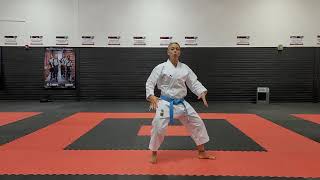
Kokutsu dachi distributes weight 70 percent to the rear leg and 30 percent to the front. Both heels should align along a single line on the floor, with the front foot pointing forward and the rear foot angled to the side. This foot alignment maintains structural integrity and prevents energy leakage.
Rear Foot and Knee Positioning
The rear foot should point outward to the side rather than backward, as backward pointing breaks structural alignment. The rear knee maintains a neutral position without intentional inward or outward pressure. Both elements work together to keep the stance rooted and connected to the ground.
Settling into the Stance Naturally
Rather than forcing tension, the practitioner should allow the body to rest comfortably while maintaining core strength and structural alignment. Excessive muscular tension is inefficient and ineffective. Proper relaxation allows the body to settle naturally into its optimal position.
Integrated Movement: Hip Rotation and Stance Transitions
When transitioning between stances, the entire body moves as one unified unit, with hip rotation driving the leg positioning. This coordinated movement generates rotational force and kime (focus). Maintaining compression and staying grounded throughout prevents rising or losing contact with the floor.
Avoiding Common Execution Errors
A hallmark of inexperience is rising and falling during stance transitions. The practitioner should remain heavy and compressed throughout movement sequences. Controlled, grounded execution with proper breathing builds technical skill more effectively than speed.
Training Application and Progression
Mastery of shuto uke and kokutsu dachi requires consistent, focused practice that emphasizes proper mechanics over speed. These fundamental techniques appear repeatedly in kata and combat applications. Dedicated training with attention to alignment, breathing, and unified body movement builds lasting skill.
SHUTO UKE + KOKUTSU DACHI 🥋⛩ (KARATE TECHNIQUES)
Key Takeaways
- •Introduction to Shuto Uke and Kokutsu Dachi
- •Finding the Center Line
- •Shuto Uke Execution: Two-Part Block
- •Hip Angle and Structural Alignment
Welcome to Ultimate Karate :) My name is Jason Leung, I am a 4th Dan in Shotokan Karate Do! In today's Karate Lesson we are learning "Shuto-Uke" (Knife-hand Block) & "Kokutsu-Dachi" (Back Stance). ~ Chapters: 00:00 - Intro 00:38 - Shuto Uke Basics 02:58 - Kokutsu Dachi Basics 05:00 - Kokutsu Dachi Details 06:05 - Natural Movement 06:54 - Moving in Kokutsu Dachi 07:40 - Shuto Uke in Heian Shodan 07:56 - Shuto Uke in Heian Nidan 08:18 - Shuto Uke in Bassai Dai 08:32 - Shuto Uke in Kanku Dai 09:03 - Shuto Uke in Enpi 09:17 - Shuto Uke in Sochin 09:34 - Best Shuto Uke Drill 11:26 - Outro ~ #KARATE #SHOTOKAN #MARTIALARTS ~ Tags: karate, shotokan, karate techniques, karate lessons, shuto uke, kokutsu dachi, karate back stance, karate blocks, shotokan techniques, ultimate karate, jason leung karate ~ My Film Equipment: Sony A7C: https://amzn.to/3nL3Gb1 16-35 G Master: https://amzn.to/3HQKqRB 20mm G Lens: https://amzn.to/3r5mcNu Sony ECM-B1M Mic: https://amzn.to/3DPAtkG Tiffen 82mm Variable ND Filter: https://amzn.to/3nJT2Bg ~ Disclaimer: By purchasing any product though my affiliate links, I will get a small commission that helps support this channel. Thank you!
Frequently Asked Questions
What does this video teach about shuto chudan uke?
This video covers introduction to shuto uke and kokutsu dachi, finding the center line, shuto uke execution: two-part block. It provides detailed instruction from ULTIMATE KARATE.
How long does it take to learn shuto chudan uke?
The basic mechanics can be understood in a single session, but developing reliable execution requires consistent drilling over weeks of practice. This 10-part breakdown helps structure your training by isolating each phase of the technique.
What are the key details for finishing shuto chudan uke?
A hallmark of inexperience is rising and falling during stance transitions. The practitioner should remain heavy and compressed throughout movement sequences. Controlled, grounded execution with proper breathing builds technical skill more effectively than speed.
Related videos
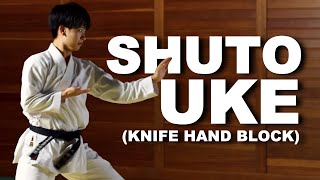
Japanese Karate Sensei's Tips On Shuto Uke (Knife Hand Block)
Karate Dojo waKu
Tip for Shuto Uke. #karate #tutorial #shorts #ytshorts #trending #viral
Kempo by Feike
Shorts075 - Chudan Shuto Uke 👊🏻 #shorts
Honam @ White Belt Dojo
Shuto uke tutorial - 5 Ways to apply shuto uke
The Kata Coach
Shuto Uke
Jennifer Allman