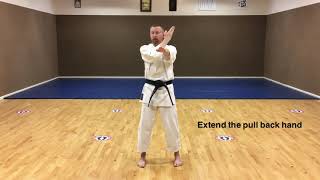
Introduction to Shuto Chudan Uke
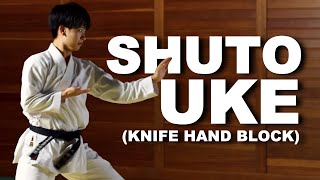
The Shuto Chudan Uke, or middle-level knife-hand block, is a fundamental defensive technique in karate that redirects incoming attacks using the outer edge of the open hand. This technique requires proper body mechanics, hand positioning, and timing to execute effectively. Mastering this block strengthens the wrist, improves rotational power, and enhances overall defensive capability.
Hand Formation and Edge Alignment
The knife hand must be formed by extending all fingers together with the thumb tucked inward to create a sharp, unified striking edge. The blocking surface is the outer edge of the hand from the base of the pinky finger to the wrist. Maintaining a rigid but not tense hand structure ensures maximum effectiveness and injury prevention.
Guard Position and Chamber
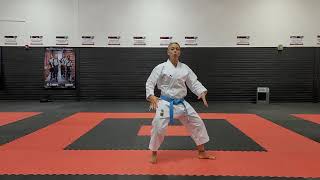
Begin with the blocking hand positioned at the opposite hip in a chamber position, with the palm facing inward and the elbow close to the body. The non-blocking arm simultaneously extends in a contracting motion to generate rotational power through the core. This synchronized movement creates dynamic tension and maximizes blocking force.
Execution and Contact Point
Execute the block by rotating the hips while driving the knife hand across the body at a forty-five-degree angle upward. The block intercepts attacks at middle height while the forearm remains slightly bent to absorb impact effectively. Proper hip rotation distributes force throughout the body rather than isolating power in the arm.
Common Errors and Corrections
Practitioners frequently extend the blocking arm too rigidly or fail to engage proper hip rotation, reducing both power and defense. Keeping the elbow slightly bent and maintaining proper stance stability are critical for executing the technique correctly. Consistent practice with proper form prevents injuries and develops muscle memory for reflexive application.
Application Drills and Practice Methods
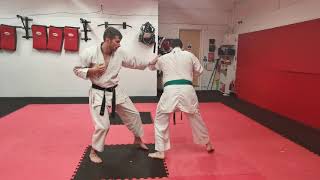
Perform repetition drills slowly and methodically before increasing speed to ensure proper technique establishment. Partner drills with controlled attacks allow practitioners to develop timing and distance awareness in realistic scenarios. Regular practice of this fundamental block builds the defensive foundation necessary for advanced karate techniques.
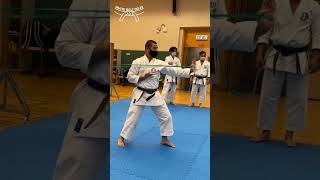
Tip for Shuto Uke. #karate #tutorial #shorts #ytshorts #trending #viral
Key Takeaways
- •Introduction to Shuto Chudan Uke
- •Hand Formation and Edge Alignment
- •Guard Position and Chamber
- •Execution and Contact Point
#KarateTutorial #KarateLessons #KarateTraining #KarateTechniques #KarateDrills #KarateBasics #karatekicks #KaratePunches #karateblocks #KarateForms #karateselfdefense #KarateSparring #karatepractice #karateskills #KarateCombos #KarateMartialArts #karatefitness #KarateBeginner #KarateAdvanced #KarateBlackBelt
Frequently Asked Questions
What does this video teach about shuto chudan uke?
This video covers introduction to shuto chudan uke, hand formation and edge alignment, guard position and chamber. It provides detailed instruction from Kempo by Feike.
How long does it take to learn shuto chudan uke?
The basic mechanics can be understood in a single session, but developing reliable execution requires consistent drilling over weeks of practice. This 6-part breakdown helps structure your training by isolating each phase of the technique.
What are the key details for finishing shuto chudan uke?
Practitioners frequently extend the blocking arm too rigidly or fail to engage proper hip rotation, reducing both power and defense. Keeping the elbow slightly bent and maintaining proper stance stability are critical for executing the technique correctly. Consistent practice with proper form prevents injuries and develops muscle memory for reflexive application.