The Best Punch Block Technique
0
Block·Master Wong
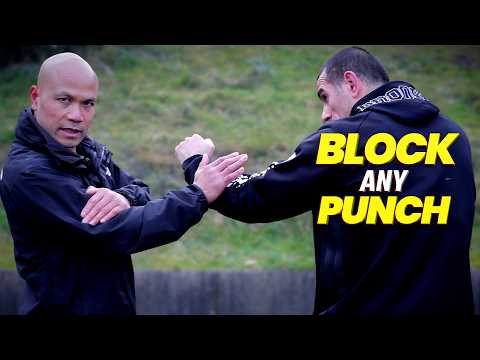
The Best Punch Block Technique Master Wong demonstrates essential "martial arts" principles for effective "self-defense"…
Translation: Block
The Block group encompasses all defensive techniques that use the arms, hands, legs, or body to physically intercept and absorb incoming strikes — the most fundamental form of defence across every striking martial art. [1] Blocking creates a physical barrier between the attacker's strike and the target, absorbing or redirecting impact through the defender's skeletal structure. [1],[2] While considered the most basic defensive skill, advanced blocking systems — boxing's shell defence, Muay Thai's shin check, and karate's formal uke waza — represent sophisticated biomechanical applications. [2],[3] Blocking is the defensive foundation upon which all other defensive skills are built: before a fighter can slip, parry, or counter, they must first be able to block. [3]
Blocking is universal across all martial arts and predates formalised combat — the instinct to raise the arms for protection is a natural reflex that martial arts refined into technique. [1] Japanese and Okinawan karate formalised blocking as uke waza, with specific blocks for each attack angle. [1],[2] Western boxing developed its guard system with padded gloves under Marquess of Queensberry Rules (1867). [2],[3] Muay Thai's shin check evolved over centuries of Thai boxing, reflecting round kicks as primary weapons. [3]
Blocking is the most reliable and accessible defence — requiring less timing than evasion and less precision than parrying, effective even under fatigue. [1] The Muay Thai shin check is so effective it was universally adopted into MMA; fighters who fail to check kicks suffer leg damage and TKO losses. [2] Boxing's shell defence, perfected by Floyd Mayweather Jr. (50-0 record), demonstrates blocking elevated to art form. [3]
Blocking traditions developed independently — karate's uke waza from Okinawan te and Chinese arts, boxing's guard from bare-knuckle prizefighting, Muay Thai's checking from Thai tradition. [1] Each system evolved for its specific striking threats. [1],[2] In modern MMA, blocking traditions merged for multi-weapon defence. [2]
No images yet for this technique.
Sign in to suggest an image.
The Best Punch Block Technique Master Wong demonstrates essential "martial arts" principles for effective "self-defense"…
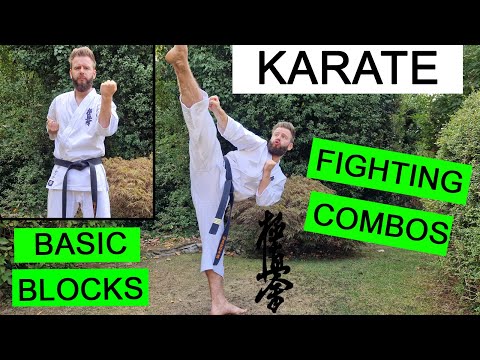
Karate - Learn how to karate block and implement into fighting combos. Karate block tutorial - uchi uke and soto uke Lea…
No instructional courses yet for this technique.
Sign in to suggest a course.
Risk of injury to the person this technique is applied to
Blocking is one of the safest defensive techniques; primary risks are accumulated damage to blocking limbs (forearm bruising, shin micro-fractures) and impact energy passing through
Skill level needed to execute this technique reliably
Whether this technique is allowed under major competition rule sets
Championship Fighting (Jack Dempsey, 1950)
Description sources — [1] Championship Fighting (Dempsey, 1950) [2] Muay Thai: The Art of Eight Limbs (Kraitus, 1988) [3] Dynamic Karate (Nakayama, 1966)
History sources — [1] Dynamic Karate (Nakayama, 1966) [2] Marquess of Queensberry Rules history [3] Thai boxing tradition
Effectiveness sources — [1] Championship Fighting (Dempsey, 1950) [2] UFC fight analysis [3] Floyd Mayweather record
Description sources — [1] Championship Fighting (Dempsey, 1950) [2] Muay Thai: The Art of Eight Limbs (Kraitus, 1988) [3] Dynamic Karate (Nakayama, 1966)
History sources — [1] Dynamic Karate (Nakayama, 1966) [2] Marquess of Queensberry Rules history [3] Thai boxing tradition
Effectiveness sources — [1] Championship Fighting (Dempsey, 1950) [2] UFC fight analysis [3] Floyd Mayweather record
forearm/shin conditioning, reflexes, structural alignment
long forearms (more blocking surface), strong shoulders (holding guard), conditioned shins
deltoids (holding guard up), forearm flexors, tibialis anterior (raising shin for checks), core (absorbing through-block impact)
Every move, in any martial art, shares a few universal traits. Mix and match below to pinpoint the right tool — or compare equivalents across styles.
The Boxing Defence family covers the blocking and guard techniques specific to Western boxing — the most refined system of hand-based defence in combat sports, developed through over 150 years of professional prizefighting. [1] Boxing defence includes the high guard (both hands at cheek level protecting the head), the shell defence (Philly shell/shoulder roll where the lead shoulder protects the chin), the cross-arm guard, and the catch-and-block technique where punches are absorbed on the gloves or forearms. [1,2] Boxing's defensive systems are designed to minimise damage while keeping the fighter in position to immediately counter-attack — the best boxing defence is not passive avoidance but active positioning that sets up offensive responses. [2,3] Floyd Mayweather Jr.'s shoulder roll defence and Canelo Álvarez's upper body movement represent the pinnacle of modern boxing defensive evolution. [3]
The Karate Block family covers traditional karate blocking techniques (uke waza, 受け技) — the formalised defensive system of Japanese and Okinawan karate that uses powerful, decisive arm movements to intercept and deflect incoming strikes. [1] Karate recognises five fundamental blocks: age uke (rising block against head attacks), gedan barai (downward sweep against low attacks), soto uke (outside-to-inside block against midsection attacks), uchi uke (inside-to-outside block), and shuto uke (knife-hand block). [1,2] Unlike boxing's passive absorption-style blocking, karate blocks are executed with full power and commitment — the blocking arm meets the attack with force, often damaging the attacker's striking limb (the concept of 'uke' as both receiving and counter-attacking simultaneously). [2,3] Karate blocks are practiced extensively in kata (formal patterns) and developed through thousands of repetitions until they become reflexive responses to attacks from any angle. [3]
The Krav Maga Defence family within the Block group covers Krav Maga's blocking and deflection system for defending against unarmed strikes — designed for real-world self-defence where the defender may have no training, no warning, and no protective equipment. [1] Krav Maga defence emphasises two core principles: the 360-degree defence (outside defence against circular attacks from any angle) and the inside defence (deflecting straight punches inward). [1,2] Unlike sport-fighting blocking that assumes a squared-off opponent at known range, Krav Maga defences are designed for ambush attacks, surprise punches, and chaotic street violence — they use gross motor movements that function even under the adrenaline dump and fine-motor-skill degradation that occurs during a real attack. [2,3] Every Krav Maga defence includes an immediate simultaneous counter-attack ('bursting') — the system never separates defence from offence. [3]
The Kung Fu Defence family covers defensive blocking, deflecting, and intercepting techniques from Chinese martial arts (kung fu/wushu) systems — the most diverse collection of defensive hand techniques in any martial arts tradition. [1] Chinese martial arts developed fundamentally different defensive approaches from Western boxing: rather than absorbing strikes on a passive guard, many Chinese systems emphasise redirecting attacks using minimal force (four ounces deflects a thousand pounds — the Tai Chi principle) or simultaneously blocking and striking (pak sao/simultaneous block-strike in Wing Chun). [1,2] The major Chinese defensive systems include Wing Chun's centreline trapping (pak sao, bong sao, tan sao), Tai Chi's yielding redirections, Shaolin's hard external blocks, and Bagua's evasive circle-walking. [2,3] These systems reflect the Chinese martial philosophy of using the opponent's force against them rather than meeting force with force. [3]
Blocking appears in 7,254 passages across our corpus — the most referenced defensive action. In karate, the four fundamental blocks (age-uke, soto-uke, uchi-uke, gedan-barai) are taught before any offensive technique. In boxing, blocks use the gloves and arms to catch punches. (200+ books; Nakayama, Dynamic Karate)
Master Wong teaches starting with one hand out, then dropping your palm to meet the incoming attack. The key is practicing the hand drop and palm position to build the foundation for punch blocks.
Master Wong emphasizes that blocking can be done multiple ways—you can drop your hand, pull your hand, or use various arm positions depending on the angle of attack. The movement can be adapted based on how the opponent comes in, so you have flexibility in your blocking approach.
MP Elite Fitness stresses that getting the twist on your arm as you block is really important because it helps deflect the attack away from your body. This rotation amplifies the block's effectiveness against straight techniques like punches or kicks coming down the middle.
The Block group encompasses all defensive techniques that use the arms, hands, legs, or body to physically intercept and absorb incoming strikes — the most fundamental form of defence across every striking martial art. Blocking creates a physical barrier between the attacker's strike and the target, absorbing or redirecting impact through the defender's skeletal structure.
Blocking is universal across all martial arts and predates formalised combat — the instinct to raise the arms for protection is a natural reflex that martial arts refined into technique. Japanese and Okinawan karate formalised blocking as uke waza, with specific blocks for each attack angle.
Unified MMA: legal — Legal defensive technique; WBC/Boxing: legal — Legal — blocking and evasion are core boxing skills; WKF: legal — Legal — blocking is a fundamental karate skill; Kyokushin: legal — Legal; WT: legal — Legal; WAKO: legal — Legal; K: legal — 1/GLORY — Legal; IFMA: legal — Legal
Danger rating 2/10. Low — blocking is one of the safest defensive techniques; primary risks are accumulated damage to blocking limbs (forearm bruising, shin micro-fractures) and impact energy passing through
The standard setup chain: Maintain Guard → Recognise Attack → Select Block → Execute Block → Counter → Reset Guard.
Standard counters include: Feinting — faking to draw the block, then attacking the opening / Level Change — attacking a different level than the block protects / Angle Change — attacking from angles bypassing the blocking position / Body Attack — targeting the body to lower the guard, then attacking the head.
Common variants: High guard (boxing) (hands protecting temples and chin, elbows tight; default …); Shell defence (Philly shell) (lead shoulder raised to protect chin, rear hand at cheek;…); Shin check (Muay Thai) (raising the shin to intercept round kicks; standard Thai …); Karate formal blocks (uke waza) (age uke (rising), gedan barai (downward sweep), soto uke …); Cross-arm guard (forearms crossed in front of face; emergency block agains…); Shoulder block (shoulder deflects jabs and straight punches; integral to …).
Blocking is the primary defensive skill in all striking competitions. In boxing, high guard and shell defence are used in every professional round.
Top errors to watch for: Reaching for the block — blocks should stay close to the body; extended arms create gaps / Dropping the guard after blocking — each block returns immediately to guard; dropping exposes targets / Only blocking high — neglecting body and leg defence; a head-only guard gets broken down / Closing eyes during the block — prevents seeing counter opportunities and follow-up strikes.
The Block is also known as Burokku, Block, Blocking Defence, Defensive Block.