Introduction to Shuto Uke
Shuto uke, commonly known as the knife hand block, is a versatile defensive technique performed across multiple stances in karate. This instructional guide demonstrates the three primary stances used in traditional dojos, though variations may exist depending on martial arts style and lineage.
Hand Formation and Structure
The shuto uke hand is formed by drawing fingers tightly together with the thumb positioned either tucked into the palm or resting on the side with a slight knuckle bend. The wrist, hand, and elbow must maintain perfect alignment to create a strong, straight line from shoulder to fingertips, ensuring proper force distribution during blocking.
Blocking Surface and Chamber Position
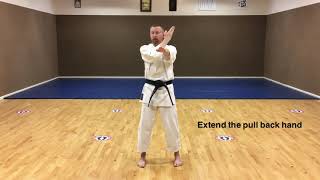
The blocking contact occurs along the outer edge of the hand and forearm, depending on the target and application. The chamber position places the blocking hand flat against the diaphragm—neither cupped nor overextended—while the opposite hand remains ready to protect the torso.
Execution in Kokutsu Dachi (Back Stance)
In back stance, the blocking arm extends from the body with the wrist, elbow, and shoulder forming a 90-degree angle. The technique employs a controlled downward angle similar to a knife slice, with the chamber hand descending to protect the lower abdomen as the blocking hand sweeps across the centerline.
Application in Neko Ashi Dachi (Cat Stance)
When performing shuto uke in cat stance, the fold and blocking motion remain consistent with back stance execution. However, the forward body position requires the blocking hand to finish with an upright wrist bend, while the chamber hand maintains its position on the diaphragm.
Variation in Zenkutsu Dachi (Front Stance)
Front stance shuto uke mirrors the cat stance mechanics, with the blocking hand extended straight and featuring the same wrist bend for proper hand alignment. The chamber hand remains anchored to the diaphragm across all three stances, providing consistent core protection and structural foundation.
Shuto Uke
Key Takeaways
- •Introduction to Shuto Uke
- •Hand Formation and Structure
- •Blocking Surface and Chamber Position
- •Execution in Kokutsu Dachi (Back Stance)
This is a video for Shuto Uke or Knife Hand block The primary purpose of this video is for my students, however if you are not one, hopefully it can help you too
Frequently Asked Questions
What does this video teach about shuto chudan uke?
This video covers introduction to shuto uke, hand formation and structure, blocking surface and chamber position. It provides detailed instruction from Jennifer Allman.
How long does it take to learn shuto chudan uke?
The basic mechanics can be understood in a single session, but developing reliable execution requires consistent drilling over weeks of practice. This 6-part breakdown helps structure your training by isolating each phase of the technique.
What are the key details for finishing shuto chudan uke?
When performing shuto uke in cat stance, the fold and blocking motion remain consistent with back stance execution. However, the forward body position requires the blocking hand to finish with an upright wrist bend, while the chamber hand maintains its position on the diaphragm.
Related videos
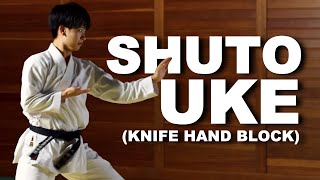
Japanese Karate Sensei's Tips On Shuto Uke (Knife Hand Block)
Karate Dojo waKu
Tip for Shuto Uke. #karate #tutorial #shorts #ytshorts #trending #viral
Kempo by Feike
Shorts075 - Chudan Shuto Uke 👊🏻 #shorts
Honam @ White Belt Dojo
Shuto uke tutorial - 5 Ways to apply shuto uke
The Kata Coach
Beginning Karate: Knife Hand Block (Shuto Uke)
Seamus O'Dowd