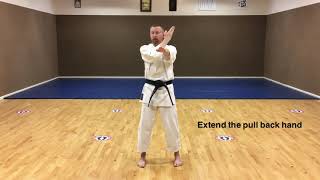
Introduction to Shuto Uke
Shuto uke (knife hand block) is often the first challenging block technique in karate piyons and heiyons, presenting difficulties that many students encounter during their training. Unlike the more intuitive age uke (rising block) or ge dang (low block), the knife hand block requires specific mechanical understanding to execute effectively.
Instructor Background
Yusuke is a Japanese karate coach based in Tokyo with over 200 domestic and international students. This instruction is drawn from his online private lessons and focuses on building power and efficiency in shuto uke through systematic, step-by-step progression.
Elbow Positioning Fundamentals
Proper elbow placement is critical—the elbow should remain close to the body rather than extended outward. This positioning mirrors natural weight distribution; when holding something heavy, the elbow naturally stays near the body to reduce strain and maximize stability.
The Isometric Squeeze Principle
Practitioners should imagine squeezing a stability ball between the elbow and ribcage to activate the triceps and maintain consistent arm position. This mental cue provides active support, preventing the elbow from drifting away from the body throughout all blocking sequences and other techniques.
Two-Phase Execution Method
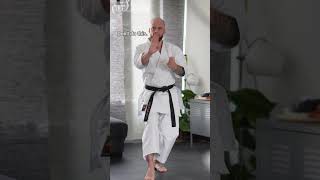
Shuto uke consists of two distinct phases: first, the elbow slides to its designated position; second, the forearm flicks outward. Many practitioners skip the initial elbow drive, beginning only with the forearm extension, which significantly reduces power generation.
Sequential Momentum Building
The elbow movement must precede and drive the forearm flick, similar to striking downward and then extending outward. This sequential timing builds momentum naturally, allowing practitioners to achieve greater power with less muscular effort.
Common Execution Error
A frequent mistake is initiating the forearm flick simultaneously with the elbow drive, resulting in premature hand extension. The elbow should fully establish its position first, creating a foundation from which the forearm accelerates.
Practice Application and Resources
Students should incorporate these mechanical principles into their regular practice, focusing on the elbow-first, forearm-second sequence. Additional instruction is available through online group lessons, private lessons, and comprehensive video courses covering fundamental karate principles.
Japanese Karate Sensei's Tips On Shuto Uke (Knife Hand Block)
Key Takeaways
- •Introduction to Shuto Uke
- •Instructor Background
- •Elbow Positioning Fundamentals
- •The Isometric Squeeze Principle
🎓More Karate Secrets On My Video Course 🎓 https://courses.thekarateuniversity.org/courses/hidden-karate-principles-the-karate-university 🥋Online Private Lesson🥋 https://karateintokyo.com/online-training/ 🥋FREE TRIAL|Online Group Lesson🥋 https://karateintokyo.com/ ✉️Email me at ✉️ [email protected] *The information/opinion in this video is Karate Dojo waKu's own interpretation and does not represent any other organizations. 📕My Background📕 Name: Yusuke Nagano Birthplace: Kawasaki, Japan Belt Grade: 2 Dan Style of Coaching: The Fusion of Simple Concept and Logical Breakdown -------------------------------------------------------------- What I covered in this video: karate, shotokan, karate shotokan, shotokan karate, karate sensei, karate tutorial, karate how to, karate dojo waku, yusuke nagano, sensei seth, karate nerd, jesse karate, jesse enkamp, karate japan, Japanese karate, karate kid, kumite #karate, #shotokan, #karateshotokan, #shotokankarate, #karatesensei, #karatetutorial, #karatehowto, #karatedojowaku #yusukenagano #senseiseth #karatenerd #jessekarate #jesseenkamp #karatejapan #japanesekarate #kumite #karatekid #kata #karatenearme #karatebelts #shorts All copyrights claims under Associated Press ID - INT25096
Frequently Asked Questions
What does this video teach about shuto chudan uke?
This video covers introduction to shuto uke, instructor background, elbow positioning fundamentals. It provides detailed instruction from Karate Dojo waKu.
How long does it take to learn shuto chudan uke?
The basic mechanics can be understood in a single session, but developing reliable execution requires consistent drilling over weeks of practice. This 8-part breakdown helps structure your training by isolating each phase of the technique.
What are the key details for finishing shuto chudan uke?
A frequent mistake is initiating the forearm flick simultaneously with the elbow drive, resulting in premature hand extension. The elbow should fully establish its position first, creating a foundation from which the forearm accelerates.