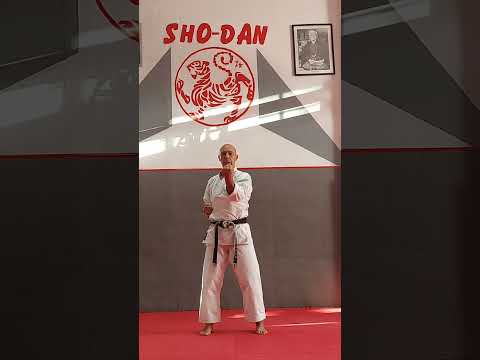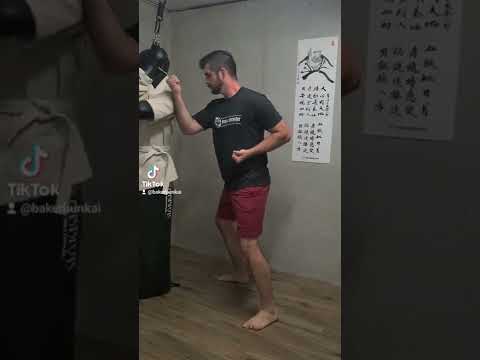
Chudan Soto Uke Progression
0
Seiken Chudan Soto Uke·Bryce Baker
Translation: Seiken (正拳) = fore-fist, Chudan (中段) = middle level, Soto (外) = outside, Uke (受け) = block/receive — an outside-to-inside forearm block deflecting attacks to the midsection by sweeping the forearm inward across the body
Seiken Chudan Soto Uke (commonly abbreviated as Soto Uke) is the fundamental outside forearm block in traditional karate, deflecting straight punches and strikes directed at the midsection by sweeping the forearm from the outside of the body inward across the centreline, using the outer forearm (ulnar bone surface) to redirect the incoming attack to the inside. [1],[2] The block is one of the four foundational defensive techniques in karate (alongside Age Uke, Uchi Uke, and Gedan Barai), and is considered the primary defence against straight punches to the chest and solar plexus — the most common attacks in both competition and self-defence. [1],[2] The mechanical execution starts with the blocking arm raised to the outside of the body (fist near the ear on the blocking side), then the forearm sweeps inward in a horizontal or slightly diagonal arc, with the outer forearm (ulna) contacting the incoming attack's forearm or wrist and deflecting it across the defender's body to the inside. [1],[2] Masutatsu Oyama's principle of 'destructive blocking' applies strongly to the Soto Uke: the forearm sweeps with enough force to bruise or numb the attacker's arm, creating a 'dead arm' effect that reduces the attacker's ability to punch with that hand. [1] In Kyokushin competition, the Soto Uke is used primarily to deflect body punches (the main hand attack in Kyokushin's no-face-punch ruleset) and to parry incoming kicks. [1] The block's inward sweeping direction creates an immediate counter-punching opportunity: as the block sweeps the attack to the inside, the opposite hand (which retracted to the hip as hikite) is already loaded for a reverse punch (gyaku-zuki) to the now-exposed target. [1],[2] This block-counter integration is one of karate's most fundamental tactical principles: the defence and the counter-attack are designed as a single integrated movement, not two separate actions. [1],[2]
The Soto Uke is one of the four foundational blocks in karate, present in the earliest Okinawan kata and documented since the beginning of karate's written history. [2] Gichin Funakoshi included the Soto Uke in Karate-Do Kyohan (1935) as one of the basic blocking techniques that every student must master before progressing to advanced training. [2] The block appears in virtually every karate kata from the most basic (Taikyoku/Heian series) to the most advanced (Unsu, Suparinpei), reflecting its universal importance across all levels of karate practice. [2] Masutatsu Oyama's Kyokushin refinement emphasised the 'destructive blocking' aspect: in a full-contact fighting environment, a block that merely deflects is insufficient — it must also PUNISH the attacker to discourage repeated attacks. [1] This philosophy has been adopted across multiple contact karate styles (Ashihara, Enshin, Seidokaikan) that descended from Kyokushin. [1]
The Soto Uke is one of the most frequently used defensive techniques in karate competition across all styles. [1],[2] In Kyokushin full-contact competition, it is the primary defence against body punches — the most common attacks under Kyokushin rules. [1] The block's effectiveness comes from its simplicity and its integration with the counter-attack: the sweeping deflection and the hikite-loaded counter-punch form a single tactical unit that defends and attacks in one movement cycle. [1],[2] The 'destructive blocking' principle adds a cumulative deterrent effect: after receiving several hard Soto Uke blocks, the attacker's punching arm becomes bruised and less effective, gradually reducing their offensive capability. [1]
The Soto Uke is the primary body-punch defence in Kyokushin full-contact competition. In WKF karate, it is used to deflect midsection attacks in kumite. The block has been used in karate competition for over a century across all styles and is one of the most practised defensive techniques in martial arts history.
No images yet for this technique.
Sign in to suggest an image.
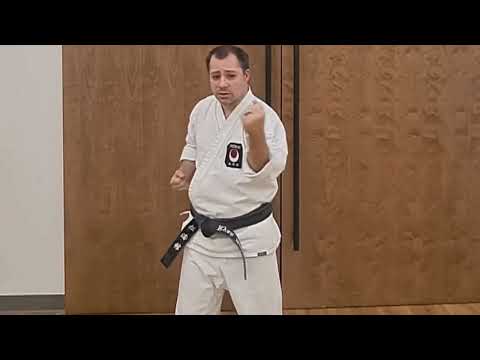
In this video, we break down the proper technique for Soto Ude Uke (Outside Forearm Block)—a fundamental block in Shotok…
Soto Uke ist die japanische Bezeichnung für diesen Block im Kyokushinkai Karate.
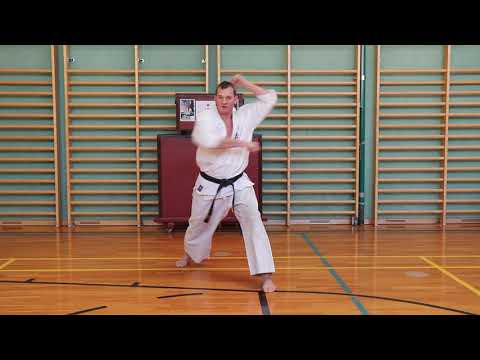
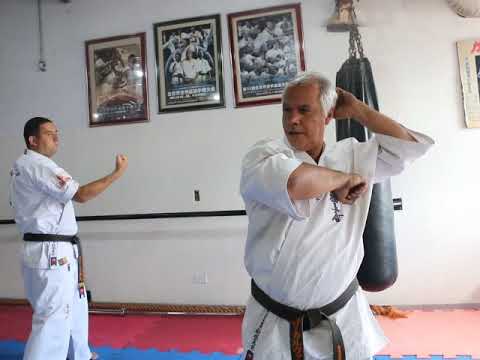
Seiken Chudan Soto Uke - Kyokushin Orange Belt 9th kyu block In this video you can learn how to do Seiken Chudan Soto U…
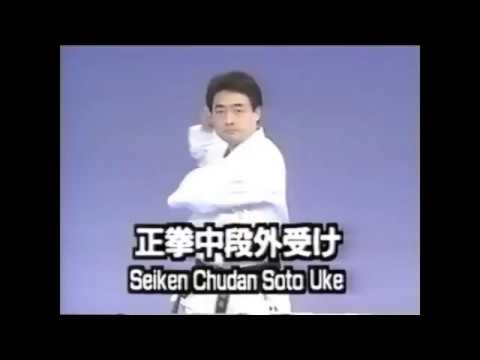
Canal Oficial da maior organização de Karate de Contato do Brasil.
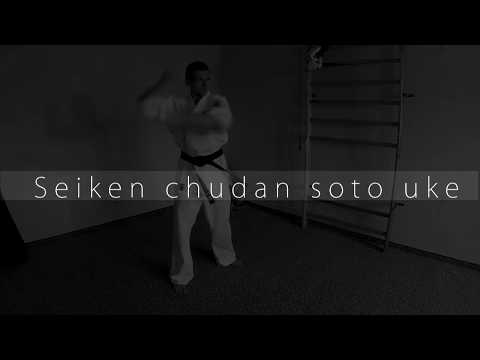
For more information about what we do: Website: www.zen-shin.co.uk Instagram: @zenshinmartialarts Facebook: Zen-Shin Mar…
For new students to karate: How to learn to do a basic outside block (soto-uke).
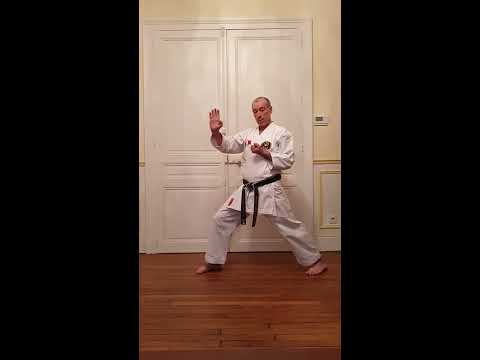
Les kihons pour débutants, petits et grands, peuvent être une phase préparatoire au combat. C'est le cas ici, avec une t…
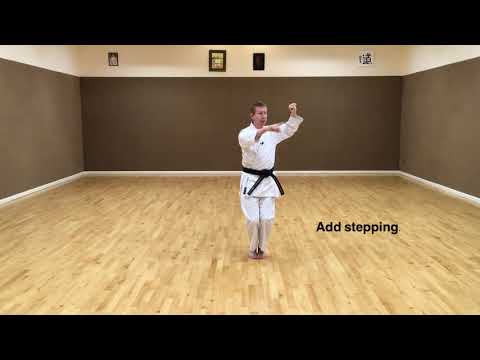
Seiken chudan soto uke is an outside-to-inside defensive block primarily used to protect against chest-level punches. Instructors across multiple karate traditions agree on fundamental mechanics: the block begins with both hands positioned outside the body (one hand drawn back, the other placed forward or across the torso), then executes a rotating motion that brings the blocking forearm across the centerline in a single fluid arc. Kyokushin Academy emphasizes the 90-degree angle between forearm and upper arm, with the blocking fist directed inward at shoulder height, and stresses simultaneous fist rotation at the conclusion. Zen-Shin Martial Arts characterizes it as one of the most challenging white-belt techniques, requiring the blocking hand to travel fully across the body rather than stopping at the center, and emphasizing extended preparation with hands drawn far back. Seamus O'Dowd provides a progression-based teaching approach, breaking the technique into bilateral, alternating, and stepping variations, and crucially notes that soto uke's blocking power diminishes beyond the centerline—requiring hip rotation (with the blocking-side hip driven back initially) to effectively deflect attacks past the body rather than to stop them directly. All instructors underscore hip engagement as essential to generating power and effectiveness in the block.
Synthesized from 4 instructors
No instructional courses yet for this technique.
Sign in to suggest a course.
Risk of injury to the person this technique is applied to
Primarily defensive, but Oyama's destructive blocking principle means the forearm sweep should cause bruising and nerve compression on the attacker's arm. Repeated Soto Uke blocks to the same arm can create a 'dead arm' effect (temporary radial or ulnar nerve compression) that reduces the attacker's punching ability. [1]
Skill level needed to execute this technique reliably
Whether this technique is allowed under major competition rule sets
This Is Karate (Oyama, 1965)
description: [1] Oyama 1965, [2] Funakoshi 1973
Official karate technique names (和語/漢語)
Established Japanese martial arts naming convention — native Japanese term (和語/漢語)
description: [1] Oyama 1965, [2] Funakoshi 1973
Minimal physical requirements — the Soto Uke is accessible to all body types and fitness levels
Forearm conditioning (ulnar bone density) develops over time through blocking drills
Shoulder mobility for the inward sweeping motion
Basic coordination for the simultaneous block-hikite action
One of the first techniques learned by every karate student
Chudan soto uke (middle-level outside block) appears in 31 passages under 'chudan uke.' The forearm sweeps from outside to inside, deflecting middle-level attacks (punches, kicks to the body). One of the four fundamental karate blocks. (31 passages; Nakayama, Dynamic Karate)
Start with your palm facing outward, pointing toward your ear with your fist open, then close your fist into the blocking position.
When blocking dynamically with seiken chudan soto uke, you must use your hips—move your opposite hip back first, then drive your hips and shoulders forward to generate power in the block.
Turn your body and hips, not just your arm; the body rotation is essential to the proper execution of the block.
Seiken Chudan Soto Uke (commonly abbreviated as Soto Uke) is the fundamental outside forearm block in traditional karate, deflecting straight punches and strikes directed at the midsection by sweeping the forearm from the outside of the body inward across the centreline, using the outer forearm (ulnar bone surface) to redirect the incoming attack to the inside. The block is one of the four foundational defensive techniques in karate (alongside Age Uke, Uchi Uke, and Gedan Barai), and is considered the primary defence against straight punches to the chest and solar plexus — the most common attacks in both competition and self-defence.
The Soto Uke is one of the four foundational blocks in karate, present in the earliest Okinawan kata and documented since the beginning of karate's written history. Gichin Funakoshi included the Soto Uke in Karate-Do Kyohan (1935) as one of the basic blocking techniques that every student must master before progressing to advanced training.
Unified MMA: legal — Legal defensive technique; WBC/Boxing: legal — Legal — blocking and evasion are core boxing skills; WKF: legal — Legal — blocking is a fundamental karate skill; Kyokushin: legal — Legal; WT: legal — Legal; WAKO: legal — Legal; K: legal — 1/GLORY — Legal; IFMA: legal — Legal
Danger rating 3/10. Primarily defensive, but Oyama's destructive blocking principle means the forearm sweep should cause bruising and nerve compression on the attacker's arm. Repeated Soto Uke blocks to the same arm can create a 'dead arm' effect (temporary radial or ulnar nerve compression) that reduces the attacker's punching ability.
The standard setup chain: Attacker throws Seiken Chudan Tsuki (straight punch to the midsection) → Defender sweeps the forearm inward from the ear position (Soto Uke) → Outer forearm contacts the attacker's forearm between wrist and elbow → Deflection redirects the punch inward across the defender's body → SIMULTANEOUSLY: opposite hand retracts to hip (hikite), loading the counter-punch → IMMEDIATELY: Gyaku-Zuki Chudan (reverse punch to the attacker's now-exposed solar plexus) → Block and counter complete as a single integrated action.
Standard counters include: Feint to the body, attack high — feinting a body punch to draw the Soto Uke, then attacking the now-exposed head / Hook punch — the Soto Uke defends against straight-line attacks; a hooking attack arcs around the outside of the block / Double attack — attacking simultaneously with both hands overwhelms the single-arm block / Low kick — the Soto Uke defends the midsection; a low kick to the legs is unaffected.
Common variants: Standard Soto Uke (the basic outside-to-inside sweep from ear level); Quick Soto Uke (parry) (a lighter, faster version for competition kumite, using m…); Reinforced Soto Uke (the non-blocking hand supports the blocking forearm for e…); Open-hand Soto Uke (using the open palm rather than closed fist for a softer …); Stepping Soto Uke (executing the block while stepping forward into the attac…); Retreating Soto Uke (blocking while stepping backward for additional safety di…); Double Soto Uke (blocking with both arms simultaneously against double pun…).
The Soto Uke is the primary body-punch defence in Kyokushin full-contact competition. In WKF karate, it is used to deflect midsection attacks in kumite.
Top errors to watch for: Starting the block too low — the forearm must start near the ear for maximum arc length and force. Starting from a lo… / Blocking with the inner forearm (flexor surface) — the OUTER forearm (ulnar bone surface) must be the contact point; … / Over-extending the arm — straightening the elbow during the block reduces structural rigidity; maintain the 90° angle / Blocking too late — the forearm must be in position BEFORE the punch arrives; blocking at the moment of contact means….
The Seiken Chudan Soto Uke is also known as Seiken Chudan Soto Uke, Middle Level Outside Block, Outside Forearm Block, Soto Uke, Outside-to-Inside Block.