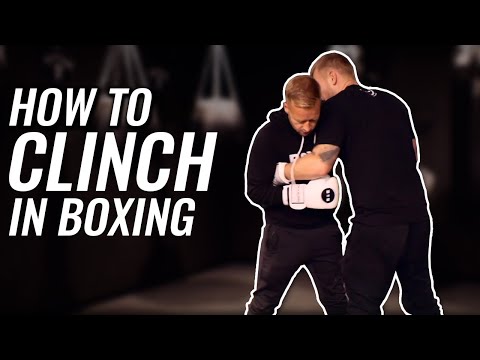
How to Clinch in boxing.. Is this correct?
0
Grip Fighting Clinch·Tony Jeffries
My name is Tony Jeffries, Olympic Bronze medallist now co-owner of Box 'N Burn, 2 boxing fitness gyms in Los Angeles, as…
Translation: grip fighting
The Grip Fighting Clinch group encompasses clinch positions defined by specific hand and clothing grip configurations, particularly those used in gi-based martial arts where gripping the uniform is a central tactical element. [1] Grip fighting (kumi-kata in judo) is the art of establishing dominant grips while denying the opponent's grip attempts, and it determines the offensive and defensive options available to both fighters. [1],[2] This group includes collar-and-sleeve grips, belt grips, cross-grips, and pistol grips, each creating distinct control dynamics and attack possibilities. [2],[3] In judo and BJJ competition, the grip fighting exchange is often the decisive phase that determines which fighter will be able to execute their preferred techniques. [3]
Grip fighting has been a core element of judo since Jigoro Kano codified the art in 1882, with kumi-kata evolving into one of the most sophisticated tactical subsystems in any martial art. [1] The International Judo Federation's (IJF) rule changes over the decades — including restrictions on grip-breaking, defensive gripping, and cross-gripping — have continuously shaped the evolution of grip fighting strategy. [2] Brazilian Jiu-Jitsu further developed gi grip fighting with the introduction of spider guard, lasso guard, and other guard positions dependent on specific sleeve and collar grips. [2],[3]
Modern judo competition is heavily influenced by grip fighting, with IJF rules penalising passive grip breaking since 2010. [1]
No images yet for this technique.
Sign in to suggest an image.
My name is Tony Jeffries, Olympic Bronze medallist now co-owner of Box 'N Burn, 2 boxing fitness gyms in Los Angeles, as…
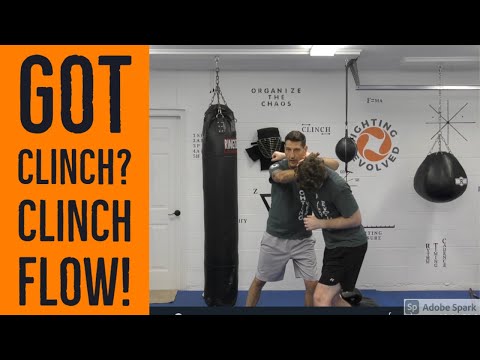
This is an excerpt from a recent class. We were working on clinch concepts and sparring. This is an example of a flow th…
No instructional courses yet for this technique.
Sign in to suggest a course.
Risk of injury to the person this technique is applied to
Grip fighting is primarily positional; finger/wrist strain risk
Skill level needed to execute this technique reliably
Whether this technique is allowed under major competition rule sets
Kodokan Judo (Jigoro Kano, 1986)
Alias sources — [1] Kodokan Judo (Kano, 1986) [2] Kodokan Judo (Kano, 1986) [3] Kodokan Judo (Kano, 1986) [4] Kodokan Judo (Kano, 1986)
Effectiveness sources — [1] Kodokan Judo (Kano, 1986) [2] Wrestling Physical Conditioning Encyclopedia (Petrov, 1977)
Established Japanese martial arts naming convention — native Japanese term (和語/漢語)
Alias sources — [1] Kodokan Judo (Kano, 1986) [2] Kodokan Judo (Kano, 1986) [3] Kodokan Judo (Kano, 1986) [4] Kodokan Judo (Kano, 1986)
Effectiveness sources — [1] Kodokan Judo (Kano, 1986) [2] Wrestling Physical Conditioning Encyclopedia (Petrov, 1977)
grip strength, upper body endurance, balance under pressure
strong arms and shoulders, stable base
forearms, deltoids, core, hip muscles
Every move, in any martial art, shares a few universal traits. Mix and match below to pinpoint the right tool — or compare equivalents across styles.
The Belt Grip family covers clinch positions where the attacker grips the opponent's belt (obi) as a primary control point, providing direct access to the opponent's hip line through the sturdy belt material. [1] Belt grips are fundamental in judo, sambo, and Georgian wrestling, where the belt serves as a reliable anchor point that cannot be easily stripped. [1,2] Front belt grips facilitate lifting and forward throws, while rear belt grips provide the dominant back control needed for suplex and mat return techniques. [2,3]
The Collar-Sleeve Grip family covers the classical judo and BJJ gripping configuration where one hand grips the opponent's collar (lapel) and the other grips the sleeve, establishing the standard bilateral control used for most gi-based throwing and sweeping techniques. [1] The collar grip controls the opponent's posture and head position, while the sleeve grip controls the arm and creates rotational opportunities — together they form the most versatile grip configuration in gi grappling. [1,2] The relative positioning of these grips (same-side or opposite-side) creates fundamentally different tactical dynamics known in judo as ai-yotsu (same-side) and kenka-yotsu (opposite-side). [2,3]
The Cross-Grip family covers clinch gripping configurations where the attacker reaches across the opponent's body to grip the far collar or far sleeve, creating a diagonal or cross-body control that generates strong rotational forces. [1] Cross-grips are powerful because they create torque across the opponent's body — a cross-collar grip pulls the opponent's far shoulder forward, while a cross-sleeve grip controls the far arm at a disadvantageous angle for the defender. [1,2] Cross-gripping is a recognised offensive strategy in judo, though international rules have periodically restricted defensive or stalling cross-grips. [2,3]
The Pistol Grip family covers the specific gripping method where the attacker grips the opponent's sleeve or gi material by inserting the four fingers inside the sleeve end and closing the fist, creating a grip that resembles holding a pistol. [1] The pistol grip is one of the strongest gi grips because the finger-inside configuration allows the attacker to maintain hold even under significant pulling force, and the grip provides precise directional control of the opponent's arm. [1,2] Pistol grips are fundamental in both judo and BJJ, used on sleeves and pants to control the opponent's limbs with maximum security. [2,3]
Grip fighting (kumikata in judo) — the battle for dominant grips — is considered one of the most important tactical skills in gi grappling. Judo matches are often won or lost in the grip fight before any throw is attempted. IJF enforces a 5-second grip-breaking rule. (Kano, Kodokan Judo; IJF Sport and Organisation Rules 2025; judo coaching manuals)
Fighting Evolved emphasizes using a parry and scoop motion to reach in while staying covered, then securing the tie clinch on top of the head to control your opponent's posture and face. Tony Jeffries stresses getting your arms on the inside rather than the outside, as this allows you to work and prevent your opponent from landing effective strikes around the back.
Fighting Evolved emphasizes that exiting the clinch with a strike is critical—most martial artists train how to enter the clinch but neglect the exit. You should practice slow drills to develop the timing and technique to strike as you disengage.
If your opponent reaches over top to break your clinch control, Fighting Evolved recommends transitioning your position to gain a better striking angle, then throwing a knee while they are repositioning. If they lock down an over-hook and press your face, you can swim in and work toward double unders.
Fighting Evolved notes that clinch is a crucial range that could be a martial art unto itself. For grapplers, proficiency in the clinch allows you to control striking opponents before taking them down; for strikers, it helps you nullify an opponent's offense and shut them down before striking or transitioning to your advantage.
The Grip Fighting Clinch group encompasses clinch positions defined by specific hand and clothing grip configurations, particularly those used in gi-based martial arts where gripping the uniform is a central tactical element. Grip fighting (kumi-kata in judo) is the art of establishing dominant grips while denying the opponent's grip attempts, and it determines the offensive and defensive options available to both fighters.
Grip fighting has been a core element of judo since Jigoro Kano codified the art in 1882, with kumi-kata evolving into one of the most sophisticated tactical subsystems in any martial art. The International Judo Federation's (IJF) rule changes over the decades — including restrictions on grip-breaking, defensive gripping, and cross-gripping — have continuously shaped the evolution of grip fighting strategy.
Unified MMA: legal — Legal — clinching is integral to MMA; IJF: legal — Legal — kumi-kata (grip fighting) is fundamental to judo; IBJJF: legal — Legal — standing grip fighting and clinch work permitted; IFMA: legal — Legal — the clinch is a core element of Muay Thai, clinch dominance is highly…; WBC/Boxing: restricted — Holding is technically a foul — referee breaks clinch, excessive holding resu…; K: restricted — 1/GLORY — One attack from clinch allowed, then referee breaks; WAKO: restricted — Clinch generally broken by referee — limited or no clinch fighting in most fo…; UWW: legal — Legal — clinch is fundamental to wrestling, the primary position in Greco-Roman
Danger rating 2/10. Low — grip fighting is primarily positional; finger/wrist strain risk
The standard setup chain: Close Distance → Establish Primary Grip → Position the Hips → Apply Pressure.
Standard counters include: Pummeling — fight for inside position by swimming arms under opponent's grips / Frame and Push — create distance using forearm frames against the chest or neck / Grip Break — systematically strip the opponent's controlling grips / Posture Up — straighten the spine and drive the hips forward to break clinch control.
Common variants: Standard variation (primary clinch configuration from the most common entry); Gi variation (adapted with collar and sleeve grips for gi-based grappling); No-gi / MMA variation (modified for no-gi or cage fighting conditions); Offensive variation (configured to set up strikes, takedowns, or submissions f…).
Modern judo competition is heavily influenced by grip fighting, with IJF rules penalising passive grip breaking since 2010.
Top errors to watch for: Accepting the opponent's grips passively — always fight for your preferred grip configuration / Using only one grip-breaking method — develop multiple strips, circles, and counter-grips / Grip fighting without a purpose — every grip action should lead toward your attacking grips or prevent the opponent's / Fatiguing the forearms by death-gripping — grip hard when attacking, relax between actions.
The Grip Fighting Clinch is also known as Kumite-arasoi, Kumi-Kata, Grip Fighting, Jacket Clinch, Gi Clinch.