Dan Henderson's Techniques of the Week: Clinch Position
0
Clinch·RevLabs
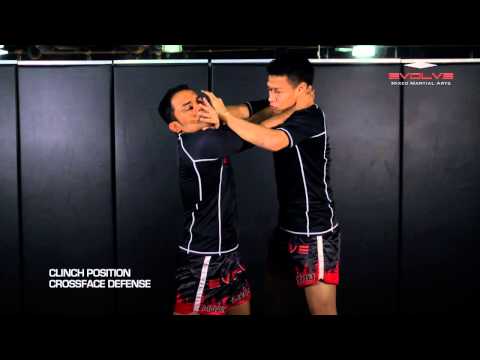
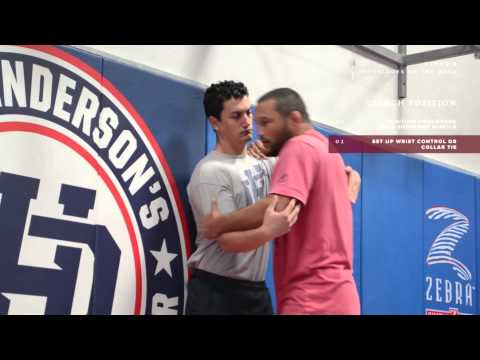
In this week's lesson, Dan Henderson shows us how to have good technique while in the clinch to avoid exposing yourself.…
Translation: clinch / grappling technique
The Clinch class encompasses all standing grappling positions where two fighters are in direct body-to-body contact, using grips on the opponent's body, limbs, or clothing to control distance, posture, and positioning. [1] Clinch fighting is the transitional bridge between striking range and ground fighting, serving as both an offensive platform for takedowns, throws, and short-range strikes, and a defensive tool for neutralising an opponent's attacks. [1],[2] The class is organised by the primary point of control — head, arms, body, upper body ties, grip configurations, and wall/cage positions — each creating distinct tactical frameworks with specific offensive and defensive options. [2],[3] Clinch work is central to virtually every combat sport and martial art, from Muay Thai's famous plum clinch to judo's sophisticated grip fighting (kumi-kata), wrestling's tie-ups, and MMA's cage clinch exchanges. [3],[4] Mastery of the clinch requires sensitivity to weight distribution, an understanding of leverage and frames, and the ability to transition fluidly between positions as the battle for inside control unfolds. [4]
Clinch fighting is among the oldest documented combat techniques, depicted in ancient Egyptian wrestling scenes at Beni Hasan (circa 2000 BCE) and in Greek pankration competitions from the 7th century BCE. [1] Every major wrestling tradition worldwide — from Indian kushti to Mongolian bökh to Turkish yağlı güreş — developed sophisticated clinch systems as the foundation of standing grappling. [2] The modern systematisation of clinch positions accelerated through judo's kumi-kata (grip fighting) methodology established by Jigoro Kano in the 1880s, Muay Thai's plum clinch refined over centuries in Thailand, and collegiate wrestling's tie-up systems in 20th-century America. [2],[3] The emergence of MMA in the 1990s forced a synthesis of these traditions, creating the most diverse clinch fighting methodology in combat sports history. [3],[4]
The clinch is a fundamental close-range position in combat sports that allows fighters to control distance, set up strikes, takedowns, and throws. [1],[2] In Muay Thai, the clinch (chap kho) is the primary platform for devastating knee strikes and sweeps. [3] In wrestling and judo, the clinch is the gateway to all offensive techniques. [1]
Clinch fighting has been documented since ancient Greek wrestling (pale) and pankration, where close-quarters grappling was central to competition. [1] In Southeast Asia, Muay Boran codified clinch-and-knee fighting as a battlefield skill. [3] Modern clinch work draws from judo's kumi-kata (grip fighting), wrestling's tie-ups, and Muay Thai's plum position. [1],[2]
In UFC competition, clinch control time is tracked by FightMetric as a key performance indicator, with fighters like Anderson Silva, Wanderlei Silva, and Valentina Shevchenko using clinch striking as a primary offensive strategy. [1] In judo, the 2010 IJF rule changes restricting leg grabs increased the tactical importance of upper-body clinch work. [2]
No images yet for this technique.
Sign in to suggest an image.
In this week's lesson, Dan Henderson shows us how to have good technique while in the clinch to avoid exposing yourself.…
http://evolve-university.com Evolve University is the largest world championship online university for martial arts. In …
No instructional courses yet for this technique.
Sign in to suggest a course.
Risk of injury to the person this technique is applied to
Clinch techniques are primarily positional; injury risk increases when combined with strikes or throws
Skill level needed to execute this technique reliably
Whether this technique is allowed under major competition rule sets
Muay Thai: The Art of Fighting (Yod Ruerngsa, Khun Kao Charuad & James Cartmell, 2002)
Alias sources — [1] Wrestling Physical Conditioning Encyclopedia (Welker, 2010) [2] Muay Thai: The Art of Fighting (Kraitus & Kraitus, 1988) [3] MMA Instruction Manual (UFC, 2008) [4] Kodokan Judo (Kano, 1986)
Effectiveness sources — [1] Mastering Jujitsu (Gracie & Danaher, 2003) [2] Wrestling Physical Conditioning Encyclopedia (Petrov, 1977) [3] Muay Thai Unleashed (Delp, 2006)
Established Japanese martial arts naming convention — native Japanese term (和語/漢語)
Alias sources — [1] Wrestling Physical Conditioning Encyclopedia (Welker, 2010) [2] Muay Thai: The Art of Fighting (Kraitus & Kraitus, 1988) [3] MMA Instruction Manual (UFC, 2008) [4] Kodokan Judo (Kano, 1986)
Effectiveness sources — [1] Mastering Jujitsu (Gracie & Danaher, 2003) [2] Wrestling Physical Conditioning Encyclopedia (Petrov, 1977) [3] Muay Thai Unleashed (Delp, 2006)
neck and bicep strength for head control, endurance for sustained clinch
longer forearms for deeper collar tie, strong neck
biceps, forearms, neck muscles, core
Every move, in any martial art, shares a few universal traits. Mix and match below to pinpoint the right tool — or compare equivalents across styles.
The Arm Control Clinch group comprises all clinch positions where the primary mechanism of control is gripping, redirecting, or immobilising the opponent's arms or wrists. [1] By controlling the arms, the clinch fighter neutralises the opponent's ability to strike, frame, or establish their own grips, creating a significant tactical advantage. [1,2] This group includes wrist control, elbow control, arm drags, and two-on-one (Russian tie) positions, each offering different levels of dominance and offensive options. [2] Arm control clinch work is fundamental in wrestling, judo, and MMA, where the battle for inside position often begins with controlling the opponent's hands and arms before progressing to deeper clinch ties. [2,3]
The Body Clinch group comprises all standing clinch positions where the attacker's arms encircle the opponent's torso, creating direct body-to-body contact and control. [1] Body clinch positions provide the strongest physical connection between fighters, allowing the controller to directly manipulate the opponent's centre of gravity through lifting, squeezing, and directional pressure. [1,2] This group includes bear hugs (arms encircling with locked grip), body locks (tight torso encirclement), and waist locks (grip focused around the hips), each offering different levels of control and offensive options. [2,3] Body clinch positions are the foundation of Greco-Roman wrestling, where all attacks must originate from above the waist. [3]
The clinch encompasses all standing grappling techniques performed at close range where both fighters have gripping contact — the critical transitional zone between striking distance and the ground. [1] Clinch fighting determines who controls the exchange: the fighter with superior inside position (underhooks), head placement, and body mechanics dictates whether the fight stays standing, goes to the ground, or returns to striking range. [1,2] Each martial art has developed its own clinch system — Muay Thai's double collar tie (plum) enables devastating knee strikes, Greco-Roman wrestling's body locks generate powerful throws, judo's kumi kata (grip fighting) sets up entries for nage waza, and MMA cage clinch work combines all three with dirty boxing. [2,3] Mastery of the clinch is what separates elite fighters from good ones, as it connects every range of combat. [3]
The Grip Fighting Clinch group encompasses clinch positions defined by specific hand and clothing grip configurations, particularly those used in gi-based martial arts where gripping the uniform is a central tactical element. [1] Grip fighting (kumi-kata in judo) is the art of establishing dominant grips while denying the opponent's grip attempts, and it determines the offensive and defensive options available to both fighters. [1,2] This group includes collar-and-sleeve grips, belt grips, cross-grips, and pistol grips, each creating distinct control dynamics and attack possibilities. [2,3] In judo and BJJ competition, the grip fighting exchange is often the decisive phase that determines which fighter will be able to execute their preferred techniques. [3]
The Head Control Clinch group encompasses all clinch positions where the primary mechanism of control is managing the opponent's head position, using collar ties, headlocks, front headlocks, or framing techniques to dictate posture and movement. [1] Head control is one of the most powerful clinch strategies because the head weighs approximately 8-12 pounds and sits atop the spine — controlling the head controls the entire spinal column and consequently the opponent's posture, balance, and movement capacity. [1,2] This group includes the Thai plum (double collar tie), single collar ties, front headlocks, head-and-arm control, and framing positions. [2,3] Head control clinch work is central to Muay Thai, wrestling, and MMA. [3]
The Upper Body Clinch group encompasses clinch positions defined by specific upper-body tie configurations — underhooks, overhooks (whizzers), and the over-under combination — where the primary control mechanism is hooking the arms under or over the opponent's arms to establish positional dominance. [1] Upper body ties are the fundamental language of clinch fighting in wrestling and MMA, with the battle for underhooks considered one of the most critical aspects of standing grappling. [1,2] The group includes single and double underhooks, standard overhooks and whizzers, and the fifty-fifty (over-under) position, each creating distinct offensive and defensive dynamics. [2,3]
The Wall-Cage Clinch group encompasses all clinch positions that are specifically defined by or dependent on the presence of a wall or cage structure, where the vertical barrier creates unique positional dynamics not found in open-space clinch fighting. [1] The cage or wall eliminates the opponent's ability to retreat, provides a surface for pinning and controlling opponents, and creates friction that can be used to maintain position or set up takedowns. [1,2] This group includes cage clinch positions (specific to MMA's octagon or ring cage), wall pin clinch positions, and wall walk techniques used to advance position against the fence. [2,3] Wall-cage clinch work is one of the most MMA-specific tactical domains, having no direct precedent in any traditional martial art. [3]
The clinch — standing grappling at close range — is the bridge between striking and ground fighting. In Muay Thai, the clinch (chap kho) is an offensive weapon for delivering knees. In wrestling, the clinch is where takedowns begin. In MMA, clinch control determines whether the fight stays standing or goes to the ground. (Delp, Muay Thai Unleashed; Gable, Coaching Wrestling Successfully; The Ultimate MMA Training Guide)
Grab the muscle on the shoulder rather than just holding your hand loosely. This approach lets you use your hand for control without wearing out your shoulder from lifting your opponent's arm.
Dan Henderson recommends combining a collar tie with an underhook as the ideal position, which allows you to move your feet in any direction and maintain balance.
Keep your head up with your chin on your hand, maintain an upright posture with hips in, and avoid bending over or leaning to one side, as this makes you vulnerable to knees and uppercuts.
Keeping your feet light on both sides and balanced allows you to move forward, backward, or sideways without being knocked off balance if your opponent pushes.
The Clinch class encompasses all standing grappling positions where two fighters are in direct body-to-body contact, using grips on the opponent's body, limbs, or clothing to control distance, posture, and positioning. Clinch fighting is the transitional bridge between striking range and ground fighting, serving as both an offensive platform for takedowns, throws, and short-range strikes, and a defensive tool for neutralising an opponent's attacks.
Clinch fighting is among the oldest documented combat techniques, depicted in ancient Egyptian wrestling scenes at Beni Hasan (circa 2000 BCE) and in Greek pankration competitions from the 7th century BCE. Every major wrestling tradition worldwide — from Indian kushti to Mongolian bökh to Turkish yağlı güreş — developed sophisticated clinch systems as the foundation of standing grappling.
Unified MMA: legal — Legal — clinching is integral to MMA; IJF: legal — Legal — kumi-kata (grip fighting) is fundamental to judo; IBJJF: legal — Legal — standing grip fighting and clinch work permitted; IFMA: legal — Legal — the clinch is a core element of Muay Thai, clinch dominance is highly…; WBC/Boxing: restricted — Holding is technically a foul — referee breaks clinch, excessive holding resu…; K: restricted — 1/GLORY — One attack from clinch allowed, then referee breaks; WAKO: restricted — Clinch generally broken by referee — limited or no clinch fighting in most fo…; UWW: legal — Legal — clinch is fundamental to wrestling, the primary position in Greco-Roman
Danger rating 3/10. Moderate — clinch techniques are primarily positional; injury risk increases when combined with strikes or throws
The standard setup chain: Close Distance → Establish Primary Grip → Position the Hips → Apply Pressure.
Standard counters include: Pummeling — fight for inside position by swimming arms under opponent's grips / Frame and Push — create distance using forearm frames against the chest or neck / Grip Break — systematically strip the opponent's controlling grips / Posture Up — straighten the spine and drive the hips forward to break clinch control.
Common variants: Cage pin with underhooks (pinning the opponent against the fence with inside position); Cage pin with body lock (locking the body against the cage for control); Cage clinch with head control (using the collar tie against the fence).
In UFC competition, clinch control time is tracked by FightMetric as a key performance indicator, with fighters like Anderson Silva, Wanderlei Silva, and Valentina Shevchenko using clinch striking as a primary offensive strategy. In judo, the 2010 IJF rule changes restricting leg grabs increased the tactical importance of upper-body clinch work.
Top errors to watch for: Reaching for the clinch without a striking setup — you eat punches on the way in / Going head-down in the clinch without controlling the opponent's arms — invites guillotines and front headlocks / Fighting for one grip position and ignoring all others — clinch fighting requires constant adjustment and pummelling / Locking into a static 50-50 clinch without attacking — the referee separates you or you waste energy.
The Clinch is also known as Standing Grapple, Clinch Fighting, Clinch Work, Kumi-waza.