Entry and Tie Clinch Control
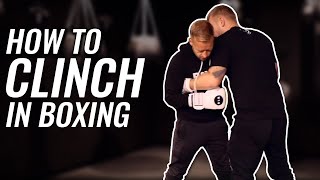
The instructor demonstrates entry after parrying an opponent's jab-cross combination, using a scoop motion to close distance while maintaining head coverage. Upon clinching, he secures a tie clinch (one hand behind opponent's head, controlling posture) to prevent the opponent from attacking the chin. Head position and postural control are emphasized as critical to maintaining dominance in this range.
Arm Triangle Transition and Knee Strike
When the opponent applies pressure, the defender pops the opponent's arm upward into a triangle formed by the defender's arm and knee. From this constrained position, the defender executes a knee strike while maintaining control of the opponent's head and arm.
Countering the Over-Hook and Face Press
As the opponent attempts to counter by reaching over the defender's shoulder and pressing the face, the defender responds by swimming an arm underneath to establish double underhooks. This transitions control and creates better striking angles for the defender while neutralizing the opponent's offensive position.
Breaking Double Underhooks
The opponent counters the double underhooks by raising the leg toward the defender's groin, shooting the arm across the defender's face, and dropping body weight to break the connection. This multi-directional pressure—leg, arm, and body weight combined—forces the defender to adjust or risk being taken down.
Clinch Exit Strategy
The instructor emphasizes that exiting the clinch is as important as entering it, and practitioners should always exit with a strike rather than passively disengaging. This prevents the opponent from capitalizing on the separation and maintains offensive momentum.
Double Underhook Limitations and Alternatives
While double underhooks are effective in MMA, the instructor notes they are poor for street defense because they limit striking capability. In street-based systems, alternative responses such as rotating the body and achieving a top position are preferable to ground engagement.
Counter to Arm Strike from Double Underhooks
When the opponent shoots the arm upward from the double underhook position, the defender can immediately transition to the opponent's back if no leg hook is present. If the opponent combines the arm strike with a leg hook and body weight drop, the defender risks being pulled into a guillotine choke.
Clinch Mastery for All Martial Arts Contexts
The instructor concludes that clinch competency is essential across striking, grappling, and traditional martial arts disciplines. For strikers, it neutralizes takedown entries; for grapplers, it provides controlled access to ground positions while maintaining offensive options.
Got Clinch? Clinch Flow for all Martial Artists
Key Takeaways
- •Entry and Tie Clinch Control
- •Arm Triangle Transition and Knee Strike
- •Countering the Over-Hook and Face Press
- •Breaking Double Underhooks
This is an excerpt from a recent class. We were working on clinch concepts and sparring. This is an example of a flow that we use to help teach common positions and transitions in the clinch range. Clinch is an often overlooked range and it is imperative to increase proficiency in this area if you are teaching self-defense. Train Hard, Train Smart, Train for a Lifetime!
Related Techniques
Frequently Asked Questions
What does this video teach about grip fighting clinch?
This video covers entry and tie clinch control, arm triangle transition and knee strike, countering the over-hook and face press. It provides detailed instruction from Fighting Evolved.
How long does it take to learn grip fighting clinch?
The basic mechanics can be understood in a single session, but developing reliable execution requires consistent drilling over weeks of practice. This 8-part breakdown helps structure your training by isolating each phase of the technique.
What are the key details for finishing grip fighting clinch?
When the opponent shoots the arm upward from the double underhook position, the defender can immediately transition to the opponent's back if no leg hook is present. If the opponent combines the arm strike with a leg hook and body weight drop, the defender risks being pulled into a guillotine choke.