HIKKOMI GAESHI Side Sacrifice Application
0
Side Sacrifice·welcomematstevescott
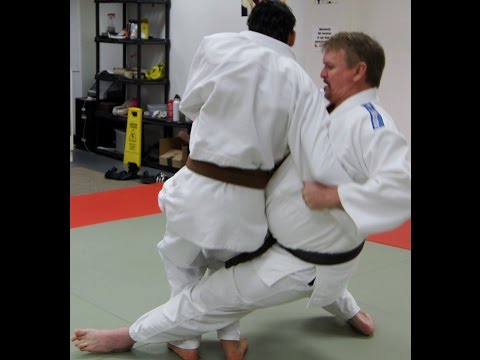
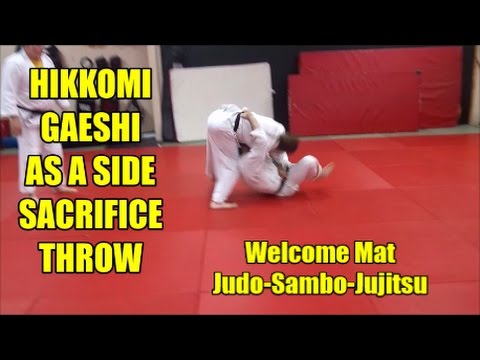
Hikkomi Gaeshi is an effective throw as well as a transition from standing to groundfighting. In this video, we analyze …
Перевод: side sacrifice technique
Side Sacrifice, or Yoko Sutemi Waza, is the family of sacrifice throws in which tori falls to their side to execute the technique, using lateral body drop and rotational momentum to throw uke. [1],[2] Unlike rear sacrifice throws where tori falls straight back, side sacrifice techniques involve tori dropping to one side, often sweeping or blocking uke's leg while pulling them laterally. [2],[3] This family includes tani otoshi (valley drop), yoko guruma (side wheel), yoko otoshi (side drop), and yoko wakare (side separation), each employing a different mechanism of lateral force application. [3],[4] Side sacrifice throws are especially effective as counter-techniques and combination finishers, exploiting lateral movement and off-balance positions that standing throws cannot easily address. [4],[5]
Yoko sutemi waza techniques appear in the earliest Kodokan curriculum and have roots in pre-Meiji jujutsu systems that valued lateral sacrifice as a battlefield technique. [1] The Kodokan formally classified side sacrifice throws alongside rear sacrifice throws within the sutemi waza division. [1],[2] Georgian and Russian judoka became particularly renowned for their innovative use of side sacrifice throws in the late 20th century. [2],[3]
Yoko-sutemi-waza (side sacrifice) is one of two sutemi-waza subcategories in the Kodokan judo syllabus. [1]
Side sacrifice throws are common in IJF competition, particularly tani otoshi and yoko otoshi. [1]
Изображений для этой техники пока нет.
Войдите, чтобы предложить изображение.
Hikkomi Gaeshi is an effective throw as well as a transition from standing to groundfighting. In this video, we analyze …
Yokosutemi-waza (15 techniques) 1. Yoko-Otoshi 2. Tani-Otoshi 3. Hane-makikomi 4. Soto-makikomi 5. Uki-waza 6. Yoko-waka…
Учебных курсов по этой технике пока нет.
Войдите, чтобы предложить курс.
Риск травмы для человека, к которому применяется техника
Yoko-Sutemi-Waza; lateral falling sacrifice; shoulder/rib impact risk
Уровень мастерства, необходимый для надёжного выполнения техники
Разрешена ли техника по основным соревновательным правилам
Kodokan Judo — Official Nage-waza Classification
Traditional Judo throwing technique terminology (Kodokan Institute)
Official Kodokan ground technique classification system
Standard Japanese martial arts terminology (kanji/hiragana)
Established Japanese martial arts naming convention — native Japanese term (和語/漢語)
Traditional Judo throwing technique terminology (Kodokan Institute)
precise timing, ankle coordination, upper body kuzushi ability
excellent balance and quick reflexes
tibialis anterior, calves, hip rotators, forearms (grip)
Каждое движение в любом боевом искусстве обладает рядом универсальных свойств. Комбинируйте параметры ниже, чтобы найти нужный инструмент или сравнить аналоги из разных стилей.
Tani Otoshi, the valley drop, is a side sacrifice throw in which tori drops to the ground beside uke while sweeping or blocking uke's legs from behind, causing uke to fall backward over tori's body into the 'valley' created by tori's position. [1,2] The throw is executed by tori sliding their body alongside and slightly behind uke, extending one leg behind both of uke's legs as a trip, and pulling uke backward and downward with the arms. [2,3] Tani otoshi is highly effective as a counter-throw, particularly against forward-moving opponents who attempt hip or shoulder throws. [3,4]
Yoko Guruma, the side wheel, is a sacrifice throw in which tori drops to their side in front of uke, wraps one arm around uke's waist or hip, and uses a wheeling motion to rotate uke laterally over tori's body. [1,2] The name refers to the wheel-like rotation uke undergoes as they are swept over tori. [1] Yoko guruma is particularly effective when uke is moving laterally or when tori can get deep hip contact before dropping. [2,3]
Yoko Otoshi, the side drop, is a sacrifice throw in which tori drops to one side while extending a leg in front of uke's advance, using a strong lateral pull to bring uke crashing down over tori's outstretched body. [1,2] The technique relies primarily on timing and the pull of the arms rather than leg sweeping or body contact — tori creates an obstacle with their extended body and uses uke's forward momentum to complete the throw. [2,3] Yoko otoshi is considered one of the purest expressions of the judo principle of using an opponent's momentum against them. [3]
Yoko Wakare, the side separation throw, is a sacrifice technique in which tori drops to one side while maintaining a strong grip on uke, using the sudden separation of tori's body from the standing position to pull uke laterally off balance and over tori's body. [1,2] The 'wakare' (separation) refers to the splitting action as tori's body drops away from uke while the arms maintain the connection. [1,3] Yoko wakare is effective against opponents who resist lateral movement and can be applied as a counter to hip throws when tori is being attacked. [3]
Side sacrifice throws (yoko-sutemi-waza) appear in 18 passages across 5 books. The attacker falls to their side to throw the opponent — the fall generates the throwing force. Yoko-guruma, tani-otoshi, and yoko-wakare are the primary side sacrifice throws. (5 books; Kano, Kodokan Judo)
The defining feature is creating a 'hole' that your opponent's head and foot pass through as you whip them over sideways, rather than rolling backward. Welcome Mat Steve Scott emphasizes that mastering this whipping motion is critical before worrying about hand placement.
Control your opponent's elbow with your grip and steer it inward to set up the throw. Welcome Mat Steve Scott notes you can adapt the grip to your preference, but controlling the elbow is a key steering mechanism.
It creates a big body slam impact, so you don't want to take a lot of falls practicing this technique repeatedly. Welcome Mat Steve Scott recommends using good weather to practice it outdoors when possible.
Side Sacrifice, or Yoko Sutemi Waza, is the family of sacrifice throws in which tori falls to their side to execute the technique, using lateral body drop and rotational momentum to throw uke. Unlike rear sacrifice throws where tori falls straight back, side sacrifice techniques involve tori dropping to one side, often sweeping or blocking uke's leg while pulling them laterally.
Yoko sutemi waza techniques appear in the earliest Kodokan curriculum and have roots in pre-Meiji jujutsu systems that valued lateral sacrifice as a battlefield technique. The Kodokan formally classified side sacrifice throws alongside rear sacrifice throws within the sutemi waza division.
IJF: разрешён — Legal throwing technique; IBJJF: разрешён — Legal at all belt levels; UWW: разрешён — Legal in both freestyle and Greco-Roman; Unified MMA: разрешён — Legal throwing technique; ADCC: разрешён — Legal; FIAS Sport Sambo: разрешён — Legal; FIAS Combat Sambo: разрешён — Legal
Оценка опасности 6/10. High — Yoko-Sutemi-Waza; lateral falling sacrifice; shoulder/rib impact risk
Стандартная цепочка подготовки: Grip Setup (Kumi-kata) → Off-Balance (Kuzushi) → Entry (Tsukuri) → Execution (Kake) → Fall (Sutemi).
Стандартные контрприёмы: Lower Centre of Gravity — bend knees and drop hips to make the throw harder to execute / Lift the Targeted Leg — raise the foot being attacked above the sweeping action / Counter-Throw — exploit the attacker's committed weight to throw them instead / Grip Break — deny the thrower their preferred gripping configuration.
Распространённые варианты: Forward sweep (sweeping the foot in the direction the opponent is stepping); Rear sweep (sweeping the foot backward as the opponent retreats); Combination sweep (chaining sweeps to both feet); Counter sweep (timing the sweep as the opponent initiates their own attack).
Side sacrifice throws are common in IJF competition, particularly tani otoshi and yoko otoshi.
Основные ошибки, на которые стоит обратить внимание: Falling to the side without pulling uke — you end up on the ground while they stand over you / Not controlling uke's posture with your grips — they need to be off-balance to be thrown laterally / Falling directly sideways when you should fall at a diagonal — the angle must match uke's direction of imbalance / Landing on the elbow or wrist — tuck the arm and land on the side of the torso.
Side Sacrifice также известен как Yoko Sutemi-waza, Side sacrifice throws, Yoko sutemi, Lateral sacrifice.