100 JU-JUTSU, JUDO THROWING TECHNIQUES
0
Бросок·James Moclair
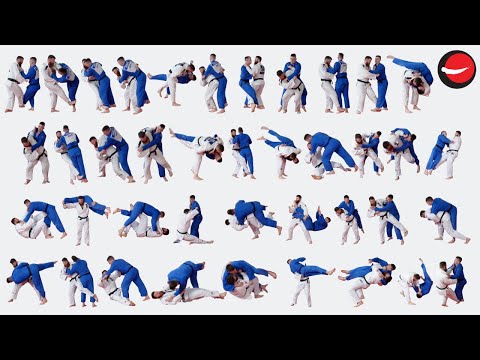
100 JU-JUTSU, JUDO THROWING TECHNIQUES. SOME OF THE THROWING TECHNIQUES ARE UNIQUE, OTHERS HAVE SMALL SUTTLE DIFFERENCES…
Перевод: техника броска
Техники бросков относятся к числу древнейших задокументированных методов борьбы: они изображены в египетских настенных росписях в Бени-Хасане (ок. 2000 лет до н.э.) и описаны в древнегреческой борьбе (палэ) и панкратионе. [1],[2] Систематизация бросковых техник была проведена в японских школах джиу-джитсу начиная с периода Сэнгоку; Дзигоро Кано в рамках Кодокан дзюдо (основано в 1882 году) упорядочил техники бросков (нагэ-вадза) в развёрнутую классификацию: броски руками (тэ-вадза), броски через бедро (коси-вадза), подножки и подсечки (аси-вадза), а также жертвенные броски (сутэми-вадза). [3],[4] Борцовские традиции по всему миру — монгольская бёх, турецкая яглы гюреш, грузинская чидаоба и индийская кушти — независимо друг от друга выработали богатый арсенал бросков. [1],[5] Современное соревновательное дзюдо, вольная борьба и самбо продолжают совершенствовать технику бросков на международных соревнованиях. [3],[6]
Броски входят в число наиболее результативных техник в боевых видах спорта: с помощью рычага и инерции они позволяют поднять или вывести противника из равновесия и жёстко перевести его на землю. [1],[2] Успешный бросок приносит иппон (чистую победу) в дзюдо и может мгновенно завершить схватку. [1] В MMA броски наносят ощутимый ударный урон и обеспечивают доминирующую позицию в партере. [3]
Техники бросков задокументированы практически во всех борцовских традициях — от древнегреческой борьбы до японского джиу-джитсу. [1] Дзигоро Кано систематизировал техники бросков (нагэ-вадза) как центральный элемент Кодокан дзюдо в 1882 году. [2] Борцовские системы по всему миру разработали параллельные методологии бросков. [3]
Изображений для этой техники пока нет.
Войдите, чтобы предложить изображение.
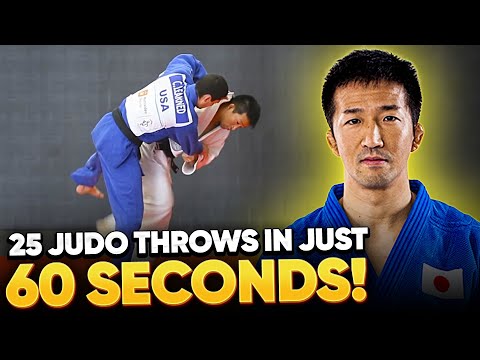
100 JU-JUTSU, JUDO THROWING TECHNIQUES. SOME OF THE THROWING TECHNIQUES ARE UNIQUE, OTHERS HAVE SMALL SUTTLE DIFFERENCES…
Judo Throws/Takedowns: Tai otoshi to ude hishigi juji gatame, Kouchi gari, Ken ken ouchi gari to Taiotoshi, Uchimata Suk…
*UPDATED VERSION CONTAINING EVERY THROWS NAME SPOKEN IN JAPANESE* https://youtu.be/uJ-4pOtwFMg The Gokyo-no-Waza betwe…
Учебных курсов по этой технике пока нет.
Войдите, чтобы предложить курс.
Риск травмы для человека, к которому применяется техника
Высокая — броски создают значительную ударную нагрузку; риск травмы головы и шеи при приземлении (Кошида и др., 2017)
Уровень мастерства, необходимый для надёжного выполнения техники
Разрешена ли техника по основным соревновательным правилам
Kodokan Judo (Jigoro Kano, 1986)
Alias sources — [1] Kodokan Judo (Kano, 1986) [2] Judo Formal Techniques (Otaki & Draeger, 1983) [3] FIAS Official Sambo Terminology [4] Shuai Jiao: The Ancient Chinese Fighting Art (Liang, 1997)
History sources — [1] Comprehensive Asian Fighting Arts (Draeger & Smith, 1969) [2] Combat Sports in the Ancient World (Poliakoff, 1987) [3] Kodokan Judo (Kano, 1986) [4] Judo Formal Techniques (Otaki & Draeger, 1983) [5] Wrestling Physical Conditioning Encyclopedia (Petrov, 1977) [6] Sambo: Russian Wrestling (Harries, 2005)
Official Kodokan ground technique classification system
Standard Japanese martial arts terminology (kanji/hiragana)
Established Japanese martial arts naming convention — native Japanese term (和語/漢語)
Alias sources — [1] Kodokan Judo (Kano, 1986) [2] Judo Formal Techniques (Otaki & Draeger, 1983) [3] FIAS Official Sambo Terminology [4] Shuai Jiao: The Ancient Chinese Fighting Art (Liang, 1997)
History sources — [1] Comprehensive Asian Fighting Arts (Draeger & Smith, 1969) [2] Combat Sports in the Ancient World (Poliakoff, 1987) [3] Kodokan Judo (Kano, 1986) [4] Judo Formal Techniques (Otaki & Draeger, 1983) [5] Wrestling Physical Conditioning Encyclopedia (Petrov, 1977) [6] Sambo: Russian Wrestling (Harries, 2005)
координации, силы захвата, мощи бёдер и корпуса, чувства равновесия
атлетическое телосложение с сильными бёдрами и хорошей проприоцепцией
кор, бёдра, ноги, мышцы кистей и предплечий
Каждое движение в любом боевом искусстве обладает рядом универсальных свойств. Комбинируйте параметры ниже, чтобы найти нужный инструмент или сравнить аналоги из разных стилей.
The Aikido Throw group covers the throwing techniques of aikido — the modern Japanese martial art founded by Morihei Ueshiba (1883-1969) that emphasises blending with and redirecting an opponent's energy rather than meeting force with force. [1,2] Aikido throws are characterised by circular and spiral motion, off-balancing through subtle entries (irimi) or pivots (tenkan), and a fundamental principle of joining the opponent's centre rather than opposing it. [1,3] The throws here include the canonical aikido throws — kokyu-nage (breath throw), kaiten-nage (rotary throw), koshi-nage (aikido hip throw), tenchi-nage (heaven and earth throw), tenbin-nage (balance throw), and juji-nage (cross throw) — each of which expresses a different application of aiki principles. [2,4] Unlike judo's koshi-waza, where the hip serves as a fulcrum loaded by muscular effort, aikido throws typically use the entire body as a unified force vector, with the thrower's centre of mass moving in concert with the uke's motion to project them with minimal apparent effort. [1,2,5] Aikido throws are practiced in countless schools worldwide and have direct lineage to Daito-ryu aiki-jujutsu (Sokaku Takeda), the parent art Ueshiba trained in before founding aikido. [3,4]
The Throw group covers all standing throwing techniques where the thrower uses leverage, momentum, and body mechanics to project the opponent through the air onto the ground — the most spectacular and technically demanding techniques in martial arts. [1] Throws are classified in judo as nage waza and divided by primary mechanism: te waza (hand throws), koshi waza (hip throws), and ashi waza (foot/leg techniques). [1,2] Unlike takedowns which drive the opponent to the mat, throws typically involve the thrower remaining standing while the opponent is airborne — in judo, a perfectly executed throw scores ippon (instant victory). [2,3] Throws appear across virtually every martial art, and the physics of throwing (kuzushi, tsukuri, kake) represent some of the most elegant applications of biomechanics in combat. [3]
Группа бросков аши-вадза (яп. 足技, техника ног) объединяет все броски, в которых основным механизмом создания усилия является действие стопы или ноги бросающего против нижней части тела противника. [1] Аши-вадза — самая многочисленная и разнообразная категория в классификации бросков Кодокана, включающая подсечки, подхваты, зацепы, крюки и блоки, выполняемые стопой, лодыжкой, голенью или бедром. [1,2] Эти техники используют фундаментальную уязвимость двуногой стойки: поскольку стоящий боец удерживает равновесие на двух точках опоры, устранение или дестабилизация одной из них немедленно создаёт возможность для броска. [2,3] Техники аши-вадза, как правило, требуют точности выбора момента, а не грубой силы: бросающий должен поймать противника в тот самый момент, когда его вес перенесён на атакуемую ногу. [3,4] На соревнованиях по дзюдо техники аши-вадза — особенно учи-мата, о-сото-гари и о-учи-гари — неизменно входят в число наиболее результативных бросков на всех уровнях, от клубных турниров до Олимпийских игр. [4,5]
The Foot Sweep group covers throwing techniques where the thrower uses their foot or leg to sweep, reap, hook, or trip the opponent's supporting leg, causing them to lose balance and fall — the most timing-dependent and technically refined techniques in all of martial arts. [1] Known as ashi waza in judo, foot sweeps are often called the 'gentleman's throw' because a perfectly timed sweep requires no strength at all — only precise timing that catches the opponent mid-step when their weight transfers to one foot. [1,2] Judo master Kyuzo Mifune demonstrated that foot sweeps can be used by a smaller fighter to throw a much larger opponent, as the technique relies on timing and kuzushi rather than power. [2,3] This group includes de ashi barai (advancing foot sweep — often considered the single most fundamental throw in judo), o soto gari (major outer reap), ko soto gari (minor outer reap), o uchi gari (major inner reap), ko uchi gari (minor inner reap), and sasae tsurikomi ashi (propping drawing ankle throw). [3]
Группа бросков техникой рук, известная в японском как тэ-вадза, включает все броски, в которых основным механизмом является действие рук и кистей, а не бёдер или ног. [1] Техники тэ-вадза создают бросковое усилие через тянущие, поднимающие, опускающие и вращающие движения захватывающих рук, используя рычаг и направленный контроль для выведения противника из равновесия и его броска. [1,2] В эту группу входят броски через плечо (семья сэои-нагэ), подбивы корпусом (тай-отоши), броски руками (суку-нагэ, суми-отоши, уки-отоши) и броски с самопожертвованием (яма-араши), каждый из которых применяет особую механику рук и плеч для выполнения броска. [2,3] Техники тэ-вадза относятся к наиболее популярным в соревновательном дзюдо: сэои-нагэ неизменно входит в число наиболее результативных бросков на всех уровнях международных соревнований. [3,4] Группа характеризуется тем, что бросающий опирается на тяговую силу, силу хвата и скорость вращения, а не на контакт бедром или подсечку ногой для создания бросковой силы. [4,5]
The Hip Technique Throw group, known in Japanese as koshi-waza, comprises all throwing techniques in which the thrower's hip serves as the primary fulcrum or lifting mechanism, rotating or wheeling the opponent over the hip to project them to the mat. [1] Koshi-waza techniques are among the most intuitive and powerful throws in grappling, using the hip as a lever point placed beneath the opponent's centre of gravity to generate mechanical advantage. [1,2] The group includes major hip throws (o-goshi, uki-goshi, koshi-guruma), sweeping hip throws (harai-goshi, hane-goshi), spring hip throws (tsuri-goshi), and hip wheel techniques (ushiro-goshi), each employing the hip fulcrum in different ways. [2,3] Hip throws are often the first techniques taught to judo beginners because they clearly demonstrate the fundamental principle of getting underneath the opponent's centre of gravity and using the body as a lever. [3,4] In competition, koshi-waza techniques — particularly harai-goshi — rank among the highest-scoring throws and are effective across all weight categories. [4,5]
Sacrifice throws (sutemi waza) are techniques where the thrower deliberately falls to the ground while executing the throw, using their own bodyweight, falling momentum, and the element of surprise to complete the technique. [1] Judo classifies sacrifice throws into two categories: ma sutemi waza (rear sacrifice throws where the thrower falls on their back) and yoko sutemi waza (side sacrifice throws where the thrower falls to their side). [1,2] Sacrifice throws are high-risk, high-reward techniques — the thrower gives up their standing position to attempt the throw, meaning a failed sacrifice throw leaves them in bottom position; however, successful sacrifice throws often produce spectacular ippon-scoring projections that catch opponents completely off-guard. [2,3] The most famous sacrifice throws — tomoe nage (circle throw), sumi gaeshi (corner reversal), and ura nage (rear throw) — are among the most visually stunning techniques in all martial arts. [3]
Sacrifice Throw, known in Japanese as Sutemi Waza, is the group of throwing techniques in which the thrower deliberately abandons their own standing base to complete the throw. [1] Unlike standing throws where tori maintains upright balance throughout, sacrifice throws require the attacker to fall to the ground — either onto their back (rear sacrifice) or onto their side (side sacrifice) — using their own body weight and momentum as the primary throwing mechanism. [1,2] The Kodokan classifies sutemi waza as one of the three major divisions of nage waza, alongside tachi waza (standing techniques), recognising that controlled self-sacrifice can generate enormous throwing force even against larger, stronger opponents. [1,3] Sacrifice throws are further subdivided into ma sutemi waza (rear sacrifice), yoko sutemi waza (side sacrifice), and rolling sacrifice (makikomi) variants, each exploiting different vectors of force application. [2,3] In competition judo, sacrifice throws account for a significant proportion of successful ippon scores because they are difficult to defend once initiated and can be launched as counter-attacks when an opponent over-commits to their own technique. [3,4] These techniques are also widely adopted in sambo, Brazilian jiu-jitsu, and mixed martial arts, where the willingness to go to the ground carries less tactical penalty. [4,5] Mastery of sacrifice throws demands precise timing, commitment, and the ability to transition immediately to ground work if the throw does not achieve a clean finish. [2,5]
The Sweep group encompasses all ground-based reversal techniques where the bottom player uses leverage, momentum, and leg work to reverse the top and bottom positions — the primary offensive tool for guard players in Brazilian Jiu-Jitsu. [1] Sweeps are mechanically distinct from standing throws: they are executed from the ground (typically from guard positions) and use hooks, grips, and hip movement to off-balance and topple the top player, putting the sweeper into a dominant top position. [1,2] In BJJ competition, a successful sweep scores 2 points (IBJJF/ADCC), reflecting its strategic importance as the path from bottom to top. [2,3] The sweep game has expanded enormously since the 1990s, with each guard variation (closed guard, half guard, butterfly, De La Riva, X-guard, spider guard) contributing its own sweep systems. [3]
The Traditional-Other Throw group encompasses throwing techniques from martial arts traditions outside the primary Japanese judo framework, including throws from sambo, sanda (Chinese kickboxing), and shuai jiao (Chinese wrestling). [1,2] While the other throw groups in this taxonomy derive predominantly from judo's Kodokan classification, this group recognises that many combat systems independently developed sophisticated throwing methods rooted in their own cultural and competitive contexts. [2,3] Sambo throws blend judo, Greco-Roman wrestling, and folk wrestling traditions of the former Soviet Union, often emphasising leg grabs and unorthodox grip positions. [3,4] Sanda throws are uniquely adapted for striking-and-throwing rulesets, where the ability to throw from clinch positions or after catching kicks is central to scoring. [4,5] Shuai jiao, one of the world's oldest martial arts, features throws executed from jacket grips with an emphasis on speed, footwork, and off-balancing through precise angles. [5,6] Together, these traditions represent the global diversity of human throwing arts beyond the Japanese canon. [6]
The Wrestling Throw group encompasses the high-amplitude throwing techniques characteristic of Greco-Roman wrestling, freestyle wrestling, and their derivatives as applied in combat sports. [1,2] Unlike judo throws, which are typically executed from jacket grips and emphasise kuzushi (off-balancing) through the uniform, wrestling throws rely on body locks, underhooks, overhooks, and direct body contact to generate throwing force. [2,3] This group includes the suplex family (vertical lifts with backward arching), the fireman's carry (shoulder-wheel throws from underhook positions), headlock throws, and the lateral drop. [3,4] Wrestling throws are generally characterised by explosive power, commitment to body contact, and the ability to generate enormous amplitude — a scoring criterion in both Greco-Roman and freestyle competition. [4,5] Many wrestling throws have been adopted into mixed martial arts, where their ability to slam an opponent to the mat from the clinch makes them among the highest-impact techniques in the sport. [5,6] The biomechanics of wrestling throws emphasise hip drive, back arch, and leg extension, often requiring exceptional athletic strength and timing. [6]
Группа бросков охватывает общие принципы бросковой техники, единые для различных систем. Броски встречаются в тысячах фрагментов нашего корпуса текстов. Общая нить: используй инерцию противника и собственный рычаг, чтобы перевести его на землю. Все бросковые системы — дзюдо, борьба, самбо, шуай цзяо — разделяют эту базовую механику. (200+ книг; Кано, «Кодокан дзюдо»; борцовские тексты)
Джеймс Моклэр делает акцент на том, чтобы тянуть противника вперёд, контролируя его движение руками — нужно поддерживать его инерцию в сторону броска, а не пытаться бросить статичного соперника.
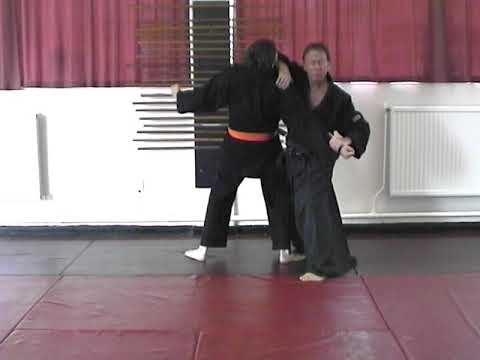
Сделайте шаг назад от противника, одновременно разворачивая ладонь к себе, поднимите ногу и сметите его ногу подсечкой, роняя его на пол — именно так это демонстрирует Джеймс Моклэр.
По словам Джеймса Моклэра, когда атакующий наносит прямой удар ногой, можно хлопнуть ладонью по его плечу, резко войти в него и тут же провести бросок через ногу, опрокидывая противника.
Джеймс Моклэр рекомендует держать противника вертикально, вытянуть его руки вверх, обхватить его за талию, плотно подбить бёдра и выполнить подхват, после чего завершить добивающим ударом.
Техники, выводящие противника из равновесия и переводящие его из положения стоя на землю с использованием рычага, инерции и механики тела в качестве основных усилителей силы воздействия.
Техники бросков относятся к числу древнейших задокументированных методов борьбы: они изображены в египетских настенных росписях в Бени-Хасане (ок. 2000 лет до н.
МФД: разрешён — Разрешённая техника броска; IBJJF: разрешён — Разрешено на всех поясных уровнях; UWW: разрешён — Разрешено в вольной и греко-римской борьбе; Единые правила MMA: разрешён — Разрешённая техника броска; ADCC: разрешён — Разрешено; ФИАС Спортивное самбо: разрешён — Разрешено; ФИАС Боевое самбо: разрешён — Разрешено
Оценка опасности 5/10. Высокая — броски создают значительную ударную нагрузку; риск травмы головы и шеи при приземлении (Кошида и др., 2017)
Стандартная цепочка подготовки: Подготовка захвата (Куми ката) → Выведение из равновесия (Кудзуси) → Вход (Цукури) → Выполнение (Кэкэ).
Стандартные контрприёмы: Понижение центра тяжести — согнуть колени и опустить бёдра, чтобы затруднить выполнение броска / Срыв захвата — лишить бросающего предпочтительного захвата / Упор прямыми руками — удерживать дистанцию с помощью прямых рук, не допуская входа.
Распространённые варианты: Стандартная техника (основное выполнение со стандартным захватом и позицией); Адаптация без ги (модификация без захватов за ги для борьбы в партере или MMA); Вход через комбинацию (вход с неудавшейся атаки или цепочки техник); Контрбросок (выполняется как прямой ответ на бросок или атаку противника).
В олимпийском дзюдо броски составляют большинство побед иппоном. В греко-римской борьбе броски и подъёмы приносят наибольшее количество очков (5 очков за бросок с большой амплитудой).
Основные ошибки, на которые стоит обратить внимание: Попытки бросков без предварительного нарушения равновесия противника — силовое выполнение броска против устойчивой ба… / Сгибание в пояснице вместо опускания бёдер при входе — ваш центр тяжести должен оказаться ниже, чем у противника / Остановка после неудавшегося броска вместо перехода к следующей атаке — неудавшиеся броски открывают возможности для … / Пренебрежение борьбой за захват и попустительство доминирующим захватам противника.
Бросок также известен как Nage-waza, Нагэ-вадза, Техники бросков, Броски, Шуай Фа (摔法).