Sutemi-waza(sacrifice techniques) vol.1~5
0
Sacrifice Throw — Sutemi Waza·이상철 프로 6단
Sutemi-waza(sacrifice techniques) vol.1~5 [김경진 프로4단] '누우며 던지는 기술' vol.1~5 #김경진 #Kyung-jin,Kim #KOR shooting day / 촬영 …
Перевод: sacrifice technique
Sacrifice Throw, known in Japanese as Sutemi Waza, is the group of throwing techniques in which the thrower deliberately abandons their own standing base to complete the throw. [1] Unlike standing throws where tori maintains upright balance throughout, sacrifice throws require the attacker to fall to the ground — either onto their back (rear sacrifice) or onto their side (side sacrifice) — using their own body weight and momentum as the primary throwing mechanism. [1],[2] The Kodokan classifies sutemi waza as one of the three major divisions of nage waza, alongside tachi waza (standing techniques), recognising that controlled self-sacrifice can generate enormous throwing force even against larger, stronger opponents. [1],[3] Sacrifice throws are further subdivided into ma sutemi waza (rear sacrifice), yoko sutemi waza (side sacrifice), and rolling sacrifice (makikomi) variants, each exploiting different vectors of force application. [2],[3] In competition judo, sacrifice throws account for a significant proportion of successful ippon scores because they are difficult to defend once initiated and can be launched as counter-attacks when an opponent over-commits to their own technique. [3],[4] These techniques are also widely adopted in sambo, Brazilian jiu-jitsu, and mixed martial arts, where the willingness to go to the ground carries less tactical penalty. [4],[5] Mastery of sacrifice throws demands precise timing, commitment, and the ability to transition immediately to ground work if the throw does not achieve a clean finish. [2],[5]
Sacrifice throws have roots in classical Japanese jujutsu systems where warriors needed techniques effective against armoured opponents who were difficult to unbalance with conventional standing throws. [1] Jigoro Kano incorporated several sutemi waza into the Kodokan syllabus from its earliest days, recognising their effectiveness in randori and shiai. [1],[2] The 1920 Kodokan gokyo revision formally categorised sacrifice throws alongside standing techniques, cementing their status within judo pedagogy. [2],[3] Throughout the 20th century, Eastern European judoka — particularly Soviet and Georgian competitors — became renowned for their innovative application of sacrifice throws in international competition. [3],[4]
Jigoro Kano classified sutemi-waza as one of the five categories of nage-waza, divided into ma-sutemi-waza (rear sacrifice) and yoko-sutemi-waza (side sacrifice). [1]
Sacrifice throws are frequently used in IJF competition, particularly by lighter-weight competitors who lack the power for standing hip throws. [1]
Изображений для этой техники пока нет.
Войдите, чтобы предложить изображение.
Sutemi-waza(sacrifice techniques) vol.1~5 [김경진 프로4단] '누우며 던지는 기술' vol.1~5 #김경진 #Kyung-jin,Kim #KOR shooting day / 촬영 …
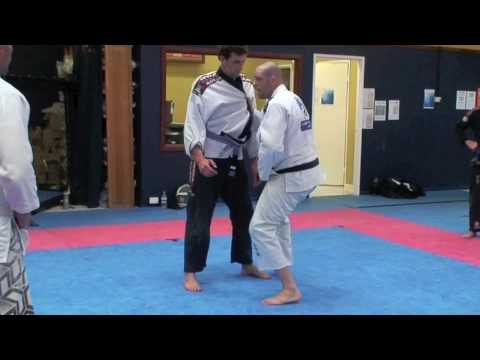
For more information or to try a free class visit http://infinitymartialarts.com.au/ or http://infinity4martialarts.co.u…
Учебных курсов по этой технике пока нет.
Войдите, чтобы предложить курс.
Риск травмы для человека, к которому применяется техника
Sacrifice throws involve tori falling with uke; higher risk of uncontrolled landing
Уровень мастерства, необходимый для надёжного выполнения техники
Разрешена ли техника по основным соревновательным правилам
Kodokan Judo — Official Nage-waza Classification
Traditional Judo throwing technique terminology (Kodokan Institute)
Official Kodokan ground technique classification system
Standard Japanese martial arts terminology (kanji/hiragana)
Established Japanese martial arts naming convention — native Japanese term (和語/漢語)
Traditional Judo throwing technique terminology (Kodokan Institute)
commitment, timing, body weight manipulation, falling skill
heavier build (body weight drives the throw), good ukemi
core rotators, hip flexors, abdominals
Каждое движение в любом боевом искусстве обладает рядом универсальных свойств. Комбинируйте параметры ниже, чтобы найти нужный инструмент или сравнить аналоги из разных стилей.
Rear Sacrifice, or Ma Sutemi Waza, is the family of sacrifice throws in which tori falls directly backward to execute the technique. [1] The thrower positions their body beneath the opponent, plants a foot on the opponent's hip, abdomen, or thigh, and rolls backward, using the fulcrum of the planted foot combined with backward momentum to launch uke overhead or to the side. [1,2] This family includes some of judo's most spectacular techniques, such as tomoe nage (circle throw), sumi gaeshi (corner reversal), and ura nage (rear throw), all of which generate considerable rotational force through the principle of leveraging one's own falling body mass against the opponent's centre of gravity. [2,3] Rear sacrifice throws are particularly effective as counter-attacks against forward-leaning opponents and in situations where tori's back is near the edge of the competition area. [3,4]
Rolling Sacrifice, or Makikomi Waza, is the family of sacrifice throws in which tori wraps their body around uke and rolls through the throw, using rotational momentum and body-weight entanglement to bring uke to the ground. [1,2] Unlike rear or side sacrifice throws where tori falls in a relatively straight line, makikomi throws involve a distinctive wrapping or winding action — tori's arm and body coil around uke, binding them together so that tori's falling body weight directly drags uke down. [2,3] This family includes harai makikomi, soto makikomi, and uchi makikomi, each applying the winding principle to a different base throw. [3,4] Makikomi throws are prized in competition for their ability to generate enormous power and for the difficulty opponents face in escaping once the roll has been initiated. [4]
Side Sacrifice, or Yoko Sutemi Waza, is the family of sacrifice throws in which tori falls to their side to execute the technique, using lateral body drop and rotational momentum to throw uke. [1,2] Unlike rear sacrifice throws where tori falls straight back, side sacrifice techniques involve tori dropping to one side, often sweeping or blocking uke's leg while pulling them laterally. [2,3] This family includes tani otoshi (valley drop), yoko guruma (side wheel), yoko otoshi (side drop), and yoko wakare (side separation), each employing a different mechanism of lateral force application. [3,4] Side sacrifice throws are especially effective as counter-techniques and combination finishers, exploiting lateral movement and off-balance positions that standing throws cannot easily address. [4,5]
The Side Sacrifice (Yoko Sutemi Waza) family covers sacrifice throws where the thrower falls to their side while executing the throw — one of two sacrifice throw sub-categories in judo (alongside ma sutemi waza where the thrower falls on their back). [1] Yoko sutemi throws use the thrower's sideways falling momentum to lever the opponent over or around them, often creating spectacular rotational throws. [1,2] Key yoko sutemi techniques include yoko otoshi (side drop), tani otoshi (valley drop), yoko guruma (side wheel), and yoko gake (side hook). [2,3] These throws are particularly effective when the opponent has strong forward-backward balance but is vulnerable to lateral attacks. [3]
Sutemi waza (sacrifice techniques) are divided into ma-sutemi (rear sacrifice) and yoko-sutemi (side sacrifice) in the Kodokan system. Tomoe nage appears in 9 passages across 6 books, tani otoshi in 13 across 8. These throws are considered advanced techniques requiring commitment and timing. (6-8 books; Kano, Kodokan Judo)
The key to the trick is breaking the opponent's posture downwards. Neil Owen emphasizes that this posture break is what makes the technique work effectively.
Pull across your opponent's arms to make them step, and keep your arms underneath to slide their arm down rather than pushing back. This positioning allows you to find the center before executing the sacrifice.
Yes, you need to get some momentum if you want the technique to work effectively, according to Neil Owen.
Sacrifice Throw, known in Japanese as Sutemi Waza, is the group of throwing techniques in which the thrower deliberately abandons their own standing base to complete the throw. Unlike standing throws where tori maintains upright balance throughout, sacrifice throws require the attacker to fall to the ground — either onto their back (rear sacrifice) or onto their side (side sacrifice) — using their own body weight and momentum as the primary throwing mechanism.
Sacrifice throws have roots in classical Japanese jujutsu systems where warriors needed techniques effective against armoured opponents who were difficult to unbalance with conventional standing throws. Jigoro Kano incorporated several sutemi waza into the Kodokan syllabus from its earliest days, recognising their effectiveness in randori and shiai.
IJF: разрешён — Legal throwing technique; IBJJF: разрешён — Legal at all belt levels; UWW: разрешён — Legal in both freestyle and Greco-Roman; Unified MMA: разрешён — Legal throwing technique; ADCC: разрешён — Legal; FIAS Sport Sambo: разрешён — Legal; FIAS Combat Sambo: разрешён — Legal
Оценка опасности 6/10. High — sacrifice throws involve tori falling with uke; higher risk of uncontrolled landing
Стандартная цепочка подготовки: Grip Setup (Kumi-kata) → Off-Balance (Kuzushi) → Entry (Tsukuri) → Execution (Kake) → Fall (Sutemi).
Стандартные контрприёмы: Lower Centre of Gravity — bend knees and drop hips to make the throw harder to execute / Grip Break — deny the thrower their preferred gripping configuration / Stiff-Arm — maintain distance with straight arms to prevent the entry.
Распространённые варианты: Rear sacrifice (falling backward while pulling the opponent over); Side sacrifice (falling to the side to project the opponent laterally); Rolling sacrifice (combining a roll with the sacrifice throw for rotation); Counter sacrifice (using the opponent's forward pressure as the driving force).
Sacrifice throws are frequently used in IJF competition, particularly by lighter-weight competitors who lack the power for standing hip throws.
Основные ошибки, на которые стоит обратить внимание: Not committing to falling — tentative sacrifice throws leave you in a seated position with no throw accomplished / Pulling the opponent down on top of you instead of redirecting them past or over you / Falling backward without any foot or leg action against the opponent — you simply sit down with no throwing mechanism / Attempting sacrifice throws when the opponent has strong forward pressure — they drive through you.
Sacrifice Throw — Sutemi Waza также известен как Sutemi-waza, Sacrifice throws, Self-sacrifice throws, Sutemi waza.