A JJM Guard Pass Encyclopedia
0
Преминаване на гард·JeanJacquesMachado
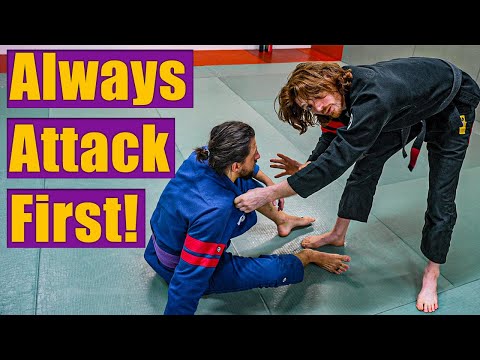
#escapes #jeanjacquesmachado #bjj One of the pioneers of the art of Brazilian Jiu-Jitsu and one of its greatest champi…
Translation: Преминаване на гард
Преминаването на гард обхваща всички техники, използвани от горния играч, за да се промъкне покрай краката на долния играч и да постигне доминираща позиция — то е ин към ян-а на гарда и може би най-сложният набор от умения в цялото борбено изкуство. [1] Преминаващият трябва да реши динамична задача: краката на долния играч са мощни, гъвкави прегради с куки, рамки и хватки, които трябва системно да бъдат неутрализирани, за да се стигне до странично управление, планка или контрол на гърба. [1],[2] Съществуват три основни философии на преминаване — преминаване с натиск (използване на телесното тегло за изравняване и обездвижване), преминаване с бързина (използване на скорост и момент, за да се изпревари реакцията на долния играч) и преминаване с тракция (хватково дърпане за отместване на краката на противника) — а елитните преминаващи съчетават и трите. [2],[3] Преминаването на гард носи 3 точки в IBJJF и ADCC, което отразява трудността и стратегическото му значение. [3]
Guard passing has been a critical skill since the emergence of the guard in BJJ — once the Gracie family demonstrated that the guard was a viable offensive position, passing the guard became the essential top-game skill. [1] Early guard passing was relatively simple — stack passes and basic toreando movements dominated until the 2000s. [1],[2] The modern guard passing revolution began with competitors like Fernando 'Tererê' Augusto (speed passing), Bernardo Faria (over-under pressure passing), the Mendes brothers (leg drag and berimbolo response), Leandro Lo (toreando and knee-cut mastery), and Gordon Ryan (systematic body-lock passing), who each contributed passing systems that transformed the art. [2],[3]
Guard passing is one of the most decisive skills in grappling competition — achieving a guard pass scores 3 points and typically leads to dominant positions where submissions or further points are available. [1] In high-level BJJ competition, the ability to pass guard often determines match outcomes, with elite passers like Leandro Lo, Roger Gracie, and Gordon Ryan building championship careers on passing excellence. [2] In MMA, guard passing from inside the guard to side control or mount is one of the strongest predictors of a round win in judging criteria. [3]
Guard passing traces from basic judo ne waza escapes from the guard through the Gracie BJJ lineage to modern sport jiu-jitsu. [1] Key innovators include Fernando Tererê (speed passing revolution), Bernardo Faria (over-under pressure system), the Mendes brothers (leg drag and precision passing), Leandro Lo (dynamic toreando), and Gordon Ryan (systematic body-lock and passing hierarchy). [1],[2] The evolution of guard passing has directly mirrored guard innovation — each new guard system spawns counter-passing strategies. [2]
Guard passing is the second-highest scoring action in IBJJF competition (3 points, behind mount's 4 points) and is central to ADCC strategy (3 points). [1] Elite guard passers dominate modern BJJ competition — Leandro Lo won 5 IBJJF World Championship titles across multiple weight classes largely through superior passing, and Gordon Ryan's systematic passing approach has dominated ADCC. [1],[2] In MMA, effective guard passing is one of the primary metrics by which ground fighters are evaluated. [2]
No images yet for this technique.
Sign in to suggest an image.
#escapes #jeanjacquesmachado #bjj One of the pioneers of the art of Brazilian Jiu-Jitsu and one of its greatest champi…
When most grapplers are taught open guard passing, they are taught with their opponents on their back and not sat up in …
No instructional courses yet for this technique.
Sign in to suggest a course.
Risk of injury to the person this technique is applied to
Moderate — guard passing is relatively safe for both players; the primary risks are submission attempts from the guard player (triangle, armbar, guillotine) during the passing attempt, and knee/ankle strain from getting caught in leg entanglements during passing transitions
Skill level needed to execute this technique reliably
Whether this technique is allowed under major competition rule sets
Jiu-Jitsu University (Saulo Ribeiro, 2008)
Description sources — [1] Jiu-Jitsu University (Ribeiro, 2008) on guard passing fundamentals [2] BJJ competition evolution analysis [3] IBJJF and ADCC scoring rules
History sources — [1] The Gracie Way (Kid Peligro, 2003) on early guard passing [2] BJJ competition records 2000–2020 [3] competitor instructional lineages
Effectiveness sources — [1] IBJJF and ADCC scoring (3 points for guard pass) [2] Competition records of Leandro Lo, Roger Gracie, Gordon Ryan [3] UFC fight analysis
Description sources — [1] Jiu-Jitsu University (Ribeiro, 2008) on guard passing fundamentals [2] BJJ competition evolution analysis [3] IBJJF and ADCC scoring rules
History sources — [1] The Gracie Way (Kid Peligro, 2003) on early guard passing [2] BJJ competition records 2000–2020 [3] competitor instructional lineages
Effectiveness sources — [1] IBJJF and ADCC scoring (3 points for guard pass) [2] Competition records of Leandro Lo, Roger Gracie, Gordon Ryan [3] UFC fight analysis
hip mobility (hip switching is the core passing movement), grip strength (controlling legs, stripping guard player's grips), cardio endurance (sustained passing pressure is exhausting)
strong core (driving pressure through the chest), explosive hips (speed passes require quick hip movement), heavy bodyweight (pressure passes are more effective with mass)
hip flexors and extensors (hip switching, sprawling), shoulders (driving crossface pressure), forearms (grip fighting), quadriceps (driving knee-cut and pressure passes), core (connecting upper and lower body during pass transitions)
Семейството фундаментални техники за преминаване на гард обхваща основните начини за пасиране, които формират основата на пасиращата игра на всеки грапльор — съществените методи за преминаване покрай краката на противника с цел постигане на страничен контрол, маунт или контрол над гърба. [1] Това семейство включва основните пасове, които всеки практикуващ BJJ научава първо: изправено разкъсване на гарда и тореандо пас, коленно разкъсване на гарда с прекарване на коляното, стек пас и фундаментални концепции за пасиране, приложими независимо от конкретния гард, който се преминава. [1,2] Макар съвременното BJJ да е развило силно специализирани системи за пасиране (пасиране с натиск, leg drag, body lock), всички те се изграждат върху фундаменталната механика за пасиране, разгледана в това семейство — стойка, база, контрол на хватките и способността да се напредне покрай линията на краката, като същевременно се предотврати възстановяването на гарда. [2,3] Всеки световен шампион по BJJ е овладял тези фундаментални пасове, преди да развие своите напреднали пасиращи системи. [3]
Семейството техники за преминаване от „щаб позиция
Семейството на коленения пас (knee cut / knee slice) обхваща една от най-универсалните и с най-висок процент на успех техники за преминаване на гарда в BJJ — карането на едното коляно напречно през бедрото на противника, едновременно с установяване на кросфейс с горната част на тялото, прорязвайки гарда за достигане на странична контрола. [1] Коленният пас се смята за „швейцарско ноже
Семейството на техниките Leg Drag Pass обхваща метода на хващане на един крак на противника и прехвърлянето му през тялото му, за да се освободи коридорът за преминаване — един от най-доминиращите и контролиращи пасове в съвременния състезателен BJJ. [1] Техниката leg drag е популяризирана от братята Мендес (Гийерме и Рафаел) и се превърна в задължителен елемент на съвременния спортен BJJ, при който пасът създава опустошителен ъгъл, даващ на нападащия едновременен достъп до странична контрола, захват на гърба и маунт. [1,2] Пасът работи чрез контролиране на единия крак на нивото на коляното или глезена и издърпването му в посока на противоположния хълбок на опонента, след което кракът се фиксира там, докато нападащият напредва до перпендикулярна или задна позиция. [2,3] Leg drag се смята за един от най-доминиращите пасове, защото след като веднъж е установен, охраняващият практически няма варианти за възстановяване — прехвърленият крак блокира движението на хълбока в посоката на преминаване. [3]
Семейството на пресинг паса обхваща техники за преминаване на гард, при които се използват тежко телесно тегло, компресия гърди в гърди и методично напредване напред, за да се сплеска играчът на гард, да се обездвижат бедрата му и бавно да се преминат краката — смилащият, доминиращ подход към преминаването на гард, предпочитан от по-тежки борци и състезатели, които залагат на контрол вместо на скорост. [1] Пресинг пасът е онагледен чрез овър-ъндър паса (едната ръка под крака, другата над него), смаш паса (избутване на краката на противника настрани и сплескване) и сигнатурната система за пресинг от полугард на Бернардо Фария. [1,2] Философията на пресинг паса е, че нападателните инструменти на играча на гард (претъркалвания, захвати за сабмишън) изискват движение на бедрата — тежкият натиск премахва движението на бедрата, свеждайки играча на гард до пасивен получател на паса. [2,3] Пресинг пасът се смята за най-надеждния подход при преминаване на гард срещу опасни играчи на гард, тъй като минимизира риска и създава неизбежно смилащо напредване. [3]
Семейството техники тореандо (матадорски) пас обхваща класическия пас на стъпала срещу гард, при който преминаващият хваща двата крачола на противника (в ги) или двете колена (без ги) и ги хвърля встрани, докато заобикаля — кръстен на движението на матадора с плащ, тъй като преминаващият пренасочва краката на защитника като матадор, пренасочващ бик. [1] Тореандото е най-основният стоящ пас срещу гард в BJJ, преподаван като първи стоящ пас практически в академия по целия свят, и остава ефективен на най-високо ниво на състезание при изпълнение с бързина и правилен тайминг. [1,2] Пасът работи чрез едновременен контрол над двата крака и бърза странична смяна на посоката, за да ги заобиколи, кацайки в страничен контрол преди защитникът да успее да се възстанови. [2,3] Леандро Ло (5-кратен световен шампион на IBJJF) беше най-великият изпълнител на тореандото в историята на BJJ, демонстрирайки, че „базовото
Guard passing — advancing past the opponent's legs to achieve a dominant position — appears in 289 passages across 19 books. The single most important top-game skill in BJJ. Without passing guard, the top player cannot score points or achieve submissions from dominant positions. (19 books; Ribeiro, Jiu-Jitsu University; Danaher, Guard Passing series)
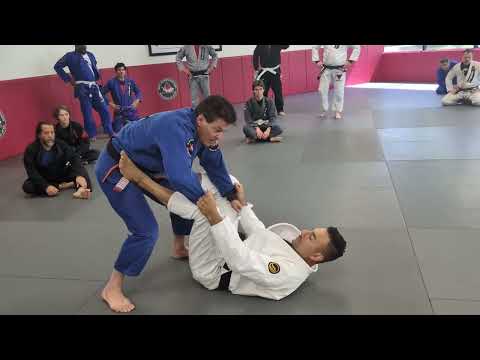
Jean Jacques Machado emphasizes getting two hands on one leg and moving parallel to your opponent, then driving your knee forward to close the distance and complete the pass. The key is maintaining control of the leg with both hands and not letting go as you drive through.
According to Jean Jacques Machado, don't fight the push—instead, go with the motion and step back, then re-engage and press forward. If your opponent holds a controlling grip on your arm, break the grip and keep moving rather than resisting the hold.
Jon Thomas emphasizes that staying low creates a strong pull on your opponent's shoulder and keeps their shoulders forward, which weakens their ability to defend and sets up the pass more effectively than being positioned high.
Jon Thomas suggests catching the lapel instead and pulling it while staying low, then moving to the side to run around or drop your shin in to create pressure on their hips, which can lead to a successful pass even without the underhook.
Преминаването на гард обхваща всички техники, използвани от горния играч, за да се промъкне покрай краката на долния играч и да постигне доминираща позиция — то е ин към ян-а на гарда и може би най-сложният набор от умения в цялото борбено изкуство. Преминаващият трябва да реши динамична задача: краката на долния играч са мощни, гъвкави прегради с куки, рамки и хватки, които трябва системно да бъдат неутрализирани, за да се стигне до странично управление, планка или контрол на гърба.
Guard passing has been a critical skill since the emergence of the guard in BJJ — once the Gracie family demonstrated that the guard was a viable offensive position, passing the guard became the essential top-game skill. Early guard passing was relatively simple — stack passes and basic toreando movements dominated until the 2000s.
IBJJF: легална — Legal, guard pass scores 3 points; IJF: легална — Legal — transitioning past opponent's legs is part of newaza; ADCC: легална — Legal, guard pass scores 3 points; Unified MMA: легална — Legal; FIAS Sport Sambo: легална — Legal
Оценка на опасност 3/10. Low-moderate — guard passing is relatively safe for both players; the primary risks are submission attempts from the guard player (triangle, armbar, guillotine) during the passing attempt, and knee/ankle strain from getting caught in leg entanglements during passing transitions
Стандартната верига за подготовка: Establish Base and Posture → Strip Grips → Choose Passing Lane → Initiate Pass → Navigate the Legs → Consolidate.
Стандартните контри включват: Guard Retention — using hip movement, frames, and grips to prevent the pass and re-establish guard / Sweep During Pass — timing a sweep as the passer commits to a pass attempt (often the highest-percentage sweep timing) / Submission During Pass — attacking with triangles, armbars, or guillotines as the passer creates openings during the … / Inversion — inverting (going upside down) to recover guard when the passer has nearly completed the pass.
Чести варианти: Pressure passing (using bodyweight and heavy chest/shoulder pressure to fla…); Speed passing (using quickness and timing to outflank the guard player's…); Traction passing (grip-based passing that moves the opponent's legs out of …); Knee-cut (knee slice) pass (splitting the guard by driving one knee across the oppone…); Leg drag (gripping one leg and dragging it across the opponent's bo…); Backstep pass (stepping backward out of the guard to create an angle for…).
Guard passing is the second-highest scoring action in IBJJF competition (3 points, behind mount's 4 points) and is central to ADCC strategy (3 points). Elite guard passers dominate modern BJJ competition — Leandro Lo won 5 IBJJF World Championship titles across multiple weight classes largely through superior passing, and Gordon Ryan's systematic passing approach has dominated ADCC.
Основни грешки, за които да внимавате: Passing without controlling grips — attempting to pass while the guard player has strong sleeve, collar, or pant grip… / Leaning too far forward — over-committing the upper body past the guard player's legs without hip control leads to be… / Using only one passing style — a pure pressure passer who never passes standing, or a pure speed passer who never use… / Ignoring the underhook during pass completion — the pass is not complete until you establish crossface and underhook ….
Преминаване на гард е известна също като Gādo Pasu, Преминаване на гард, Преминаване, Позиция след преминаване на гард.