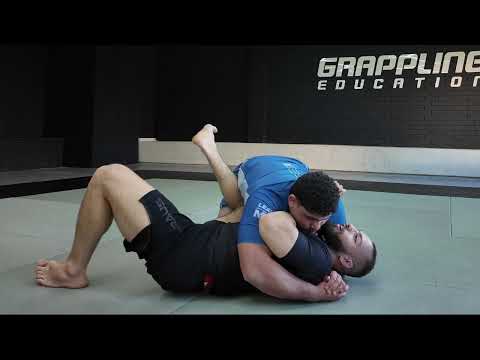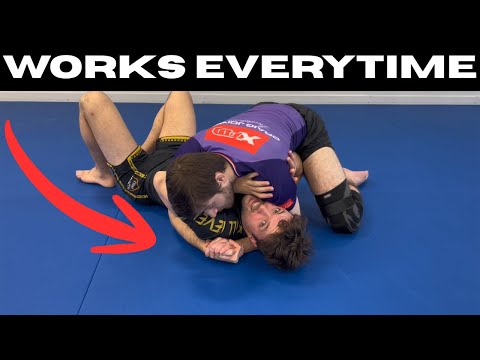
How I Escape EVERYONES Side Control
0
Излизане от страничен контрол·CrashAndFlowBJJ
I escape everyone’s side control using clean mechanics and high-percentage technique. This video shows my live rounds wi…
Translation: Излизане от страничен контрол
Групата техники за излизане от страничен контрол в рамките на категорията „Излизане от долна позиция
Side control escapes are fundamental to all grappling traditions — judo's methods for escaping yoko shiho gatame and wrestling's bottom escapes from cross-body rides both contributed to the modern BJJ escape system. [1] Saulo Ribeiro's systematisation of escapes in Jiu-Jitsu University (2008) provided the modern framework, introducing the 'survival posture' concept that prioritises self-protection before escape attempts. [1],[2] The hip escape (shrimp) — originally called the 'camarão' in Portuguese — was developed as a fundamental BJJ movement and is now considered the single most important ground movement in grappling. [2],[3]
Side control escapes are essential survival skills — the hip escape to guard recovery is the most commonly used escape in all of BJJ and MMA competition. [1] Elite grapplers like Marcelo Garcia and Demian Maia have demonstrated the ability to escape side control against the world's best, showing that even top-level control can be overcome with proper technique and timing. [2] In MMA, effective side control escape ability has saved countless fighters from ground-and-pound stoppages. [3]
No images yet for this technique.
Sign in to suggest an image.
I escape everyone’s side control using clean mechanics and high-percentage technique. This video shows my live rounds wi…
Join Ebsayz Jiu Jitsu for 1 on 1 coaching to accelerate your progress and guaranteed results! https://www.skool.com/ebsa…
No instructional courses yet for this technique.
Sign in to suggest a course.
Risk of injury to the person this technique is applied to
Escaping side control carries risk of being submitted during the escape (the opponent may attack armbars, kimuras, or chokes as you create space), and in MMA, escaping exposes the face to ground-and-pound during transitions
Skill level needed to execute this technique reliably
Whether this technique is allowed under major competition rule sets
Jiu-Jitsu University (Saulo Ribeiro, 2008)
Description sources — [1] Jiu-Jitsu University (Ribeiro, 2008) on escape hierarchy and survival posture [2] Marcelo Garcia escape demonstrations [3] The hip escape in grappling history
History sources — [1] Judo and wrestling escape traditions [2] Ribeiro's systematisation [3] BJJ movement fundamentals
Description sources — [1] Jiu-Jitsu University (Ribeiro, 2008) on escape hierarchy and survival posture [2] Marcelo Garcia escape demonstrations [3] The hip escape in grappling history
History sources — [1] Judo and wrestling escape traditions [2] Ribeiro's systematisation [3] BJJ movement fundamentals
hip mobility (shrimping is the primary movement), frame strength (maintaining forearm frames under pressure), core strength (bridging), cardio endurance (escape attempts are exhausting)
flexible hips, strong forearms (frame maintenance), explosive bridging
hip flexors (shrimping), forearms (framing), glutes (bridging), core (connecting bridge and shrimp), quadriceps (supporting frame structure)
Подгрупата „мост и обръщане от странична контрола
Подгрупата „рамка и възстановяване на гард
Подгрупата бягства от странично задържане чрез движение на ханша обхваща бягства от странично задържане, при които основно се използва движението на ханша (скарида), за да се създаде страничното пространство, необходимо за повторно вкарване на краката и възстановяване на гарда. [1] Бягството чрез движение на ханша от странично задържане е най-фундаменталното и най-често тренирано бягство в BJJ, формирайки основата на повечето последователности за бягство от странично задържане. [1,2] Вариантите включват стандартното движение на ханша (скарида за възстановяване на гарда) и бягството призрак (динамично движение на ханша, при което изпълнителят се плъзга под противника). [2,3]
Групата техники за излизане от странична контрола с подхват обхваща варианти, при които защитаващият се установява подхват от близката страна, намирайки се отдолу в странична контрола, след което използва подхвата, за да създаде рамка и да генерира пространство, необходимо за излизане на колене или възстановяване на гарда. [1] Подхватът от долна позиция в странична контрола дава вътрешна позиция, която позволява на защитаващия се да натиска срещу противника и да създава насочена нагоре сила, вместо да разчита единствено на избягване с ханша встрани. [1,2] Излизането с подхват може да доведе до залавяне на единичен крак, вземане на гръб или просто позиционно подобрение до позиция на колене. [2,3]
Side control escapes rely on creating frames (forearms against the opponent's neck and hip) to create space for hip movement. The shrimp-to-guard recovery is the primary escape method. (Ribeiro, Jiu-Jitsu University)
According to Ebsayz, the biggest mistake is hugging your opponent or trying to frame in the wrong direction. Instead, you need to avoid hugging and focus on creating proper frames with correct body positioning.
CrashAndFlowBJJ emphasizes that you must first address the cross face by getting your hand inside to prevent your opponent from turning you over, since the body follows the head and you need to be able to turn into your opponent to execute the escape.
CrashAndFlowBJJ recommends defaulting to a power strip position, which he describes as super valuable and reliable for getting your side guard escape every time, even against tight positioning.
Ebsayz outlines that step one is to not hug your opponent, then you need to establish two frames with proper positioning (more than 90 degrees and lined up to the elbow), create separation, get a leg between you and your opponent, and move into counter-attacks.
Групата техники за излизане от страничен контрол в рамките на категорията „Излизане от долна позиция
Side control escapes are fundamental to all grappling traditions — judo's methods for escaping yoko shiho gatame and wrestling's bottom escapes from cross-body rides both contributed to the modern BJJ escape system. Saulo Ribeiro's systematisation of escapes in Jiu-Jitsu University (2008) provided the modern framework, introducing the 'survival posture' concept that prioritises self-protection before escape attempts.
Unified MMA: легална — Legal defensive/transitional technique; IBJJF: легална — Legal; IJF: легална — Legal; ADCC: легална — Legal; UWW: легална — Legal, escape scores 1 point (freestyle), reversal scores 1 point; FIAS Sport Sambo: легална — Legal; NCAA Folkstyle: легална — Legal, escape scores 1 point, reversal scores 2 points
Оценка на опасност 4/10. Moderate — escaping side control carries risk of being submitted during the escape (the opponent may attack armbars, kimuras, or chokes as you create space), and in MMA, escaping exposes the face to ground-and-pound during transitions
Стандартната верига за подготовка: Survive → Frame → Create Space → Hip Escape → Insert Knee → Recover Guard → Consolidate.
Стандартните контри включват: When on top in side control: drive heavy chest pressure to prevent framing / Follow the hips — when the bottom player shrimps, follow with your hips to maintain chest contact / Crossface — drive the forearm across the face to turn the head and prevent guard recovery / Knee insert — drive the near-side knee into the space between the bottom player's elbow and hip to block guard recovery.
Чести варианти: Hip escape (shrimp) to guard recovery (the most fundamental and commonly used escape; shrimping …); Bridge and roll (explosive bridge to reverse when the opponent has poor base); Underhook escape (fighting for the near-side underhook and coming to the kn…); Running escape (turning away and coming up in a running motion; a Marcelo…); Ghost escape (framing against the opponent's hip while sliding the body…); Sit-up escape (sitting up into the opponent while attacking an underhook…); Stiff-arm escape (fully extending the near arm to create maximum frame dist…); Knee-elbow escape (a compact version where the knee and elbow connect to cre…).
Side control escapes are the most commonly attempted escapes in BJJ and MMA competition. The hip escape to guard recovery is performed thousands of times in every major tournament.
Основни грешки, за които да внимавате: Pushing with arms instead of framing — pushing is weak and tires quickly; frames use skeletal structure (bone against… / Shrimping without frames — the opponent simply follows the shrimp if no frames prevent them from re-closing the distance / Lying flat and accepting the position — side control escapes require active effort from the first moment / Bridging straight up — bridges must be at a specific angle to create usable space; straight-up bridges are easily ridden.
Излизане от страничен контрол е известна също като Saido Kontorōru Esukēpu, Излизане от страничен контрол, Излизане от странично закрепване, Излизане от кеса гатаме.