Side control ESCAPES | BJJ Fundamentals
0
Escape and Reversal·Energia Martial Arts
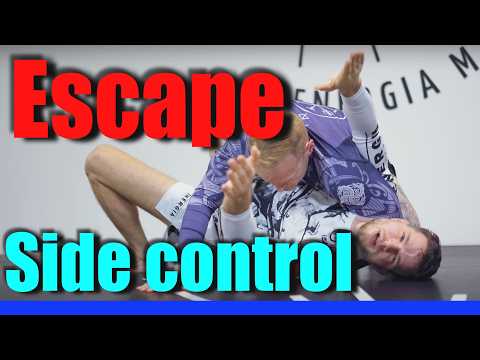
Side control ESCAPES | BJJ Fundamentals FUNdamentals time! One of the first videos we ever made was on side control esc…
Translation: escape and reversal techniques
Escape and reversal techniques have been integral to grappling systems since antiquity; ancient Greek pankration and Indian kushti both codified methods of regaining position from disadvantageous holds. [1],[2] In Japanese jujutsu, reversal methods (kaeshi-waza) were systematised as a core curriculum element alongside throwing and pinning. [3] Jigoro Kano's Kodokan judo further formalised escape and counter techniques within its ne-waza (ground technique) and katame-waza (grappling technique) divisions. [3],[4] Modern Brazilian jiu-jitsu has expanded the escape and reversal taxonomy significantly, with systematic approaches developed by instructors such as Saulo Ribeiro and John Danaher. [5],[6]
Escape and reversal techniques are among the most critical skills in competitive grappling — without them, any positional disadvantage becomes terminal. [1] Saulo Ribeiro identifies escapes as the foundational skill layer that must be mastered before attacks, arguing that a fighter who cannot escape will never develop the confidence to take risks offensively. [1] In MMA, the ability to escape bottom positions and return to standing is statistically one of the strongest predictors of competitive success, as fighters who remain on bottom absorb significantly more damage. [2]
Escape techniques trace through every major grappling lineage. Jigoro Kano included ground escapes (fusegi) in Kodokan Judo's ne-waza curriculum from the 1880s. [3] The Gracie family, particularly Helio Gracie, emphasized escapes as the foundation of BJJ for smaller practitioners, developing the bridge-and-roll and elbow escape as core survival techniques. [4] Modern escape methodology has been further refined by instructors like John Danaher, whose systematic approach to escapes emphasizes frames, wedges, and sequential hip movement. [2]
No images yet for this technique.
Sign in to suggest an image.
Side control ESCAPES | BJJ Fundamentals FUNdamentals time! One of the first videos we ever made was on side control esc…
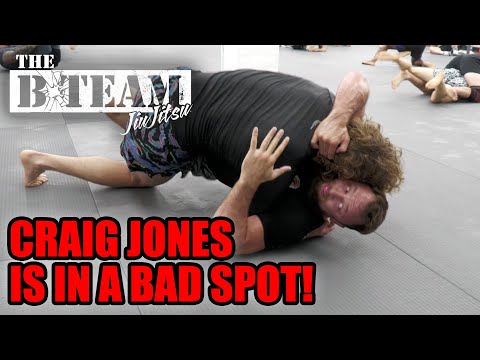
Craig Jones spends time in bottom position to develop a way of escaping new for many jiu-jitsu practitioners. Craig trai…
No instructional courses yet for this technique.
Sign in to suggest a course.
Risk of injury to the person this technique is applied to
Escapes involve explosive movement from disadvantaged positions; joint strain risk during bridge/shrimp
Skill level needed to execute this technique reliably
Whether this technique is allowed under major competition rule sets
Drysdale, Robert. Opening Closed-Guard: The Origins of Jiu-Jitsu in Brazil (2020). ISBN: 979-8680602287
Alias sources — [1] Gracie Jiu-Jitsu (Gracie & Gracie, 2001) [2] Kodokan Judo (Jigoro Kano, 1986) [3] Jiu-Jitsu University (Saulo Ribeiro, 2008) [4] Jiu-Jitsu University (Saulo Ribeiro, 2008)
Effectiveness sources — [1] Jiu-Jitsu University (Saulo Ribeiro, 2008) [2] Mastering Jujitsu (Renzo Gracie & John Danaher, 2003)
Standard Japanese martial arts terminology (kanji/hiragana)
Established Japanese martial arts naming convention — native Japanese term (和語/漢語)
Alias sources — [1] Gracie Jiu-Jitsu (Gracie & Gracie, 2001) [2] Kodokan Judo (Jigoro Kano, 1986) [3] Jiu-Jitsu University (Saulo Ribeiro, 2008) [4] Jiu-Jitsu University (Saulo Ribeiro, 2008)
Effectiveness sources — [1] Jiu-Jitsu University (Saulo Ribeiro, 2008) [2] Mastering Jujitsu (Renzo Gracie & John Danaher, 2003)
hip mobility, explosive bridge/shrimp power, timing
flexible hips and strong glutes for escape movements
glutes, hip flexors, core, triceps (framing)
Every move, in any martial art, shares a few universal traits. Mix and match below to pinpoint the right tool — or compare equivalents across styles.
The Back Escape group encompasses all techniques for escaping when an opponent has achieved back control — one of the most dominant and dangerous positions in grappling. [1] Back control gives the attacker access to rear naked chokes and other strangulations while the defender faces away and cannot effectively counter-attack, making back escapes among the most critical survival skills in grappling. [1,2] This group includes rear mount escapes (escaping hooks-in back control), crucifix escapes (escaping the fully immobilised crucifix position), and the various mechanical strategies for dislodging an opponent from the back. [2,3]
Bottom Escape covers all techniques for escaping inferior bottom positions where the opponent has established dominant top control — the defensive survival skills that keep a fighter in the fight after losing the positional battle. [1] This group addresses escapes from mount, side control, knee-on-belly, north-south, and other bottom positions using the fundamental principles of framing (creating skeletal structure barriers), hip movement (shrimping to generate space), and bridging (explosive upward force to off-balance the top player). [1,2] Hélio Gracie's philosophy that a smaller, weaker fighter should be able to survive and eventually escape from underneath a larger opponent is the foundational principle of BJJ's bottom escape system. [2,3] In competition, bottom escapes are not directly scored but are essential for survival — a fighter who cannot escape bottom positions will be submitted, pinned, or ground-and-pounded in MMA. [3]
Pin Escape covers techniques for escaping from wrestling pins and holds where the opponent controls you against the mat with your shoulders exposed — a critical survival skill in folk, freestyle, and Greco-Roman wrestling. [1] In wrestling, being pinned (both shoulders on the mat for a specified duration) results in an immediate loss by fall, making pin escape the highest-priority skill after being turned to the back. [1,2] Pin escapes use bridging (explosive hip thrust upward), posting (arms pushing against the mat for base), and turning (rotating to the belly to clear the shoulders from the mat). [2,3] In judo, the equivalent concept is escaping osaekomi waza (hold-down techniques) before the referee counts the required duration for scoring. [3]
Position Escape covers techniques for escaping from specialised control positions that don't fit within the standard mount, side control, or back escape categories — addressing unique positional challenges found in MMA, 10th Planet Jiu-Jitsu, and modern submission grappling. [1] This group includes escapes from crucifix, body triangle, truck position, leg ride, cradle, and other specialised control positions that have become increasingly common as positional systems have diversified. [1,2] Many of these positions are unique to specific martial arts or competition formats — the truck position is primarily a 10th Planet Jiu-Jitsu concept, the body triangle is common in MMA back control, and the crucifix appears across wrestling, BJJ, and MMA. [2,3] Understanding these escapes requires knowledge of the specific control mechanics of each position, as the escape principles differ significantly from standard bottom escapes. [3]
The Standing Escape group encompasses all techniques for returning to a standing position from the ground, whether from bottom position, guard, or after being taken down. [1] Standing escapes are critical in MMA where the ground position may not be advantageous for a striker, and in self-defence where remaining on the ground creates additional vulnerability. [1,2] This group includes technical stand-ups (systematic methods of standing safely), guard pulls (transitioning from standing to a specific guard position), and wrestle-ups (using wrestling techniques to return to standing from the bottom). [2,3]
The Submission Escape group encompasses all techniques for escaping submission attempts — joint locks, chokes, and compression holds — that have been initiated but not yet fully secured. [1] Submission escapes represent the last line of positional defence in grappling; once a fighter is caught in a submission, escape becomes a matter of survival with a narrow window of opportunity. [1,2] This group covers armbar escapes (stacking, hitchhiker, rolling), choke escapes (guillotine, RNC, triangle), and leglock escapes (ankle lock, heel hook, kneebar), each requiring specific mechanical knowledge and timing to execute safely. [2,3] The ability to escape submissions is what allows grapplers to compete at the highest levels without being forced to constantly concede via tap-out. [3,4]
The Sweep — Guard Reversal group encompasses all techniques for reversing position from a bottom guard position to a top position, constituting the offensive component of the Escape and Reversal class. [1] Sweeps are the mechanism by which guard players convert a seemingly inferior bottom position into a dominant top position, and they are one of the most technically rich and diverse areas of Brazilian Jiu-Jitsu. [1,2] This group covers sweeps from every major guard position — closed guard, half guard, butterfly guard, open guards (De La Riva, spider, collar-sleeve), and advanced inverted positions like the berimbolo — each requiring different mechanical principles and timing. [2,3] In competition, sweeps are scored highly (two points in IBJJF rules) because they represent a clear reversal of the positional hierarchy. [3,4]
The Turtle Escape group encompasses all techniques for escaping the turtle position — the defensive curled-up posture on hands and knees where a grappler protects against attacks from the opponent on top or behind. [1] Turtle escapes are critical because while the turtle position prevents immediate submissions and pins, it is a fundamentally defensive position that scores negatively in many rulesets and leaves the bottom fighter vulnerable to back takes, turnovers, and ground-and-pound in MMA. [1,2] This group covers sit-out escapes, rolling escapes (Peterson roll, snap roll), guard pulls from turtle, and stand-ups from turtle, each offering a different pathway back to a neutral or advantageous position. [2,3]
Escapes and reversals are the techniques for recovering from disadvantaged positions — the bottom player's toolkit. In BJJ, Saulo Ribeiro's Jiu-Jitsu University organizes the entire art around a survival-escape-attack hierarchy: survive first, escape second, attack third. 'Sweep' appears in 2,629 passages across our corpus. (200+ books; Ribeiro, Jiu-Jitsu University; Gracie & Danaher, Mastering Jujitsu)
No—Energia Martial Arts emphasizes that weight alone isn't the deciding factor. Even if your opponent puts all their weight on you with no arm control, proper framing and body positioning allow you to move and escape quickly.
Energia Martial Arts stresses two critical frames: getting your elbow into your opponent's hip, and placing your hand on their face or neck. When framing the face, enter with your fist and keep your elbow tucked to avoid arm triangle setups.
Most beginners don't align their shoulders with their hips before extending, creating a dangerous spinal twist. Instead, rotate to your side first so your shoulder blades align with your hip position—like a deadlift rather than a sideways hinge—before driving through the escape.
Use a two-part bridge: first bridge with your hips to create initial separation, then bridge with your upper body to open additional space. Time this correctly so you can slot your elbow in without giving your opponent time to transition to a mounted position.
Techniques used to free oneself from disadvantageous positions or to reverse positional control, transitioning from a defensive state to a neutral or dominant one.
Escape and reversal techniques have been integral to grappling systems since antiquity; ancient Greek pankration and Indian kushti both codified methods of regaining position from disadvantageous holds. In Japanese jujutsu, reversal methods (kaeshi-waza) were systematised as a core curriculum element alongside throwing and pinning.
Unified MMA: legal — Legal defensive/transitional technique; IBJJF: legal — Legal; IJF: legal — Legal; ADCC: legal — Legal; UWW: legal — Legal, escape scores 1 point (freestyle), reversal scores 1 point; FIAS Sport Sambo: legal — Legal; NCAA Folkstyle: legal — Legal, escape scores 1 point, reversal scores 2 points
Danger rating 3/10. Moderate — escapes involve explosive movement from disadvantaged positions; joint strain risk during bridge/shrimp
The standard setup chain: Create Space → Disrupt Control → Execute Escape → Recover Position.
Standard counters include: Maintain Pressure — keep consistent weight distribution to limit escape space / Anticipate Direction — read escape attempt direction and block early / Transition — flow to a new position when the current one is threatened.
Common variants: Standard escape (primary escape mechanic using frames, bridges, or hip mov…); Combination escape (chaining two escape directions or methods); Counter escape (using the opponent's attack attempt to create the escape …); Competition variation (modified for rule-set optimisation).
Escape and reversal techniques are fundamental scoring actions in wrestling (1 point for escape, 2 for reversal in folkstyle) and critical survival skills in BJJ and MMA.
Top errors to watch for: Waiting too long to escape — the longer you're in a bad position, the harder escape becomes; start working immediately / Using strength instead of technique — muscling out of positions works against weaker opponents but fails against skil… / Escaping to the same bad position — the escape must lead to a positional improvement, not a lateral move / Panicking and using explosive, uncontrolled movement — controlled technique with proper timing beats frantic energy.
The Escape and Reversal is also known as Nige-waza / Kaeshi-waza, Escape, Reversal, Fusegi, Positional Escape.