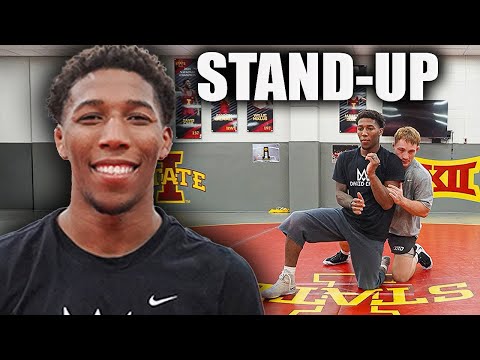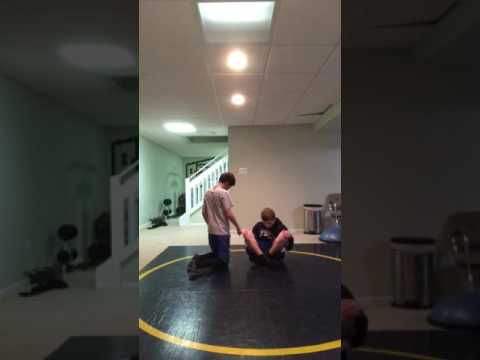
How to escape out of bottom position in wrestling!
0
Bottom Escape·Wrestling 101
When your ever stuck in bottom position and need to get out, moves like the Peterson, Oklahoma State hip heist, Granby r…
Translation: Bottom escape
Bottom Escape covers all techniques for escaping inferior bottom positions where the opponent has established dominant top control — the defensive survival skills that keep a fighter in the fight after losing the positional battle. [1] This group addresses escapes from mount, side control, knee-on-belly, north-south, and other bottom positions using the fundamental principles of framing (creating skeletal structure barriers), hip movement (shrimping to generate space), and bridging (explosive upward force to off-balance the top player). [1],[2] Hélio Gracie's philosophy that a smaller, weaker fighter should be able to survive and eventually escape from underneath a larger opponent is the foundational principle of BJJ's bottom escape system. [2],[3] In competition, bottom escapes are not directly scored but are essential for survival — a fighter who cannot escape bottom positions will be submitted, pinned, or ground-and-pounded in MMA. [3]
Bottom escape techniques are fundamental to all grappling traditions — wrestling 'bottom man' escapes have been systematised for over a century, and judo's escape from osaekomi (pins) is a core skill set. [1] In BJJ, the escape system was elevated to an art form by Hélio Gracie, who built his entire approach around surviving underneath larger opponents and eventually escaping. [1],[2] Saulo Ribeiro's 'survival posture' concept (Jiu-Jitsu University, 2008) provided a modern framework for bottom escape that begins with protecting yourself before attempting to escape. [2],[3]
Bottom escapes are essential survival skills — fighters who can consistently escape bad positions extend their careers and create opportunities to win from disadvantageous situations. [1] In MMA, effective escape ability has saved numerous fighters from defeat — Demian Maia, Tony Ferguson, and Nate Diaz have all demonstrated the ability to escape dominant positions and turn fights around. [2] In BJJ competition, escape ability is what allows competitors to take risks with aggressive guard play without being stuck in bottom position. [3]
No images yet for this technique.
Sign in to suggest an image.
When your ever stuck in bottom position and need to get out, moves like the Peterson, Oklahoma State hip heist, Granby r…
wrestling can be frustrating when you can't get off the bottom position here are some of my favorite tips and tricks to …
No instructional courses yet for this technique.
Sign in to suggest a course.
Risk of injury to the person this technique is applied to
Moderate — escaping is inherently risky because it involves moving from a disadvantaged position while the opponent has control; the primary risks are being submitted during the escape attempt (if the escape exposes the neck or limbs) and absorbing ground-and-pound in MMA while working the escape
Skill level needed to execute this technique reliably
Whether this technique is allowed under major competition rule sets
Jiu-Jitsu University (Saulo Ribeiro, 2008)
Description sources — [1] Jiu-Jitsu University (Ribeiro, 2008) on escape hierarchy [2] Mastering Jujitsu (Gracie & Danaher, 2003) on Hélio Gracie's philosophy [3] Competition application
History sources — [1] Wrestling escape traditions [2] Gracie family history [3] Jiu-Jitsu University (Ribeiro, 2008)
Description sources — [1] Jiu-Jitsu University (Ribeiro, 2008) on escape hierarchy [2] Mastering Jujitsu (Gracie & Danaher, 2003) on Hélio Gracie's philosophy [3] Competition application
History sources — [1] Wrestling escape traditions [2] Gracie family history [3] Jiu-Jitsu University (Ribeiro, 2008)
hip mobility (shrimping is the primary escape movement), explosive bridging power, frame strength (maintaining frames under pressure)
flexible hips, strong glutes (bridging power), cardio endurance (escape attempts are exhausting)
glutes (bridging), hip flexors (shrimping), forearms (framing), core (connecting bridge and shrimp movements)
Every move, in any martial art, shares a few universal traits. Mix and match below to pinpoint the right tool — or compare equivalents across styles.
The Kesa Gatame Escape family covers techniques for escaping the kesa gatame (scarf hold) position, where the opponent controls from the side with one arm wrapped around the defender's head and the other controlling the near arm. [1] Kesa gatame escapes must address the headlock control that distinguishes this position from standard side control — the wrapped head limits the defender's ability to turn and creates compression on the neck. [1,2] Primary escape methods include bridging and rolling toward the opponent, and threading the leg over the opponent's head to create a reversal. [2,3]
The Knee On Belly Escape family covers techniques for escaping the knee-on-belly (or knee-on-stomach) position, where the opponent places one knee on the defender's midsection with the other leg posted for balance. [1] Knee-on-belly creates intense pressure on the diaphragm, making breathing difficult and creating urgency to escape — panicked reactions are the biggest danger, as they often lead to worse positions or submission exposure. [1,2] Primary escape methods include framing and shrimping to create distance, and pushing the knee off while reguarding. [2,3]
The Mount Escape family covers all techniques for escaping the mount position, where the opponent sits on top of the defender's torso with legs straddling the body. [1] Mount is one of the most dominant positions in grappling and MMA — the top fighter has gravitational advantage, access to strikes, and can transition to submissions — making mount escapes among the most critical survival skills. [1,2] Primary escape methods include the trap and roll (upa), shrimp to half guard or full guard, heel drag escapes, and kipping escapes. [2,3]
The North-South Escape family covers techniques for escaping the north-south position, where the opponent controls from head-to-head with their chest on the defender's chest, facing the opposite direction. [1] North-south is a particularly oppressive control position because the opponent's weight is directly on the defender's chest and the position limits hip movement, making the standard shrimp difficult. [1,2] Primary escapes include shrimping to create angle and reguarding, and inversions that use the defender's flexibility to recover guard. [2,3]
The Side Control Escape family within the Bottom Escape group covers the fundamental techniques for escaping from underneath side control — the most commonly encountered bad position in BJJ and the position from which the most escapes are attempted in competition. [1] The two primary side control escapes are the hip escape (shrimp) to guard recovery and the bridge-and-roll reversal, with the hip escape being the most important single escape in all of grappling. [1,2] Side control escapes rely on three fundamental principles: framing (creating skeletal structure barriers with the forearms against the opponent's neck and hip), hip movement (shrimping to generate lateral space), and timing (executing the escape when the opponent shifts weight or transitions between positions). [2,3] Saulo Ribeiro's 'survival posture' concept — protecting yourself before attempting to escape — provides the modern framework for side control escape methodology. [3]
The Wrestling Bottom Escape family covers escape techniques from the wrestling bottom (referee's) position — the on-hands-and-knees starting position used in folkstyle wrestling where one wrestler is on bottom with the opponent behind in a riding position. [1] This is a wrestling-specific escape family that addresses the unique challenges of the folkstyle bottom position: the top wrestler has a waist-and-wrist ride (seatbelt-like control from behind), and the bottom wrestler must escape to standing, reverse position, or create a neutral scramble. [1,2] The four fundamental wrestling bottom escapes are the stand-up (explosive rise to feet), the sit-out (sitting through to face the opponent), the switch (reaching back to reverse position), and the Granby roll (shoulder roll to escape). [2,3] In folkstyle wrestling, escaping from bottom scores 1 point (escape) and reversing scores 2 points (reversal), making these directly scoring techniques. [3]
Bottom escapes — from mount, side control, knee-on-belly, north-south — follow Ribeiro's survival hierarchy: frame → create space → hip escape → recover guard. Mount escape and side control escape are the two most important skills for any BJJ beginner. (Ribeiro, Jiu-Jitsu University; Gracie & Danaher, Mastering Jujitsu)
David Carr emphasizes keeping a bend in your elbows for explosiveness, curling your toes, keeping your head up with a straight back, and maintaining a strong wrestling stance rather than standing straight up—this allows you to anticipate and react to your opponent's moves.
Block and seal one side of your opponent's arm so it can't move, then use a strong arm block by grabbing four fingers and pushing into your back to prevent them from locking their hands and controlling you.
Block his arm with your elbow and control his wrist, then circle toward your head on your feet so his leg comes into range, get up on your feet, grab his leg, and roll across your back into position.
David Carr stresses that staying on your feet is equally important as getting up because your opponent will try to mat return you; if you can block their hips and avoid being picked up, you conserve energy and eventually they'll have to give up or hit you for stalling.
Bottom Escape covers all techniques for escaping inferior bottom positions where the opponent has established dominant top control — the defensive survival skills that keep a fighter in the fight after losing the positional battle. This group addresses escapes from mount, side control, knee-on-belly, north-south, and other bottom positions using the fundamental principles of framing (creating skeletal structure barriers), hip movement (shrimping to generate space), and bridging (explosive upward force to off-balance the top player).
Bottom escape techniques are fundamental to all grappling traditions — wrestling 'bottom man' escapes have been systematised for over a century, and judo's escape from osaekomi (pins) is a core skill set. In BJJ, the escape system was elevated to an art form by Hélio Gracie, who built his entire approach around surviving underneath larger opponents and eventually escaping.
Unified MMA: legal — Legal defensive/transitional technique; IBJJF: legal — Legal; IJF: legal — Legal; ADCC: legal — Legal; UWW: legal — Legal, escape scores 1 point (freestyle), reversal scores 1 point; FIAS Sport Sambo: legal — Legal; NCAA Folkstyle: legal — Legal, escape scores 1 point, reversal scores 2 points
Danger rating 3/10. Low-moderate — escaping is inherently risky because it involves moving from a disadvantaged position while the opponent has control; the primary risks are being submitted during the escape attempt (if the escape exposes the neck or limbs) and absorbing ground-and-pound in MMA while working the escape
The standard setup chain: Survive → Frame → Create Space → Move → Recover Position.
Standard counters include: When on top, counter escapes by: maintaining heavy chest pressure / Anticipating the escape direction and blocking with hip or knee / Transitioning to a new position when the current one is threatened / Using the escape attempt to set up submissions (e.g., the bottom player exposing an arm during escape allows an armbar).
Common variants: Mount escape (trap and roll (upa), elbow-knee (shrimp), heel drag, and …); Side control escape (hip escape to guard recovery, bridge and roll to reversal…); Knee-on-belly escape (frame and shrimp, guard recovery, and spin-under escapes); North-south escape (frame-based hip escape and guard recovery); Scarf hold (kesa gatame) escape (bridge and roll to reverse, or frame and slide out the back); Back control escape (fighting hands, sliding hips to mat, and turning into the…); Crucifix escape (bridging and rolling to free trapped arms).
Bottom escapes are not directly scored in most rulesets but are essential for survival. In folkstyle wrestling, the escape from bottom scores 1 point.
Top errors to watch for: Lying flat and accepting the position — panic or resignation leads to staying flat; escapes require active effort fro… / Pushing with arms only instead of using hips — arm pushes are weak and tire quickly; the hips generate the real escap… / Not framing before moving — attempting to shrimp without first establishing frames results in the opponent following … / Bridging straight up — bridges must be directional (at an angle) to create usable space; straight-up bridges are easi….
The Bottom Escape is also known as Botomu Esukēpu, Bottom Position Escape, Escape From Bottom, Guard Recovery.