Definition and Purpose
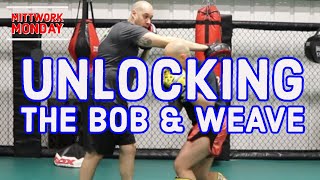
The bob and weave consists of two distinct movements: bobbing, which moves the head vertically up and down, and weaving, which moves the head horizontally side to side in a perpendicular pattern. The primary objective is to avoid the opponent's strikes while maintaining proper boxing stance and the ability to counterattack. By moving the head out of the centerline—termed the "kill zone"—where strikes carry maximum impact, a boxer can reduce the damage potential of incoming punches.
The Kill Zone Concept
The kill zone is the area directly in line with an opponent's punches where strikes have maximum leverage and power. Any punch landing in this zone will cause significant damage due to optimal force transfer. The bob and weave allows a boxer to keep their head moving continuously, preventing it from remaining a stationary target within this critical striking zone.
Proper Mechanics and Stance
The bob and weave must be generated from the legs and knees, not the lower back. Bending at the knees provides better balance, positioning for counterattacks, and prevents the head from drifting too far forward beyond the feet. Using only the lower back creates poor balance, reduces power for return strikes, and risks injury if the head extends past the toes into the opponent's knee line.
Advantages of Weaving Over Static Bobbing
Pure vertical bobbing leaves a fighter confined to a narrow space and vulnerable to continuous attacks once the opponent recovers position. Weaving incorporates weight transfer from leg to leg, which generates momentum that can be used to advance forward while evading strikes. This momentum allows a fighter to close distance, escape the kill zone, and transition to effective counteroffensives.
Offensive Integration
The bob and weave transitions from defensive evasion to offensive opportunity by building momentum through weight shifts. As the weaving motion transfers weight between the lead and rear legs, a boxer accumulates force that can be redirected into powerful counter-strikes once inside optimal fighting range. This allows the fighter to slip multiple incoming attacks and then launch an aggressive combination.
Basic Drill Execution
The fundamental bob and weave drill begins in proper boxing stance with bent knees. The rear elbow drops toward the rear knee while momentum transfers to the lead leg, creating a 45-degree angle directional change. The lead elbow then approaches the lead knee as weight transfers back, and this alternating pattern is repeated continuously. The head traces a V-shaped pattern around the kill zone throughout the movement.
Partner Training Progression
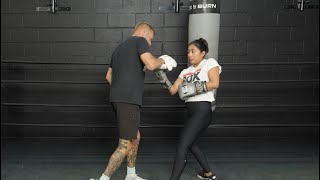
Training with a partner begins with slow, controlled hook punches directed at the head while the defending boxer practices bobbing and weaving underneath. Once the basic evasion is mastered, the attacker can introduce counter-strike opportunities and the defender can begin adding counter-punches to the drill. Controlled sparring conditions are essential to build neural adaptation without causing injury.
Distance and Context Considerations
The bob and weave is most effective at close range where the opponent is actively striking and the defensive movement directly counters incoming attacks. At mid or long range, the movement wastes energy without benefit since no strikes are being thrown. An opponent observing excessive bob and weave at distance will simply wait for the boxer to tire before attacking, making range awareness critical for efficient execution.
The Bob and Weave (step by step for beginners)
Key Takeaways
- •Definition and Purpose
- •The Kill Zone Concept
- •Proper Mechanics and Stance
- •Advantages of Weaving Over Static Bobbing
Learn the Boxing Bob and Weave as Everlast Nutrition expert fitness trainer walks you through it step by step. The bob and weave is a fundamental movement in boxing that allows a fighter to evade punches while remaining in a position to counterattack. The bob refers to the motion of dropping the head and upper body down and forward, while the weave refers to the motion of slipping the head to the side while weaving the upper body underneath the punch. Together, the bob and weave allows a boxer to avoid punches while remaining in a position to strike back, providing them with a valuable defensive advantage. The bob and weave is a key technique for avoiding punches, especially hooks, which are difficult to see coming and can be very damaging. The bob and weave can help fighters get inside the range of taller and longer armed opponents, giving them an opportunity to land their punches and do damage. Additionally, this technique allows boxers to move in and out of range quickly, making it more difficult for the opponent to land punches, thus avoiding taking unnecessary punishment. Furthermore, by practicing this technique, the boxer develops better balance and footwork, which is crucial for effective mobility and being able to evade punches quickly and efficiently. In summary, The bob and weave is an important technique in boxing that provides fighters with the ability to evade punches while remaining in position to counter-attack, it helps boxers to get inside the range of taller and longer armed opponents and improve their balance and footwork, among other benefits. Proper Boxing Stance; https://www.youtube.com/watch?v=DFTa81YQRmw
Related Techniques
Frequently Asked Questions
What does this video teach about bob and weave?
This video covers definition and purpose, the kill zone concept, proper mechanics and stance. It provides detailed instruction from Fight your way Fit.
How long does it take to learn bob and weave?
The basic mechanics can be understood in a single session, but developing reliable execution requires consistent drilling over weeks of practice. This 8-part breakdown helps structure your training by isolating each phase of the technique.
What are the key details for finishing bob and weave?
Training with a partner begins with slow, controlled hook punches directed at the head while the defending boxer practices bobbing and weaving underneath. Once the basic evasion is mastered, the attacker can introduce counter-strike opportunities and the defender can begin adding counter-punches to the drill. Controlled sparring conditions are essential to build neural adaptation without causing injury.