The Bob and Weave (step by step for beginners)
0
Bob And Weave·Fight your way Fit
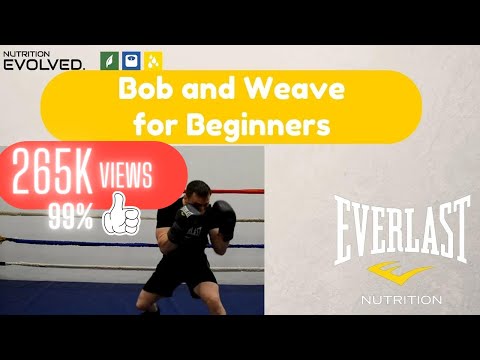
Learn the Boxing Bob and Weave as Everlast Nutrition expert fitness trainer walks you through it step by step. The bob …
ボブアンドウィーブ(Bobu Ando Wību)
TransliterationTranslation: bob and weave
The Bob And Weave subfamily covers the defensive technique where the fighter bends at the knees and waist to drop below an incoming horizontal strike (the bob), then moves laterally while rising back up (the weave), re-emerging on the other side of the punch. [1] The bob and weave is the primary defence against hooks and wide swinging punches because it takes the head below the arc of the strike while the lateral weave repositions the fighter for a counter-attack. [1],[2] The technique requires strong legs and a flexible spine, as the fighter must drop and rise fluidly while maintaining balance and defensive awareness. [2],[3]
The bob and weave became a signature defensive technique in boxing during the early 20th century, particularly associated with shorter fighters who needed to get inside taller opponents' reaches. [1] Mike Tyson's devastating bob-and-weave offence — ducking under punches and countering with hooks and uppercuts — became one of the most famous applications of this technique. [2],[3]
Bob and weave is a classic boxing head movement technique. [1]
Used by elite boxers like Mike Tyson and in MMA by fighters like Dominick Cruz. [1]
No images yet for this technique.
Sign in to suggest an image.
Learn the Boxing Bob and Weave as Everlast Nutrition expert fitness trainer walks you through it step by step. The bob …
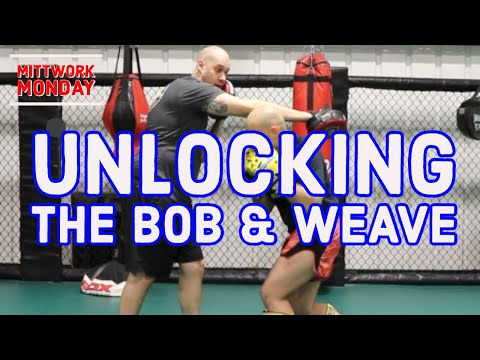
In this week’s Mitt Work Monday, we unlock the Bob & Weave for Muay Thai, Kickboxing, or MMA. The Combat Theory Cloth…
No instructional courses yet for this technique.
Sign in to suggest a course.
Risk of injury to the person this technique is applied to
Evasion techniques avoid contact entirely; lowest injury risk of all techniques
Skill level needed to execute this technique reliably
Whether this technique is allowed under major competition rule sets
Boxing (Edwin Haislet, 1940)
Alias sources — [1] Championship Fighting (Dempsey, 1950) [2] Boxing Mastery (Hatmaker, 2004) [3] Fighter's Fact Book (Christensen, 2000)
Effectiveness sources — [1] Boxing: The Complete Guide to Training and Fitness (Hatmaker, 2004) [2] Mastering Jujitsu (Gracie & Danaher, 2003)
Standard katakana transliteration of Western martial arts terminology (外来語) — used in Japanese MMA, boxing, and BJJ communities
Alias sources — [1] Championship Fighting (Dempsey, 1950) [2] Boxing Mastery (Hatmaker, 2004) [3] Fighter's Fact Book (Christensen, 2000)
Effectiveness sources — [1] Boxing: The Complete Guide to Training and Fitness (Hatmaker, 2004) [2] Mastering Jujitsu (Gracie & Danaher, 2003)
neck flexibility, knee bend coordination, visual tracking
shorter stature for easier level changes, strong neck
neck muscles, quadriceps, obliques, calves
The Dempsey Roll is an aggressive bob-and-weave variation named after heavyweight champion Jack Dempsey, characterised by a continuous figure-eight head movement pattern combined with alternating hooks. [1] The Dempsey Roll uses the momentum of the bob-and-weave to generate power in the counter-punches — as the fighter weaves to one side, they use the rising motion to load and deliver a hook, then immediately weave to the other side for the opposite hook. [1,2] The technique transforms defensive head movement into a continuous offensive engine. [2,3]
The Standard Bob And Weave executes the fundamental bob-and-weave where the fighter drops the level by bending the knees (not the waist), ducking below the incoming hook or overhand, then weaves laterally by shifting the weight to one side while rising back to fighting stance. [1] The key mechanics are: bend the knees to drop level, keep the eyes on the opponent throughout, shift laterally during the rise, and re-emerge in a balanced stance ready to counter. [1,2] The standard bob and weave must be performed in a U-shaped motion, not a V-shape, to maintain balance and avoid popping straight back up into the next punch. [2,3]
Start slowly with a partner throwing a basic jab-cross combination at slow speed while you focus on slipping and rolling. Combat Theory emphasizes there's no learning in fear, so controlled, methodical practice at slower speeds helps you build the fundamental movement patterns before adding speed and complexity.
After slipping the incoming cross on the outside, you can throw a counter cross back at your opponent. Once you've mastered the basic slip, you can progress to defending against their counter-cross after you slip and roll.
The Bob And Weave subfamily covers the defensive technique where the fighter bends at the knees and waist to drop below an incoming horizontal strike (the bob), then moves laterally while rising back up (the weave), re-emerging on the other side of the punch. The bob and weave is the primary defence against hooks and wide swinging punches because it takes the head below the arc of the strike while the lateral weave repositions the fighter for a counter-attack.
The bob and weave became a signature defensive technique in boxing during the early 20th century, particularly associated with shorter fighters who needed to get inside taller opponents' reaches. Mike Tyson's devastating bob-and-weave offence — ducking under punches and countering with hooks and uppercuts — became one of the most famous applications of this technique.
Unified MMA: legal — Legal defensive technique; WBC/Boxing: legal — Legal — blocking and evasion are core boxing skills; WKF: legal — Legal — blocking is a fundamental karate skill; Kyokushin: legal — Legal; WT: legal — Legal; WAKO: legal — Legal; K: legal — 1/GLORY — Legal; IFMA: legal — Legal
Danger rating 1/10. Low — evasion techniques avoid contact entirely; lowest injury risk of all techniques
The standard setup chain: Read the Punch → Bend at the Waist/Knees → Maintain Eye Contact → Counter from Angle.
Standard counters include: Timing — attack when the defence is recovering or between movements / Feint — use deception to create openings in the defensive structure / Angle Change — attack from an unexpected angle that the defence does not cover.
Common variants: Inside slip (moving the head to the inside of the incoming punch); Outside slip (moving the head to the outside of the incoming punch); Bob and weave (ducking under a hook and rising on the other side); Pull-back (leaning the head and torso backward to make the punch fal…).
Used by elite boxers like Mike Tyson and in MMA by fighters like Dominick Cruz.
Top errors to watch for: Bending at the waist instead of the knees — the bob must come from the legs; bending the waist exposes you to uppercu… / Dropping too low — the bob only needs to duck under the punch's arc; going to the floor wastes energy and time / Not weaving laterally — just ducking straight down puts you in the same position; the lateral shift creates the angle / Moving too slowly — the bob and weave must be a quick, sharp dip; a slow motion gets timed.
The Bob And Weave is also known as Bobu Ando Wību, Bobbing And Weaving, Duck And Weave, Sway.