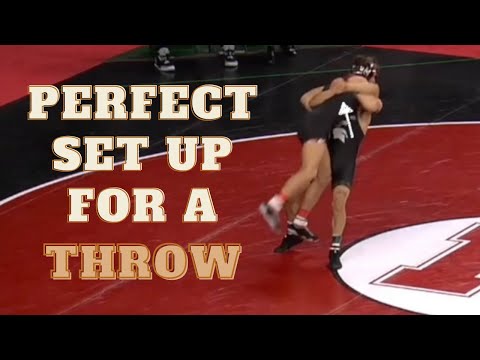
Use The Duck Under To Throw ANY Wrestler!
0
Duck·Earn Your Gold Medal
Use this to set up a lat drop or headlock/head & arm
Translation: ducking
The Duck subfamily covers the defensive technique where the fighter rapidly drops their level by bending the knees, lowering the head below the path of an incoming strike. [1] The duck is a pure level-change defence — unlike the bob and weave which includes lateral movement, the duck is primarily a vertical drop. [1],[2] The duck is effective against high strikes, hooks, and spinning techniques, and it leaves the defender in a low position that can transition directly into takedown entries in MMA. [2],[3]
Ducking lowers the head below the incoming strike by bending the knees. [1]
The duck is a fundamental boxing head movement. [1]
Used in boxing and MMA competition. [1]
No images yet for this technique.
Sign in to suggest an image.
Use this to set up a lat drop or headlock/head & arm
No instructional courses yet for this technique.
Sign in to suggest a course.
Risk of injury to the person this technique is applied to
Evasion techniques avoid contact entirely; lowest injury risk of all techniques
Skill level needed to execute this technique reliably
Whether this technique is allowed under major competition rule sets
Boxing (Edwin Haislet, 1940)
Alias sources — [1] Championship Fighting (Dempsey, 1950) [2] Boxing Mastery (Hatmaker, 2004) [3] Fighter's Fact Book (Christensen, 2000)
Effectiveness sources — [1] Boxing: The Complete Guide to Training and Fitness (Hatmaker, 2004)
Standard katakana transliteration of Western martial arts terminology (外来語) — used in Japanese MMA, boxing, and BJJ communities
Alias sources — [1] Championship Fighting (Dempsey, 1950) [2] Boxing Mastery (Hatmaker, 2004) [3] Fighter's Fact Book (Christensen, 2000)
Effectiveness sources — [1] Boxing: The Complete Guide to Training and Fitness (Hatmaker, 2004)
neck flexibility, knee bend coordination, visual tracking
shorter stature for easier level changes, strong neck
neck muscles, quadriceps, obliques, calves
Every move, in any martial art, shares a few universal traits. Mix and match below to pinpoint the right tool — or compare equivalents across styles.
Your head should be on the opposite side of your opponent's body before executing the duck under, which allows you to generate the proper angle for the technique.
The Duck subfamily covers the defensive technique where the fighter rapidly drops their level by bending the knees, lowering the head below the path of an incoming strike. The duck is a pure level-change defence — unlike the bob and weave which includes lateral movement, the duck is primarily a vertical drop.
Ducking is one of the most instinctive defensive reactions in fighting and has been used since the earliest boxing matches. The technique became strategically important in MMA where the level change of a duck creates immediate takedown opportunities.
Unified MMA: legal — Legal defensive technique; WBC/Boxing: legal — Legal — blocking and evasion are core boxing skills; WKF: legal — Legal — blocking is a fundamental karate skill; Kyokushin: legal — Legal; WT: legal — Legal; WAKO: legal — Legal; K: legal — 1/GLORY — Legal; IFMA: legal — Legal
Danger rating 1/10. Low — evasion techniques avoid contact entirely; lowest injury risk of all techniques
The standard setup chain: Anticipate the Attack → Execute Defence → Recover Stance → Counter or Disengage.
Standard counters include: Timing — attack when the defence is recovering or between movements / Feint — use deception to create openings in the defensive structure / Angle Change — attack from an unexpected angle that the defence does not cover.
Common variants: Inside slip (moving the head to the inside of the incoming punch); Outside slip (moving the head to the outside of the incoming punch); Bob and weave (ducking under a hook and rising on the other side); Pull-back (leaning the head and torso backward to make the punch fal…).
Used in boxing and MMA competition.
Top errors to watch for: Bending at the waist and putting your head down — duck by bending the KNEES; the head stays up with eyes on the opponent / Ducking too slowly — the duck must be explosive; a slow duck gets kneed or uppercut / Staying down after ducking — rise immediately or transition to a shot; lingering low invites knees and uppercuts / Ducking against straight punches — the duck is for wide/hooking strikes; straight punches follow you down.
The Duck is also known as Dakkingu, Level Change Duck, Drop, Ducking Defence.