Tomoe Nage: Definition and Classification
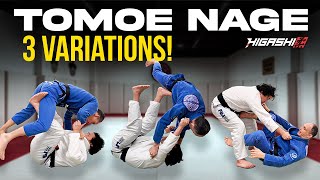
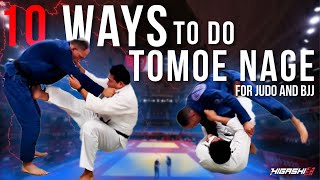
Tomoe nage is classified as an ama sutemiwaza, a sacrifice throw in which the practitioner abandons their upright position. The term "tomoe" refers to the three circular motions that characterize the technique. This throw fundamentally involves disposing of the opponent behind and over the practitioner's body.
Foot Placement and Trajectory Control
The placement and angle of the foot determine the opponent's flight path. Rather than lifting the opponent straight upward, the instructor should point their toes inward to direct the opponent's body trajectory forward and over in a controlled arc. This subtle adjustment prevents a vertical lift and ensures proper mechanical execution.
Historical Context and Variations
Tomoe nage has multiple variations and technical applications. The technique was refined by Olympic medalists such as Okano and all-Japan champion Kashiwazaki, who employed refined versions requiring minimal impact noise. These elite practitioners demonstrated that proper execution emphasizes controlled descent rather than explosive force.
Controlled Landing and Hand Positioning
A silent landing indicates proper technique execution. Hands should remain elevated throughout the throw to maintain balance and control the opponent's descent. The practitioner drops straight down with hands positioned defensively, converting the throw's intensity into a controlled movement that reduces injury risk.
Proper Uke Positioning: Mii Jigoutai Stance
The uke must adopt mii jigoutai, an open, balanced stance that facilitates safe practice and allows defensive response. This positioning enables the uke to adjust their weight and movement during the throw execution. Proper uke stance is foundational to both safe practice and authentic technique replication.
Entry Technique and Kuzushi Application
Entry begins with hidari-maigiri, dropping the left leg as the right foot rises toward the opponent's abdomen. The foot placement targets the shita-hara region, creating maximum kuzushi by breaking the opponent's balance. This synchronized movement generates the mechanical advantage necessary for the throw.
Defensive Positioning During Entry
Proper foot placement during entry creates inherent defensive options. When the practitioner steps precisely to break the opponent's line, knee rotation can neutralize counter-attacks. Conversely, excessive penetration limits the practitioner's movement options and compromises defensive capability.
Progressive Training Methodology
Mastering tomoe nage requires systematic repetition and proper instruction sequencing. Practitioners must first understand uke no mino-waza before executing the throw, ensuring both safety and technical comprehension. Rushing progression or demonstrating techniques without proper foundation results in injury and abandoned practice.
Safety Emphasis in Judo Practice
While judo is inherently demanding, structured training protocols prevent unnecessary injury. The misconception of judo as gentle obscures the reality that proper technique application requires respect, controlled intensity, and methodical skill development. Instructors must communicate that rigorous practice builds both technical proficiency and physical resilience.
Tomoe-Nage Tips | Riki Judo Dojo
Key Takeaways
- •Tomoe Nage: Definition and Classification
- •Foot Placement and Trajectory Control
- •Historical Context and Variations
- •Controlled Landing and Hand Positioning
Riki sensei explained tomoe-nage (巴投 - circle throw) during judo class on 4-24-2023. 0:00 definition 0:19 foot details 0:37 learning from Okano 0:56 control your descent 1:14 Riki sensei got caught 1:56 being a good uke 2:29 tomoe-nage in jujitsu 3:00 don't step too deep 3:32 effective practice 4:30 judo ≠ gentle Riki sensei began Judo in Okinawa and is a Shichidan with over 56 years of study, practice, competition and teaching. He competed for 25 years at the local, national and international levels. A few of the great Judoka Riki sensei has studied and practiced with include: Kotani, Daigo, Ito, Inokuma, Okano, Kimura, Kaminaga and Nakatani. See Riki sensei teach every Monday, Wednesday, Thursday and Friday evening at 535 W. Iron Ave, Mesa, AZ 85210. Youth classes are 6 - 6:55 PM, adult classes are 7:00 - 8:30 PM. For more info, please visit rikidojousa.com The purpose of this YouTube channel is to pass on the original, traditional, authentic Kodokan Judo that Riki sensei loves so much. Riki sensei's students maintain this YouTube channel (and are responsible for any errors), but you can find more of his thoughts at the Riki Judo Dojo Facebook page: https://www.facebook.com/Riki-Judo-Dojo-USA-194351210607759 18
Frequently Asked Questions
What does this video teach about standard tomoe nage?
This video covers tomoe nage: definition and classification, foot placement and trajectory control, historical context and variations. It provides detailed instruction from Riki Judo Dojo.
How long does it take to learn standard tomoe nage?
The basic mechanics can be understood in a single session, but developing reliable execution requires consistent drilling over weeks of practice. This 9-part breakdown helps structure your training by isolating each phase of the technique.
What are the key details for finishing standard tomoe nage?
Mastering tomoe nage requires systematic repetition and proper instruction sequencing. Practitioners must first understand uke no mino-waza before executing the throw, ensuring both safety and technical comprehension. Rushing progression or demonstrating techniques without proper foundation results in injury and abandoned practice.