Introduction to Uchi Mata
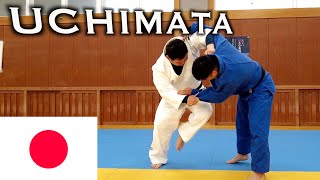
Uchi Mata is an inner thigh throw frequently requested by judo practitioners. This technique requires precise balance-breaking and hip positioning to execute effectively. The instructor demonstrates the completed throw before breaking down its fundamental components.
Breaking Balance and Creating Contact
The foundational requirement for Uchi Mata is breaking the opponent's balance by bringing them forward onto their toes. Hip-to-hip contact between tori and uke is critical for generating power and control. The practitioner must maintain constant pressure to prevent the opponent from sliding backward.
Hand Positioning and Lapel Control
Traditional Uchi Mata execution involves gripping the opponent's lapel with the throwing-side hand. The non-throwing-side hand elevates the opponent while the elbow remains low to maximize leverage. Keeping the elbow positioned low creates additional mechanical advantage for a more powerful throw.
Footwork and Leg Placement
The attacking leg must pass between the opponent's thighs, positioned slightly toward their non-throwing side. Proper spacing during the initial step-in ensures the sweeping leg has adequate room to generate power. The leg acts as a guide and sweeping mechanism, though hip action drives the primary throwing force.
Commitment and Hip Integration
Successful Uchi Mata requires full commitment and forward bending as the technique executes. Hip-to-hip contact must be maintained throughout the sweep while lifting the attacking leg upward. The combination of hip rotation, forward lean, and leg sweep creates the throwing action that elevates the opponent off the ground.
Application and Practice Recommendations
Uchi Mata is considered an essential contest technique in judo competition and training. Multiple variations exist, but the traditional Japanese execution described here serves as the optimal foundational method for instruction. Practitioners should focus on hip positioning, hand control, and complete commitment when drilling this technique.
How to do Uchi Mata
Key Takeaways
- •Introduction to Uchi Mata
- •Breaking Balance and Creating Contact
- •Hand Positioning and Lapel Control
- •Footwork and Leg Placement
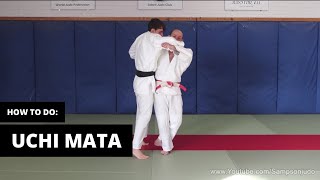
How to do Uchi Mata. In this video I am showing how to do one of the most popular throws in judo - Uchi Mata, Inner Thigh Throw. Although an Ashi Waza technique, I like to create a large amount of hip contact in order to execute this throw powerfully, using the leg as a guide rather than the core of the throw. There are a large number of variations of this throw, and with time we will cover them too. Be sure to comment, like and share the video! Enjoy! Like us on Facebook at: www.Facebook.com/SampsonJudo www.sobelljudoclub.com www.judoforall.org.uk Finger tape: https://amzn.to/2zbqvyh Mizuno Judogi: https://amzn.to/3gasbZz Pre-washed soft black belt: https://amzn.to/2XpNIEK My ultimate technique reference book: https://amzn.to/2LT46Zk Mind over muscle by Jigoro Kano: https://amzn.to/2zeDTSi
Related Techniques
Frequently Asked Questions
What does this video teach about ashi uchi mata?
This video covers introduction to uchi mata, breaking balance and creating contact, hand positioning and lapel control. It provides detailed instruction from Sampson Judo.
How long does it take to learn ashi uchi mata?
The basic mechanics can be understood in a single session, but developing reliable execution requires consistent drilling over weeks of practice. This 6-part breakdown helps structure your training by isolating each phase of the technique.
What are the key details for finishing ashi uchi mata?
Successful Uchi Mata requires full commitment and forward bending as the technique executes. Hip-to-hip contact must be maintained throughout the sweep while lifting the attacking leg upward. The combination of hip rotation, forward lean, and leg sweep creates the throwing action that elevates the opponent off the ground.