Foundation: Hand Placement and Posture Breaking
The practitioner must first ensure the opponent's hands contact the mat rather than posting on the defender's body. To accomplish this, the defender arches their back to create an unfavorable angle that prevents the opponent from generating downward pressure, then uses leg pressure to pull the opponent's upper body down. This foundational step makes all subsequent techniques significantly more effective.
Grip Mechanics: Targeting the Wrist
When establishing the initial grip, the defender focuses on the wrist—specifically where the forearm meets the hand—rather than the broader forearm. Using two to three fingers concentrated at this point creates a stronger, more durable grip that resists the opponent's attempts to escape. Gripping the meat of the forearm allows the opponent to roll their wrist and recover their arm position.
Arm Lock and Guard Opening
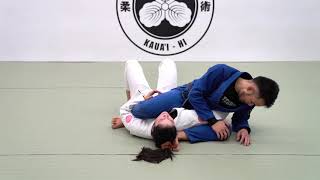
After breaking posture and securing the wrist grip, the defender locks their own arm straight to prevent the opponent from simply rolling their wrist back to safety. When opening the guard, the defender performs a small hip escape to create space, then shifts their weight to their hip and side. The defender sits up on their elbow rather than their buttocks, enabling forward lean to resist the opponent's pressure.
Figure Four Setup: Elbow Position
The defender circles behind the opponent's arm to set up the figure four lock. Proper elbow positioning is critical—the elbows must be pinched tightly together rather than flared outward, as wider spacing significantly weakens the lock. This principle is especially important for taller practitioners who may naturally position elbows at wider angles.
Thumbless Grip Execution
When securing the figure four, the defender removes their thumb and adopts a thumbless grip. This grip style is more durable over extended periods and prevents the opponent's hand movements from hyperextending or irritating the defender's thumb. The thumbless position creates a secure 'monkey grip' that maintains control throughout the transition.
Finishing Position: Full Body Engagement
To complete the kimura, the defender scoots out, rotates toward the opponent, and turns their entire body toward their opponent's trapped shoulder rather than relying solely on arm strength. The elbows remain pinched tightly inward, ensuring the technique becomes a full-body application against the opponent's shoulder joint. This body angle and positioning maximizes leverage and ensures secure submission.
Kimura From Closed Guard For White Belts (Small Details To Improve Success)
Key Takeaways
- •Foundation: Hand Placement and Posture Breaking
- •Grip Mechanics: Targeting the Wrist
- •Arm Lock and Guard Opening
- •Figure Four Setup: Elbow Position
www.Chewjitsu.net In this video I show a kimura from closed guard. The kimura from closed guard is one of the essential techniques everyone has to have, especially white belts. In the video I give some small details that help my students and have helped me make the move more successful during training and competitions. http://www.instagram.com/chewjitsu http://www.twitter.com/chewjitsu http://www.facebook.com/chewjitsu https://www.periscope.tv/chewjitsu Snapchat : Chewjitsu
Related Techniques
Frequently Asked Questions
What does this video teach about kimura lock?
This video covers foundation: hand placement and posture breaking, grip mechanics: targeting the wrist, arm lock and guard opening. It provides detailed instruction from Chewjitsu.
How long does it take to learn kimura lock?
The basic mechanics can be understood in a single session, but developing reliable execution requires consistent drilling over weeks of practice. This 6-part breakdown helps structure your training by isolating each phase of the technique.
What are the key details for finishing kimura lock?
When securing the figure four, the defender removes their thumb and adopts a thumbless grip. This grip style is more durable over extended periods and prevents the opponent's hand movements from hyperextending or irritating the defender's thumb. The thumbless position creates a secure 'monkey grip' that maintains control throughout the transition.
Related videos
How To Do The Perfect Kimura From Side Control by John Danaher
Bernardo Faria BJJ Fanatics
Finish the Kimura Every Time! Jiu Jitsu Tutorial
Matt Arroyo Jiu Jitsu
Learn How To Lock In The Perfect Omoplata Submission
Stay Safe Martial Arts
Omoplata vs De la Riva Ankle Lock
Brandon Quick
Monoplata from Mount
Esaki Jiu Jitsu