The Kimura Lock Foundation
The Kimura from bottom guard is a fundamental submission that many practitioners struggle to execute effectively in live rolling. Success depends not on the technique itself, but on mastering critical details that separate theoretical knowledge from practical application. This guide breaks down the specific mechanics required to finish the Kimura against high-level opponents of any size.
Clearing the Hands
The opponent's hands must be positioned on the mat, not on the practitioner's body, to create a viable attack pathway. The most effective method uses a blade-hand technique, sliding fingers underneath the opponent's wrists to dislodge them from the body. The practitioner then employs the 'torpedo method'—continuously following the opponent's hands with leg pressure and body position, preventing them from re-establishing contact with the torso until they settle on the mat.
Head Positioning and Body Alignment
Once the opponent's chest makes contact with the practitioner's chest, the head must be deflected to one side to allow proper upper-body positioning. If the opponent's head remains centered, the practitioner uses a two-part motion: pushing the head laterally while simultaneously placing their armpit over it. The practitioner then opens the legs briefly, tightens the knees, shifts onto their elbow, and rotates onto the same-side hip to establish control.
Securing the Arm Hook
The critical error most practitioners make is grabbing the opponent's wrist too early, which alerts them to the attack and allows escape. Instead, the practitioner immediately hooks the arm as high as possible near the shoulder and armpit, making it impossible to rip the elbow free. The elbow is then glued tight to the body, eliminating any leverage for escape before the wrist grip is secured.
Locking the Grip and Handling Defense
Once the arm hook is established, the practitioner secures the wrist grip using a thumb-down position on the near hand and no-thumb grip on the far hand. If the opponent drops their body weight to pin the hand to the mat—the intelligent defensive response—the practitioner executes repeated elbow-to-hip movements to gradually shift their hips closer to the opponent's hand until it's forced off the mat.
Establishing the Finishing Position
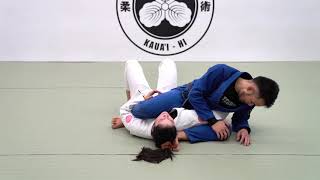
Once the opponent's hand lifts off the mat, the practitioner's opposite leg crosses over the opponent's back at a high angle to prevent forward rolling escapes. The practitioner swivels their head to create a perpendicular angle relative to the opponent's arm, positioning themselves behind the submission rather than pulling from the front. This setup allows for a mechanically superior push finish rather than inefficient pulling.
Executing the Submission
The practitioner glues the opponent's elbow tight to their chest, rotates their body to increase pressure, and pushes the opponent's wrist toward their own back. Minimal force is required when all elements are properly aligned—the elbow locked in place and all components tight against the body. If the opponent possesses exceptional shoulder flexibility, additional body rotation can be applied until they submit.
Finish the Kimura Every Time! Jiu Jitsu Tutorial
Key Takeaways
- •The Kimura Lock Foundation
- •Clearing the Hands
- •Head Positioning and Body Alignment
- •Securing the Arm Hook
Join My Online Academy to Improve Your Jiu Jitsu FAST!!! https://academy.mattarroyo.com/ Struggling to finish the kimura? You’re not alone—and in this video, BJJ black belt and UFC veteran Matt Arroyo breaks down exactly how to finish the kimura lock with precision, control, and confidence—every single time. Whether you’re training in Gi or NoGi, this kimura tutorial will show you: ✅ Why most kimuras fail (and how to fix it) ✅ How to apply the kimura from top side control, guard, and north-south ✅ Crucial kimura grip details to prevent escapes ✅ How to finish the kimura even when your opponent defends ✅ Kimura traps that lead to back takes and arm locks This isn’t just a technique—it’s a kimura system that works at every belt level. ⸻ 💪 Who This Is For: • White belts looking to add a powerful submission to their game • Blue belts struggling to finish kimuras against resisting opponents • Advanced grapplers who want more control and setup options
Related Techniques
Frequently Asked Questions
What does this video teach about kimura lock?
This video covers the kimura lock foundation, clearing the hands, head positioning and body alignment. It provides detailed instruction from Matt Arroyo Jiu Jitsu .
How long does it take to learn kimura lock?
The basic mechanics can be understood in a single session, but developing reliable execution requires consistent drilling over weeks of practice. This 7-part breakdown helps structure your training by isolating each phase of the technique.
What are the key details for finishing kimura lock?
Once the opponent's hand lifts off the mat, the practitioner's opposite leg crosses over the opponent's back at a high angle to prevent forward rolling escapes. The practitioner swivels their head to create a perpendicular angle relative to the opponent's arm, positioning themselves behind the submission rather than pulling from the front. This setup allows for a mechanically superior push finish rather than inefficient pulling.
Related videos
How To Do The Perfect Kimura From Side Control by John Danaher
Bernardo Faria BJJ Fanatics
Kimura From Closed Guard For White Belts (Small Details To Improve Success)
Chewjitsu
Learn How To Lock In The Perfect Omoplata Submission
Stay Safe Martial Arts
Omoplata vs De la Riva Ankle Lock
Brandon Quick
Monoplata from Mount
Esaki Jiu Jitsu