Kimura From Closed Guard For White Belts (Small Details To Improve Success)
0
Kimura Lock·Chewjitsu
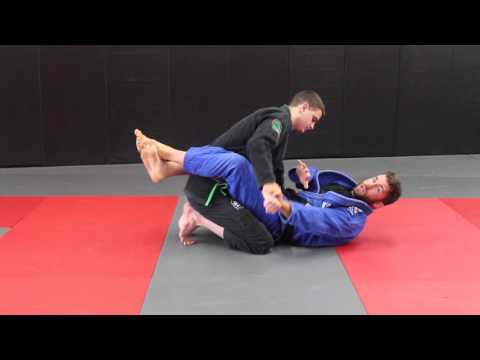
www.Chewjitsu.net In this video I show a kimura from closed guard. The kimura from closed guard is one of the essenti…
Translation: arm entanglement
The Kimura lock (gyaku-ude-garami / double wristlock) is a shoulder lock where the attacker grips the opponent's wrist with one hand, threads the other arm under the opponent's elbow, and clasps a figure-four grip to rotate the shoulder joint behind the opponent's back. [1],[2] The figure-four configuration provides enormous leverage against the shoulder's rotational limits. [1] The Kimura is applicable from guard, mount, side control, north-south, and half guard, and serves both as a submission and as a powerful positional control tool for sweeps and transitions. [1],[3]
The technique is named after Masahiko Kimura, the legendary judoka who defeated Hélio Gracie in 1951 using gyaku-ude-garami (逆腕絡み, 'reverse arm entanglement') to break Gracie's arm. [1],[2] In catch wrestling, the same technique is called the double wristlock. [1] The Kimura has become one of the most studied submissions in modern grappling, with John Danaher and other instructors building entire systematic approaches around it. [1],[3]
The Kimura (ude-garami) is both a high-percentage submission and one of the most powerful positional control tools in grappling. [1] The figure-four grip on the wrist and elbow generates enormous rotational force against the shoulder joint, which has limited range of motion in internal rotation behind the back. [1],[2] John Danaher describes the Kimura grip as the 'master key' of grappling because it enables submissions, sweeps, back takes, and guard passes from a single controlling position. [3]
Ude-garami (腕緘) was codified in Kodokan Judo's kansetsu-waza by Jigoro Kano. [1] The technique became known as the 'Kimura' after Masahiko Kimura defeated Hélio Gracie in 1951 by breaking his arm with gyaku-ude-garami. [2] In catch wrestling, the same mechanic is called the double wristlock. [3] Modern systematization by John Danaher at Renzo Gracie Academy built an entire submission system around the Kimura grip. [4]
The Kimura is among the top ten most common submissions in UFC history. [1] Frank Mir's Kimura finish of Antonio Rodrigo Nogueira at UFC 140 (2011) resulted in a broken arm and remains one of the most dramatic finishes in UFC history. [1] Masahiko Kimura's defeat of Hélio Gracie in 1951 is one of the most significant bouts in martial arts history. [2]
No images yet for this technique.
Sign in to suggest an image.
www.Chewjitsu.net In this video I show a kimura from closed guard. The kimura from closed guard is one of the essenti…
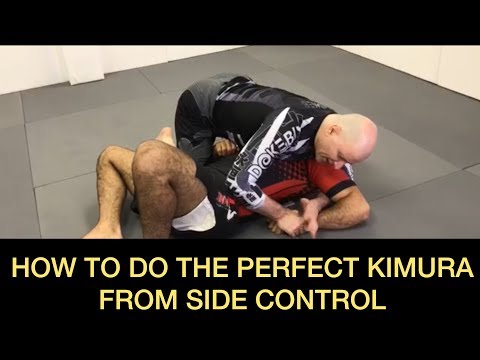
How To Do The Perfect Kimura From Side Control by John Danaher - Click Here To Check Out John Danaher's Instructional Vi…
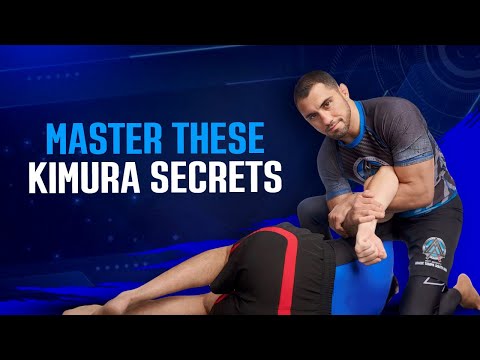
Join My Online Academy to Improve Your Jiu Jitsu FAST!!! https://academy.mattarroyo.com/ Struggling to finish the kimu…
The Kimura lock is a shoulder joint lock requiring precise setup and finishing mechanics across multiple positions. Matt Arroyo Jiu Jitsu emphasizes the closed guard entry, stressing that the opponent's hands must be on the mat rather than on the attacker's body; this is achieved using leg pressure and the 'torpedo method'—following the opponent's hands persistently until they land flat. Arroyo prioritizes hooking high near the shoulder and armpit immediately after hand positioning to prevent the opponent from extracting their arm, then securing the figure-four grip with the thumb underneath, followed by methodical elbow-to-hip movements to displace the hand from the mat before swiveling perpendicular and applying the finish via body turn and wrist-to-back pressure. Chewjitsu, also addressing closed guard Kimura for white belts, agrees on the importance of getting hands to the mat and emphasizes arching the back to create a slope preventing the opponent from digging in. Chewjitsu stresses gripping the wrist (not the forearm) with two to three fingers, locking the arm straight, and transitioning to a thumbless grip when forming the figure-four to protect the thumb and maintain grip security with elbows pinched tight. Both Arroyo and Chewjitsu prioritize the sit-to-elbow position rather than sitting upright. John Danaher, presented by Bernardo Faria from side control, introduces a fundamentally different mechanical principle: the 'power line' concept operating diagonally across the opponent's body rather than perpendicularly to the chest. Danaher advocates for pull-dominant Kimuras (immobilizing the wrist while pulling the elbow) over push-dominant variations, positioning the attacker's hips over the opponent's opposite shoulder and head over the opponent's hip to create extreme shoulder and elbow tension. All three instructors agree the Kimura is highly effective when technical details are properly implemented.
Synthesized from 3 instructors
No instructional courses yet for this technique.
Sign in to suggest a course.
Risk of injury to the person this technique is applied to
The kimura (double wristlock) attacks the shoulder through forced internal rotation; risk of rotator cuff tears
Skill level needed to execute this technique reliably
Whether this technique is allowed under major competition rule sets
Kodokan Judo — Official Katame-waza Classification
Kodokan — Ude-garami (腕緘) classification
Alias sources — [1] Kodokan Judo (Kano, 1986) [2] Say Uncle (Melanson, 2013) [3] Wrestling Physical Conditioning Encyclopedia (Welker, 2010)
Effectiveness sources — [1] Jiu-Jitsu University (Ribeiro, 2008) [2] Mastering Jujitsu (Gracie & Danaher, 2003) [3] Kimura Enter the System (Danaher, 2019, BJJ Fanatics)
Standard Japanese martial arts terminology (kanji/hiragana)
Established Japanese martial arts naming convention — native Japanese term (和語/漢語)
Kodokan — Ude-garami (腕緘) classification
Alias sources — [1] Kodokan Judo (Kano, 1986) [2] Say Uncle (Melanson, 2013) [3] Wrestling Physical Conditioning Encyclopedia (Welker, 2010)
Effectiveness sources — [1] Jiu-Jitsu University (Ribeiro, 2008) [2] Mastering Jujitsu (Gracie & Danaher, 2003) [3] Kimura Enter the System (Danaher, 2019, BJJ Fanatics)
grip strength, rotational power, shoulder/core stability
strong forearms and thick wrists
forearm flexors, rotator cuff, core rotators, deltoids
The term 'Kimura' appears in 523 passages across 65 books — the most referenced single technique name in our entire corpus. Named after Masahiko Kimura's 1951 victory over Helio Gracie. The technique (ude-garami in judo) existed for centuries before acquiring the personal name. (65 books in corpus; Kano, Kodokan Judo)
Grip at the wrist rather than the meat of the forearm, as this gives you a stronger grip that's much harder for your opponent to break. Chewjitsu emphasizes that after breaking posture, you should grab the wrist and lock that arm out straight, since a bent arm allows your opponent to easily roll their wrist and escape.
If your arm is bent, your opponent can simply roll their wrist and bring their hand back to safety. By locking your arm out straight, your opponent has to pull their arm way back, making it far more difficult to escape. Chewjitsu stresses this detail as crucial for white belt success.
Open your guard with a small hip escape, shift your weight to your hip and side, then sit up to your elbow rather than straight up to your butt. This allows you to lean forward and prevents your opponent from simply driving you down. Make sure to pinch your elbows tight together and finish on your side, as the further your elbows are out, the weaker the submission becomes.
Hook the arm immediately and as high as possible at the shoulder and armpit, not down at the wrist or elbow. Matt Arroyo explains that most people grab the wrist first, which alerts the opponent to escape, but hooking high and tight to the armpit traps them so they can't rip their elbow free, giving you time to secure the lock.
Get behind the submission by positioning yourself perpendicular to your opponent's arm, glue their elbow to your chest, and push their wrist toward their back using pressure rather than pulling. Matt Arroyo notes that you should drive forward with your hip, bulldozing their hand off the mat, and keep your leg high over their back to prevent them from rolling out.
According to John Danaher, position your hips on your opponent's shoulder and follow the diagonal power line that runs from their opposite hip to the opposite shoulder—positioning somewhere between north and south rather than perpendicular. Your head should go over their hip, which puts you on the correct power line to generate extreme breaking pressure.
The Kimura lock (gyaku-ude-garami / double wristlock) is a shoulder lock where the attacker grips the opponent's wrist with one hand, threads the other arm under the opponent's elbow, and clasps a figure-four grip to rotate the shoulder joint behind the opponent's back. The figure-four configuration provides enormous leverage against the shoulder's rotational limits.
The technique is named after Masahiko Kimura, the legendary judoka who defeated Hélio Gracie in 1951 using gyaku-ude-garami (逆腕絡み, 'reverse arm entanglement') to break Gracie's arm. In catch wrestling, the same technique is called the double wristlock.
IBJJF: legal — Legal at all belt levels; IJF: banned — Only elbow joint locks (kansetsu-waza) permitted in judo — all other joint lo…; ADCC: legal — Legal — all submissions legal in ADCC; Unified MMA: legal — Legal submission technique; FIAS Sport Sambo: legal — Legal; FIAS Combat Sambo: legal — Legal
Danger rating 7/10. The kimura (double wristlock) attacks the shoulder through forced internal rotation; risk of rotator cuff tears
The standard setup chain: Control the Arm → Position the Hips → Pinch Knees → Extend for the Finish.
Standard counters include: Clasp Hands — grip own wrist to prevent arm extension / Stack — drive forward to compress the attacker and relieve elbow pressure / Hitchhiker Escape — rotate the thumb toward the mat and roll to extract the arm.
Common variants: Standard kimura (figure-four grip rotating the shoulder from guard, side c…); Kimura trap (using the kimura grip as a controlling position to chain …); Standing kimura (applied during a clinch or takedown exchange); Reverse kimura (attacking from the opposite rotation angle (Americana dir…).
The Kimura is among the top ten most common submissions in UFC history. Frank Mir's Kimura finish of Antonio Rodrigo Nogueira at UFC 140 (2011) resulted in a broken arm and remains one of the most dramatic finishes in UFC history.
Top errors to watch for: Not keeping the opponent's elbow close to their body — the elbow must be bent and close to the torso; a straight arm … / Lifting the hand without controlling the elbow — both the hand rotation and the elbow elevation must happen simultane… / Attempting the kimura with the opponent's arm straight — bend the arm first; the kimura works on a bent arm / Not using body weight to pin the shoulder — the shoulder must be flat on the ground; a raised shoulder absorbs the ro….
The Kimura Lock is also known as Ude-garami, Double Wristlock, Chicken Wing.