De la Riva Guard Setup
From a basic position, the instructor establishes De la Riva guard by pushing on the opponent's upper hip and thigh while hooking the near-side leg deeply. The grip involves cupping two fingers in the armpit area to control the shoulder and create push-pull action with the feet. Proper hand placement focuses on the bone structure rather than the knee, allowing for shoulder manipulation and base destruction.
Opponent's Overhook Response
When the opponent attempts to defend by overhooting the De la Riva hook, they must drop their body significantly to reach the leg. The instructor demonstrates that hand overhooks and elbow hooks to the Achilles are common defensive responses, both requiring the defender to commit their upper body downward.
Transition to Leg Lock Counter
Upon detecting the opponent's overhook attempt, the instructor drives upward and shoots their leg through, either overhooting or underhooting the opponent's leg while simultaneously straightening to roll them over. This movement maintains control of the opponent's arms throughout the transition, preserving multiple finishing options including triangles, back steps, and armbars.
Establishing Top Position Control
After shooting through, the instructor achieves a dominant top position by holding the opponent's elbow with substantial pressure while posting one leg underneath for stability. The grip targets the elbow rather than the wrist, preventing the opponent from escaping by sucking their elbow inward, and allows the instructor to apply significant pressure while maintaining control of the opponent's positioning.
Omoplata Lock Execution
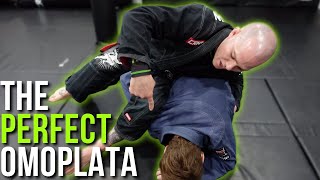
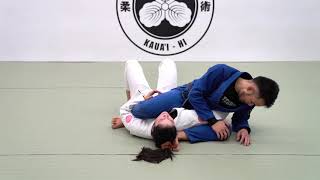
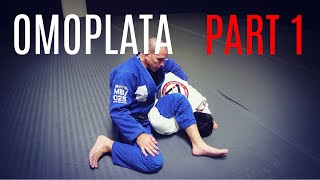
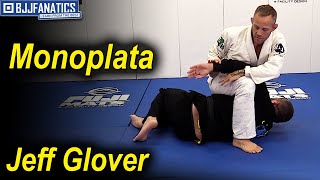
The instructor secures the omoplata by wrapping the opponent's arm while maintaining elbow control and shooting the leg through underneath. The finishing position involves straightening both legs independently—rather than crossing them triangle-style—to roll the opponent over and complete the lock with the opponent's arm trapped between the legs.
Log Roll Sweep Variation
Known as the log roll in omoplata terminology, this variation involves rolling the opponent over while they are trapped in the lock. The instructor emphasizes not reaching over with the free arm, as this allows the opponent to counterattack with a backstep triangle, and instead maintains tight leg control to prevent the opponent from jumping out of the position.
Preventing Escape and Finishing Chains
To secure the submission, the instructor keeps the opponent's leg hugged tightly to prevent jumping over the hips. Two continuation methods exist: staying on top while posting and walking the weight forward to force the opponent flat, or transitioning to different angles. The near-side arm actively chases the armpit and back, maintaining pressure throughout both approaches.
Top Position Pressure Application
The preferred finishing method involves staying on top with a post, using bodyweight to walk forward and force the opponent to extend flat on the mat. The instructor maintains loose control that prevents the opponent from escaping to their knees, requiring them to reset the pin and break down their hips if they attempt to recover position.
Omoplata vs De la Riva Ankle Lock
Key Takeaways
- •De la Riva Guard Setup
- •Opponent's Overhook Response
- •Transition to Leg Lock Counter
- •Establishing Top Position Control
My friend Igor is a Olive officer, friend and student in Brussels, Belgium. We have been to Portugal, Germany and Amsterdam together as well. This video is a similar movement https://youtu.be/78TKn3tVWWM This is an old video in the Gi with a similar concept and movement https://youtu.be/c0qxu6qN1Wo
Related Techniques
Frequently Asked Questions
What does this video teach about omoplata lock?
This video covers de la riva guard setup, opponent's overhook response, transition to leg lock counter. It provides detailed instruction from Brandon Quick.
How long does it take to learn omoplata lock?
The basic mechanics can be understood in a single session, but developing reliable execution requires consistent drilling over weeks of practice. This 8-part breakdown helps structure your training by isolating each phase of the technique.
What are the key details for finishing omoplata lock?
To secure the submission, the instructor keeps the opponent's leg hugged tightly to prevent jumping over the hips. Two continuation methods exist: staying on top while posting and walking the weight forward to force the opponent flat, or transitioning to different angles. The near-side arm actively chases the armpit and back, maintaining pressure throughout both approaches.