Monoplata from Mount
0
Monoplata Lock·Esaki Jiu Jitsu
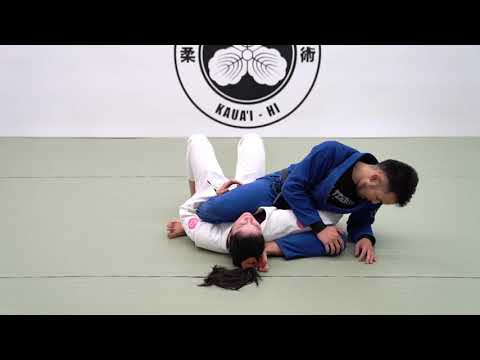
Here is a simple drill for catching your opponent's arm in the monoplata submission when they try to bridge you from the…
Not yet documented
The Monoplata is a shoulder lock submission similar to the omoplata but using only one leg to control the opponent's arm — applied from mount, side control, or back control rather than from guard. [1] While less common than the omoplata, the monoplata provides a shoulder lock option from top positions where the omoplata's guard-based entry is not available. [1],[2]
Developed within the parent martial arts tradition. [1]
Used in relevant competition formats. [1]
No images yet for this technique.
Sign in to suggest an image.
Here is a simple drill for catching your opponent's arm in the monoplata submission when they try to bridge you from the…
No instructional courses yet for this technique.
Sign in to suggest a course.
Risk of injury to the person this technique is applied to
Standard technique-level risk appropriate to the category
Skill level needed to execute this technique reliably
Whether this technique is allowed under major competition rule sets
Jiu-Jitsu University (Saulo Ribeiro, 2008)
Description sources — [1] Martial arts curriculum [2] Competition analysis
Standard katakana transliteration of Western martial arts terminology (外来語) — used in Japanese MMA, boxing, and BJJ communities
Description sources — [1] Martial arts curriculum [2] Competition analysis
technique-specific physical attributes
technique-dependent
Every move, in any martial art, shares a few universal traits. Mix and match below to pinpoint the right tool — or compare equivalents across styles.
The monoplata is a shoulder lock applied using a single leg (mono = one) wrapped around the opponent's arm, as opposed to the omoplata which uses the full figure-four leg configuration. A modern innovation primarily seen in no-gi competition. (BJJ competition records)
Make sure your opponent can't free their wrist from your armpit, then reach back with a C-grip on their wrist. Esaki Jiu Jitsu emphasizes that securing this grip prevents escape attempts and allows you to control the arm before applying the finish.
When you feel them underhook and bridge, post your hands and float with their bridge rather than staying tight on top. Esaki Jiu Jitsu recommends immediately occupying the space behind their shoulders once they lift off the mat to maintain control.
Once you have your knee and shin positioned over their bicep, you can apply the finish. Esaki Jiu Jitsu notes that if your opponent is exploding a lot, you may need to use a modified Kimura-like pressure before fully securing the monoplata lock.
The Monoplata is a shoulder lock submission similar to the omoplata but using only one leg to control the opponent's arm — applied from mount, side control, or back control rather than from guard. While less common than the omoplata, the monoplata provides a shoulder lock option from top positions where the omoplata's guard-based entry is not available.
This technique developed within its parent martial arts tradition and has been refined through competition.
IBJJF: legal — Legal at all belt levels; IJF: banned — Only elbow joint locks (kansetsu-waza) permitted in judo — all other joint lo…; ADCC: legal — Legal — all submissions legal in ADCC; Unified MMA: legal — Legal submission technique; FIAS Sport Sambo: legal — Legal; FIAS Combat Sambo: legal — Legal
Danger rating 4/10. Moderate — standard technique-level risk appropriate to the category
The standard setup chain: Establish Entry Position → Set Up the Technique → Execute → Follow Through → Consolidate or Transition.
Standard counters include: Defensive techniques against this specific technique / Prevention of the entry position.
Common variants: Standard execution (the fundamental version); Modified variation (adapted for specific scenarios).
Used in relevant competition formats.
Top errors to watch for: Poor entry positioning / Incomplete execution / Not chaining with follow-up techniques / Attempting without proper setup.
The Monoplata Lock is also known as Monoplata, Single Wing Lock.