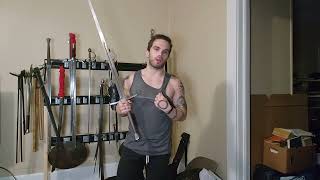
Introduction and Context
The instructor discusses the modern HEMA sport fighting posture, clarifying that this analysis is not disparaging but rather an examination of an effective stance commonly seen in contemporary practice. The goal is to understand this position as a practical fighting stance that practitioners will encounter and likely adopt.
Defining the Sport Guard
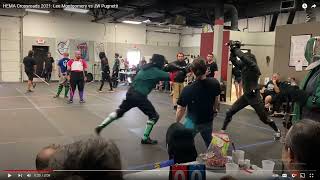
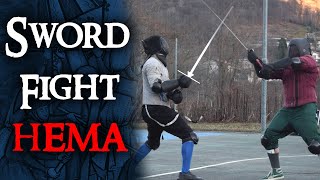
The modern HEMA sport posture consists of a dominant foot forward stance with the sword held in front, typically with the thumb on the blade. The stance is markedly linear, with considerable variation in edge orientation and arm extension depending on the individual fighter.
The Tip-Out Variation
The simplest form of the sport guard features the tip extended forward with the dominant side positioned forward. This configuration provides natural comfort and adequate defense against attacks from both the dominant and non-dominant sides, though it limits mobility.
Weight Distribution and Stance Depth
An excessively low and forward-weighted stance enables quick stepping but creates vulnerability on retreat, as the extended front leg limits backward movement. Proper execution requires the back leg to remain equally loaded under the fighter, preventing it from lagging behind and compromising defensive capability.
Defensive Movements and Parries
From the sport guard, defensive options include tip-forward positions, high parries, transitions to the ox guard on attacks from the dominant side, and movements into hanging guard positions. These defenses effectively lock down attack angles available to opponents due to the linear stance geometry.
Primary Offensive Techniques
The most common attack from this position is a cut from the non-dominant side, as cuts from the dominant side require blade withdrawal. When both fighters assume the same stance with right foot forward, the left-side cut becomes the most efficient initial attack.
Thrusting Mechanics
The sport guard position is particularly suited for rapid thrusts delivered through multiple methods, including shield-bow motions, flat extensions, and raises into left ox positions. These thrusting options make the stance effective for mid-to-close range engagements.
Height Variations: High, Middle, and Low
The sport guard exists in three primary height variations. The middle variation with tip forward is most common, while the low variation positions the blade across the leg rather than pure low and is employed by fighters emphasizing distance management.
Shoulder Variation and Deceptive Posturing
The shoulder variation retracts the blade toward the body, creating an opening that generates the same cutting accessibility as a reversed stance while optimizing lateral and middle-distance engagements. This variation provides deceptive angles despite appearing more vulnerable.
HEMA's 'Sport' Guard
Key Takeaways
- •Introduction and Context
- •Defining the Sport Guard
- •The Tip-Out Variation
- •Weight Distribution and Stance Depth
Discussing the modern posture often seen in HEMA tournaments and some common actions you can make from it.
Related Techniques
Frequently Asked Questions
What does this video teach about hema guard?
This video covers introduction and context, defining the sport guard, the tip-out variation. It provides detailed instruction from Rocket City HEMA.
How long does it take to learn hema guard?
The basic mechanics can be understood in a single session, but developing reliable execution requires consistent drilling over weeks of practice. This 9-part breakdown helps structure your training by isolating each phase of the technique.
What are the key details for finishing hema guard?
The sport guard exists in three primary height variations. The middle variation with tip forward is most common, while the low variation positions the blade across the leg rather than pure low and is employed by fighters emphasizing distance management.