Fencing Technique: Stop thrust
0
Fencing Thrust·selbergfencing
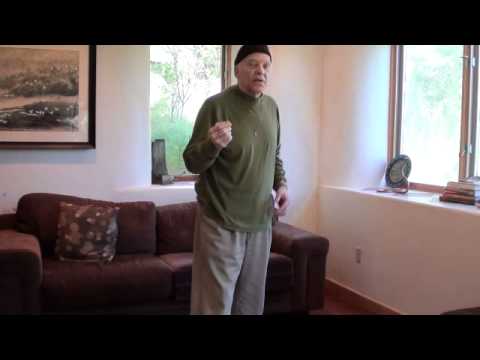
Fencing Master Charles Selberg answers the following question from a fencer, Eliot Smith, "Tell me about the stop thrust…
Translation: Fencing thrust
The Fencing Thrust family covers the offensive attacking techniques in fencing — the extension of the arm and blade to land a touch on the opponent's valid target area, which is the fundamental scoring action in foil and épée. [1] Thrusts include simple attacks (direct thrust, disengage — circling around the opponent's blade, coupé — cutting over the blade), compound attacks (one-two, double disengage — combining multiple feints before the final thrust), and attacks on the blade (attacks preceded by blade actions like beats or presses). [1],[2] In foil fencing, the thrust must have right-of-way (priority) to score — the attack must be initiated first or follow a proper parry (riposte), adding a tactical layer beyond simply touching the opponent. [2],[3] The lunge — the explosive forward step that delivers the thrust — is fencing's most iconic movement and the primary delivery mechanism for all thrusting attacks. [3]
The thrust became the dominant fencing technique with the development of the rapier in the 16th century, replacing the cutting-dominant swordplay of earlier periods. [1] The French school of fencing formalised the thrusting attack system (with the lunge as the primary delivery mechanism) during the 17th-18th centuries. [1],[2] The modern electrical scoring system (introduced for épée in 1936, foil in 1956) standardised the force needed to register a valid touch, making precision more important than power. [2],[3]
The thrust is the fundamental scoring action in fencing — every touch scored in foil and épée is a thrust. [1] At the Olympic level, the ability to score cleanly with well-timed thrusts is what separates medalists from participants. [2] The efficiency of fencing's thrusting system has influenced military sword training for centuries. [3]
No images yet for this technique.
Sign in to suggest an image.
Fencing Master Charles Selberg answers the following question from a fencer, Eliot Smith, "Tell me about the stop thrust…
No instructional courses yet for this technique.
Sign in to suggest a course.
Risk of injury to the person this technique is applied to
Very low — sport fencing uses flexible blades with blunted tips (foil/épée) or blunted edges (sabre), full face masks, and protective jackets; the scoring apparatus registers touches at very low force thresholds; fencing is one of the safest Olympic combat sports
Skill level needed to execute this technique reliably
Whether this technique is allowed under major competition rule sets
The Art and Science of Fencing (William Gaugler, 2004)
Description sources — [1] The Art and Science of Fencing (Gaugler, 2004) [2] On Fencing (Nadi, 1943) [3] FIE rules and historical development
Description sources — [1] The Art and Science of Fencing (Gaugler, 2004) [2] On Fencing (Nadi, 1943) [3] FIE rules and historical development
arm speed (fast extension), leg power (explosive lunge from the rear leg), point accuracy (placing the tip on a specific target), distance judgment (knowing when in range)
long reach (arm + lunge = maximum attacking distance), fast-twitch muscles (explosive lunge), good depth perception
quadriceps (lunge drive), calves (push-off), deltoid (arm extension), finger flexors (point control), core (balance during the lunge)
Every move, in any martial art, shares a few universal traits. Mix and match below to pinpoint the right tool — or compare equivalents across styles.
The Balestra is a preparation combining a forward jump (appel) with an immediate lunge, used to close distance explosively while maintaining the structure of a lunge. [1] The jump startles the opponent and closes distance, while the lunge that follows delivers the touch. [1] It is one of the most commonly used compound attacks in foil fencing. [1]
The Flèche (French for 'arrow') is an explosive running attack where the fencer launches the rear foot past the front foot, propelling the body forward in a sprinting motion to close distance rapidly. [1] Unlike the lunge which maintains a recoverable stance, the flèche commits the fencer's entire body forward. [1] It is used in épée and foil competition but is banned in modern sabre fencing. [1]
The Lunge is the fundamental attacking movement in Western fencing, combining a full arm extension with a powerful forward drive of the body to deliver a thrust across a distance greater than the fencer's normal reach. [1] The fencer extends the sword arm completely (establishing 'right of way' in foil and sabre), then drives the front foot forward approximately two to three feet by explosively straightening the rear leg, while the rear foot remains planted as an anchor — the result is a deep split stance with the sword point arriving at the opponent's target before the body stops moving. [1,2] The lunge is the culmination of approximately three centuries of fencing evolution: before the lunge was codified, sword combat relied primarily on cuts and passing steps (where both feet move forward). [2,3] The development of the lunge, attributed to Italian masters of the late 16th century (most commonly credited to Nicoletto Giganti, whose 1606 treatise Scola, overo Teatro describes a recognisable lunging action), represented a paradigm shift from cutting to thrusting — the realisation that a thrust delivered with a lunge reaches the opponent faster than any cut, because the point travels in a straight line (the shortest distance between two points). [2,3] This single technical innovation — extending the arm and driving the body forward in one explosive action — transformed European swordsmanship from a medieval cutting art into the refined thrusting science that eventually became modern sport fencing. [2,3] In modern competitive fencing, the lunge remains the primary method of scoring touches in all three weapons (foil, épée, sabre), with elite fencers capable of launching a lunge covering 6-8 feet in under 0.3 seconds. [1,4]
The Remise is a renewal of the attack in the same line without withdrawing the arm, delivered when the opponent's parry or riposte is late or fails. [1] It exploits the gap between a failed parry and the opponent's recovery. [1] The remise is a key tactical tool in épée fencing where right-of-way rules do not apply. [1]
The Riposte is the offensive action delivered immediately after a successful parry, completing the defensive-offensive cycle that is the foundation of fencing tactics — the defender parries the incoming attack, and in the same continuous motion, extends the sword to score a touch on the now-exposed attacker. [1] The riposte is not merely a 'counter-attack after blocking' — it is conceived as the COMPLETION of the parry, inseparable from it in the same way that retracting a punch is inseparable from throwing it. [1,2] The French fencing masters who refined this concept in the 17th and 18th centuries articulated the principle that 'every parry must also be a thrust' — that a defensive action without an immediate offensive follow-up is incomplete and tactically wasteful. [1] Pollock, Grove, and Prevost wrote in 1902 that the riposte de pied ferme (the stationary riposte, delivered without advancing the feet) is 'perhaps the most deadly of all thrusts with the sword,' because the attacker has already committed their body forward into the attack and cannot simultaneously defend against the return thrust — their momentum carries them onto the riposte's point. [1] The riposte can be delivered in three forms: DIRECT (straight into the line opened by the parry), INDIRECT (with a disengage to a different line), or COMPOUND (with one or more feints before the final thrust). [1,2] In modern competitive fencing, the parry-riposte is the single most practiced two-move sequence — fencers drill thousands of parry-riposte combinations to develop the reflex of converting every successful defence into an immediate attack. [1,3] The concept of the riposte extends beyond fencing: in boxing, the 'counter-punch' is the functional equivalent, and in karate, the 'block-and-counter' (uke-waza followed by tsuki-waza) embodies the same principle of converting defensive success into offensive opportunity. [1]
The Time Thrust (Arrêt) is a stop-hit delivered into the opponent's attack, exploiting a tempo where the attacker is committed but has not yet reached the target. [1] It requires precise timing and courage to thrust into an incoming attack. [1] In épée, the time thrust is one of the highest-percentage tactical actions. [1]
The thrust is the primary attack in foil and épée fencing — the point of the weapon drives forward into the target. In rapier fencing, the thrust was considered superior to the cut because it could reach the target faster over a shorter distance. (FIE rules; Capoferro, Gran Simulacro; fencing history)
Use a stop thrust against aggressive opponents who don't lead with their point and throw continuous hostile blade movements at you. According to Selberg Fencing, if you try to parry such an opponent, you'll likely lose; instead, putting your point out lets them run onto it.
A stop thrust doesn't take time, while an attack always does. Selberg Fencing explains that if a director can't distinguish between them, the benefit of the doubt goes to the attack, so use a stop thrust at your own risk.
The stop thrust is much more important in épée (APA) than in foil. In foil, the basic defense is retreat and parry, but in épée, fencers use the stop thrust in place of the parry as their primary defensive thought.
The Fencing Thrust family covers the offensive attacking techniques in fencing — the extension of the arm and blade to land a touch on the opponent's valid target area, which is the fundamental scoring action in foil and épée. Thrusts include simple attacks (direct thrust, disengage — circling around the opponent's blade, coupé — cutting over the blade), compound attacks (one-two, double disengage — combining multiple feints before the final thrust), and attacks on the blade (attacks preceded by blade actions like beats or presses).
The thrust became the dominant fencing technique with the development of the rapier in the 16th century, replacing the cutting-dominant swordplay of earlier periods. The French school of fencing formalised the thrusting attack system (with the lunge as the primary delivery mechanism) during the 17th-18th centuries.
FIE: legal — Legal fencing technique — governed by FIE rules for foil, épée, and sabre; HEMA: legal — Legal in historical fencing competition
Danger rating 1/10. Very low — sport fencing uses flexible blades with blunted tips (foil/épée) or blunted edges (sabre), full face masks, and protective jackets; the scoring apparatus registers touches at very low force thresholds; fencing is one of the safest Olympic combat sports
The standard setup chain: Establish Guard (En Garde) → Prepare → Extend Arm → Lunge or Advance → Score → Recover.
Standard counters include: Parry — deflecting the thrust with the blade / Counter-attack — thrusting into the opponent's attack with opposition / Retreat — stepping backward to make the attack fall short / Distance — maintaining distance outside the opponent's attacking range.
Common variants: Direct thrust (straight extension to the target without blade manipulati…); Disengage (circling the point around the opponent's blade to attack …); Coupé (cutover) (lifting the point over the opponent's blade to attack); One-two (feint disengage followed by a second disengage; the class…); Double (feint in one line, opponent parries, disengage to opposit…); Fleche (running attack delivering the thrust during a forward sprint); Remise (immediate re-extension after the initial attack is parrie…); Counter-attack (thrusting into the opponent's attack with opposition (clo…).
Every touch scored in Olympic foil and épée is a thrust. Thrusting accuracy and timing are the primary performance metrics in competitive fencing.
Top errors to watch for: Moving the foot before extending the arm — in foil, this results in losing right-of-way; the arm must lead / Leaning too far forward on the lunge — over-lunging makes recovery difficult and leaves the fencer vulnerable / Aiming at the blade instead of the target — the point must aim at the opponent's body, not their blade / Telegraphing the attack with preparatory movements — body tension or weight shifts before the attack signal the opponent.
The Fencing Thrust is also known as Fenshingu Surasuto, Thrust, Fencing Attack, Offensive Fencing Action, Touche.