Jab
The jab is a straight punch thrown with the lead hand and forms the foundational strike across all combat sports. Executed by extending the lead arm straight forward with the fist rotated palm-down on impact, the jab prioritizes speed over power and serves to establish range, set up combinations, and control distance. Its defensive value lies in keeping opponents at bay and creating space when needed. Muhammad Ali exemplified masterful jab usage, employing it to control entire fights and dictate pace.
Cross
The cross is a straight power punch thrown with the rear hand across the body, generating power through full hip and shoulder rotation driven off the back foot. This punch covers more distance than the jab and serves as the primary power shot for finishing combinations with significant knockout potential. The cross demonstrates the highest knockout percentage among straight punches, exemplified by Deontay Wilder's 41 professional fight finishes.
Hook
The hook is an arcing punch executed in semi-circular motion with the elbow bent at approximately 90 degrees, targeting either the head or body through hip and shoulder rotation. Both lead and rear hooks are effective at close to mid-range, with the lead hook offering greater speed and the rear hook delivering more power. The hook presents the highest knockout percentage of any punch, particularly when landing clean on the temple due to rotational brain trauma.
Uppercut
The uppercut is a vertical rising punch thrown upward from a bent arm position, initiated with a slight dip before driving upward through the legs and hips. Most effective in close range where the fighter can get underneath the opponent's guard, the uppercut targets the chin from below and proves devastating in inside fighting. Gervonta Davis demonstrated its fight-ending potential when his perfectly-placed uppercut finished Ryan Garcia.
Overhand
The overhand is a looping power punch thrown over the opponent's guard in a downward arc, sacrificing speed for power through a slight winding motion. More prevalent in MMA than boxing, the overhand effectively counters opponents with high guards or those attempting level changes for takedowns. While the technique telegraphs intent and leaves the thrower open to counters, it carries significant fight-ending power against defensive shells and wrestlers.
Straight Body Shot
The straight body shot targets the midsection, typically the solar plexus or ribs, using mechanics identical to the jab or cross but angled downward with slight knee dips. Its cumulative effects drain stamina and slow opponents progressively over time, while a clean shot to the solar plexus can paralyze the diaphragm and cause instant knockout. This underrated technique systematically breaks opponent will and opens up head shots as fatigue causes hand drops.
Body Hook and Liver Shot
The body hook targets the ribs or liver with an arcing punch requiring dip and rotation with full hip drive into the floating ribs unprotected by the rib cage. The liver shot—a left hook to the right side of the body—produces unique delayed neurological shutdown through vagus nerve response, causing collapse seconds after impact rather than immediate knockdown. While cumulative damage occurs over time, a clean liver shot possesses unstoppable fight-ending potential.
Check Hook
The check hook is a lead hook thrown while pivoting away from the opponent's attack, executed by throwing the lead hook while simultaneously pivoting on the lead foot to create angle and move off center line. This counter-punching technique proves devastatingly effective when opponents overcommit forward, meeting the punch with their own momentum to multiply impact. Juan Manuel Marquez's knockout of Manny Pacquiao exemplified perfect timing of the check hook against aggressive forward movement.
Shovel Hook
The shovel hook is a hybrid between hook and uppercut—an upward arcing punch at a 45-degree angle with a scooping motion that targets either body or head. This old-school boxing technique proves effective in clinch situations and tight spaces where traditional punches lack room, making it ideal for inside fighting when pressed against an opponent. Though less common in modern fighting, the shovel hook remains a niche technique designed specifically for close-range engagement.
Gazelle Punch
The gazelle punch is a leaping hook or uppercut executed while jumping forward, named after Floyd Patterson's signature move of the 1950s and 60s. The technique closes distance explosively while generating power through forward momentum developed during the leap. Patterson's gazelle punch served as his trademark finishing move, demonstrating the technique's capacity for devastating effect when properly executed.
Every Type Of Punch Explained
Key Takeaways
- •Jab
- •Cross
- •Hook
- •Uppercut
FULL COMBAT CONDITIONING GUIDE: http://bit.ly/4r04JBS Every Type Of Punch Explained If you enjoyed please like, subscribe, and hit the bell for more. Timestamps: 0:00 – Jab 0:43 – Cross 1:20 – Hook 1:56 – Uppercut 2:36 – Overhand 3:15 – Straight Body Shot 3:50 – Body Hook 4:31 – Check Hook 5:14 – Shovel Hook 5:50 – Gazelle Punch 6:28 – Corkscrew Punch 7:08 – Hammerfist 7:49 – Backfist 8:31 – Superman Punch 9:09 – Haymaker
Related Techniques
Frequently Asked Questions
What does this video teach about fundamental punch?
This video covers jab, cross, hook. It provides detailed instruction from MMA Unpacked.
How long does it take to learn fundamental punch?
The basic mechanics can be understood in a single session, but developing reliable execution requires consistent drilling over weeks of practice. This 10-part breakdown helps structure your training by isolating each phase of the technique.
What are the key details for finishing fundamental punch?
The shovel hook is a hybrid between hook and uppercut—an upward arcing punch at a 45-degree angle with a scooping motion that targets either body or head. This old-school boxing technique proves effective in clinch situations and tight spaces where traditional punches lack room, making it ideal for inside fighting when pressed against an opponent. Though less common in modern fighting, the shovel hook remains a niche technique designed specifically for close-range engagement.
Related videos
4 Tips for KO Power in your Jab
Tony Jeffries
Master the Jab to the Body
Tony Jeffries
TECHNIQUE OF THE SHOVEL HOOK
PRIDE MARTIAL ARTS
How To Counter The Jab With The Right Hook - Southpaw vs Orthodox
World Class Boxing Channel
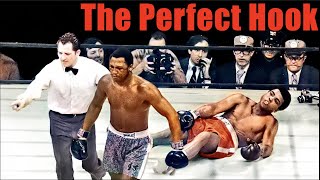
Smokin Joe Frazier's Terrifying Hook & Head Movement Explained - Technique Breakdown
The Modern Martial Artist