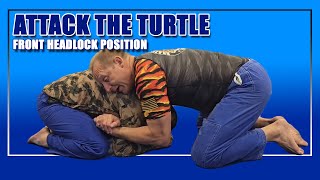
Introduction to Gi Turtle Attacks
The instructor presents three effective methods for attacking the turtle position in gi jiu-jitsu, with the final technique applicable to both gi and no-gi. These approaches are designed as simple, low-risk, high-reward submissions for practitioners struggling against skilled turtle players.
Illinois Loop Choke Setup
The Illinois loop choke is presented as one of the most powerful submissions available, functioning similarly to the Peruvian necktie in no-gi. The attacker maintains weight on the opponent's upper back by staying on the feet rather than the knees, creating a mechanical advantage before executing the technique.
Rope Collection and Chest Positioning
The attacker gathers the gi fabric to create a tight rope section, then passes this rope past the opponent's jawline into the opposite armpit. This positioning is critical, as completing this component places the opponent in significant danger and is approximately 80 percent of the way to submission.
Leg Position and Head Control
The attacker walks perpendicular to the opponent while pressing the head down to the mat to prevent posturing up. The right hamstring is positioned over the back of the head, with the right hand securing the gi pants or belt as control anchors during the finish.
Finishing the Illinois Loop Choke
The attacker sits to their buttocks while extending their left leg over the opponent's lower back, then executes a deadlift motion by straightening the back and pushing the legs away. This creates intense tension through the fabric rope around the neck, resulting in a powerful and often painful submission.
Clock Choke Overview and Grip
The clock choke is presented as a fundamental submission that requires proper mechanical understanding. The attacker secures a lapel grip just underneath the opponent's ear while maintaining chest pressure into the turtle player's back.
Lateral Movement and Face Scoop
The attacker rotates to the opposite side of their gripping hand and simultaneously scoops the forearm under the opponent's face and against the neck. The radial bone is used to press underneath the forehead and down the face, coordinating this movement with positional adjustment.
Clock Choke Wrist Control and Finish
The far-side arm reaches through the armpit to grip the opponent's wrist, preventing posting and sit-up escapes. The attacker then steps through and slides the torso up the opponent's back while walking toward the trapped wrist, progressively tightening the lapel grip around the neck until submission.
ATTACKING TURTLE IN GI - JIU JITSU TIPS
Key Takeaways
- •Introduction to Gi Turtle Attacks
- •Illinois Loop Choke Setup
- •Rope Collection and Chest Positioning
- •Leg Position and Head Control
Last week we covered attacking turtle in nogi. This week I’m covering some gi variations that I like. I love how Jiu Jitsu provides so many options in attacking or defending certain positions, and all of those options will have nogi and gi variations. Jiu Jitsu is such a deep martial art. Because of that, I like to focus on simple and effective, as you’ll see in this video. So sit back and enjoy. I always have more on the way. Now let’s attack some turtle. Train well, Will
Related Techniques
Frequently Asked Questions
What does this video teach about attacking turtle?
This video covers introduction to gi turtle attacks, illinois loop choke setup, rope collection and chest positioning. It provides detailed instruction from Will Brooks Official.
How long does it take to learn attacking turtle?
The basic mechanics can be understood in a single session, but developing reliable execution requires consistent drilling over weeks of practice. This 8-part breakdown helps structure your training by isolating each phase of the technique.
What are the key details for finishing attacking turtle?
The attacker rotates to the opposite side of their gripping hand and simultaneously scoops the forearm under the opponent's face and against the neck. The radial bone is used to press underneath the forehead and down the face, coordinating this movement with positional adjustment.