Power Stand Overview
The power stand is a fundamental escape from the referee's position that emphasizes explosive foot movement, hand control, and rapid clearance. The technique begins with minimal weight distributed to the hands, allowing the wrestler to generate momentum from the upper body rather than pushing off with the arms.
Initial Momentum and Elbow Retraction
Upon the referee's whistle, the wrestler initiates movement by driving the head and chest upward first. Retracting the elbows to the sides serves dual purposes: it prevents the opponent from establishing under-hooks and simultaneously generates upward momentum for the upper body.
Explosive Foot Positioning
The wrestler explosively extends to standing while maintaining a bent-knee, upright posture with a straight back and lowered hips. Positioning one leg forward and one leg back creates defensive stability against forward drives and backward pressure while enabling lateral wrestling movement.
Grip Control and Hand Fighting
Hand control is prioritized by attacking the opponent's grip immediately. The wrestler uses a chopping motion while loading away and pivoting on the trail leg, creating separation while remaining positioned to counter-attack forward.
Managing Locked Hands
When the opponent establishes a locked grip, the wrestler slides the opponent's hands down the hip and breaks the hold through explosive hip extension. This creates space for the wrestler to reset into a defensive posture with lowered hips and back pressure.
Three-Step Drilling Progression
Foundational practice involves a three-step sequence: explosive foot drive, attacking and controlling the hands by placing them on the hip, and popping the hips while chopping away to clear the lower leg. Mastering this footwork pattern before introducing live opposition ensures proper mechanics.
Leg Selection and Opponent Positioning
The choice of which leg to drive up first typically corresponds to the opponent's position, with wrestlers generally mirroring the side the opponent lines up on. However, this can be adjusted based on opponent tendencies—for example, leading with the opposite leg if the opponent favors leg attacks from a particular side.
Back Pressure and Hip Management
Maintaining back pressure throughout the stand-up prevents the opponent from driving the wrestler backward into a compromised position. Low hips remain critical throughout the escape, as they enable effective pressure generation and provide stability against forward and backward drives.
Advanced Grip Breaking Sequences
When facing locked hands with forward pressure, the wrestler removes slack from the opponent's grip by pushing it down the leg, then pops explosively to break contact. The wrestler then recovers to a low, away position that provides protection while maintaining offensive positioning.
Referee's Position: Stand up 🤼♂️
Key Takeaways
- •Power Stand Overview
- •Initial Momentum and Elbow Retraction
- •Explosive Foot Positioning
- •Grip Control and Hand Fighting
Folkstyle Wrestling - Referee's Position: Stand up - Level 1 USA Wrestling Core Curriculum A folk wrestling style is any traditional style of wrestling, which may or may not be codified as a modern sport. Most cultures have developed regional forms of grappling.
Frequently Asked Questions
What does this video teach about standard referee position?
This video covers power stand overview, initial momentum and elbow retraction, explosive foot positioning. It provides detailed instruction from KombatPlay.
How long does it take to learn standard referee position?
The basic mechanics can be understood in a single session, but developing reliable execution requires consistent drilling over weeks of practice. This 9-part breakdown helps structure your training by isolating each phase of the technique.
What are the key details for finishing standard referee position?
Maintaining back pressure throughout the stand-up prevents the opponent from driving the wrestler backward into a compromised position. Low hips remain critical throughout the escape, as they enable effective pressure generation and provide stability against forward and backward drives.
Related videos
2024-25 Wrestling Referee Mechanics Video
Nebraska School Activities Association
Wrestling Basics: Referee's Position to the Breakdown
Sign&Sub
Turtle Position... What to do!
TeachMeGrappling Coach Brian
ATTACKING TURTLE IN GI - JIU JITSU TIPS
Will Brooks Official
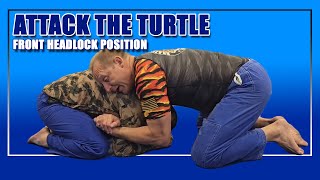
HOW TO ATTACK THE TURTLE - Front Headlock System
Fargo BJJ Academy