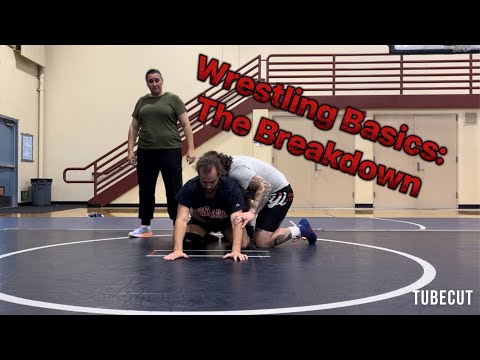
Wrestling Basics: Referee's Position to the Breakdown
0
Referee Position·Sign&Sub
A great video for every new and experienced wrestler coming into season. " I fear not the man who practices a thousand k…
Translation: referee position
The Referee Position family covers the specific turtle-like starting position used in wrestling, where one fighter starts on hands and knees and the other starts on top with a defined grip position. [1] The referee's position is used in folk-style and freestyle wrestling to restart matches from the ground, giving the bottom fighter an opportunity to escape and the top fighter an opportunity to control or turn. [1],[2] It is the formal starting position for ground work in many wrestling rulesets. [2],[3]
The referee's position is a formal starting position in wrestling competition, established as part of the rules of folk-style and freestyle wrestling to provide a structured starting point for ground exchanges. [1] It has been a standard part of wrestling competition format throughout its modern history. [2],[3]
The referee's position is the standard starting position for ground wrestling in folkstyle and freestyle competition. [1]
The referee's position is the mandated starting position for par terre wrestling in UWW and NCAA competition. [1]
No images yet for this technique.
Sign in to suggest an image.
A great video for every new and experienced wrestler coming into season. " I fear not the man who practices a thousand k…
No instructional courses yet for this technique.
Sign in to suggest a course.
Risk of injury to the person this technique is applied to
Turtle is a defensive shell position; vulnerable to back takes and chokes
Skill level needed to execute this technique reliably
Whether this technique is allowed under major competition rule sets
Jiu-Jitsu University (Saulo Ribeiro, 2008)
Alias sources — [1] United World Wrestling Rules [2] United World Wrestling Rules [3] NCAA Wrestling Rules and Interpretations
Effectiveness sources — [1] IBJJF Rules and Regulations
Official Kodokan ground technique classification system
Standard katakana transliteration of Western martial arts terminology (外来語) — used in Japanese MMA, boxing, and BJJ communities
Alias sources — [1] United World Wrestling Rules [2] United World Wrestling Rules [3] NCAA Wrestling Rules and Interpretations
Effectiveness sources — [1] IBJJF Rules and Regulations
core strength, tight elbow position, neck protection
compact build with strong core for stability
core stabilisers, shoulders, neck, hip flexors
Every move, in any martial art, shares a few universal traits. Mix and match below to pinpoint the right tool — or compare equivalents across styles.
The referee's position is the standard bottom position in folkstyle and freestyle wrestling — hands and knees with the top wrestler behind. In judo, this is equivalent to turtle position. All bottom wrestling escapes (stand-up, sit-out, switch) begin from this position. (Coaching Wrestling Successfully, Gable)
Your knee on the same side as your setup goes down, while your opposite knee comes up with your foot positioned behind the opponent's tailbone. Your hand on the down-knee side forms a C grip just above the opponent's elbow.
Connecting your upper body and lower body is critical in wrestling because pushing or attacking without this connection won't be effective—the movements need to work together as an integrated unit.
Focus on cutting away and controlling the opponent's leg before attacking it, rather than simply taking them on top of yourself.
The Referee Position family covers the specific turtle-like starting position used in wrestling, where one fighter starts on hands and knees and the other starts on top with a defined grip position. The referee's position is used in folk-style and freestyle wrestling to restart matches from the ground, giving the bottom fighter an opportunity to escape and the top fighter an opportunity to control or turn.
The referee's position is a formal starting position in wrestling competition, established as part of the rules of folk-style and freestyle wrestling to provide a structured starting point for ground exchanges. It has been a standard part of wrestling competition format throughout its modern history.
IBJJF: legal — Legal — common transitional position; IJF: restricted — Legal position but extended turtle without attacking penalized for non-combat…; ADCC: legal — Legal; Unified MMA: legal — Legal; UWW: legal — Legal — bottom position, opponent works to turn/pin; FIAS Sport Sambo: legal — Legal
Danger rating 3/10. Moderate — turtle is a defensive shell position; vulnerable to back takes and chokes
The standard setup chain: Achieve Position → Stabilize → Maintain → Attack.
Standard counters include: Posture Control — maintain strong posture to limit the opponent's offensive options / Escape to Neutral — work back to standing or a neutral position.
Common variants: Standard turtle (hands and knees with elbows tight, head protected); Flattened turtle (driven to the mat from turtle, attempting to re-turtle); Active turtle (using sit-outs or rolls from the turtle position).
The referee's position is the mandated starting position for par terre wrestling in UWW and NCAA competition.
Top errors to watch for: Starting from referee position without an immediate plan — both top and bottom should have their first technique read… / Bottom wrestler staying flat — explode off the whistle; the first movement determines the exchange / Top wrestler not maintaining contact — the hands must stay on the elbow and waist until the whistle / Not training referee position in BJJ — it develops turtle skills that transfer to live grappling.
The Referee Position is also known as Referī Pojishon, Par Terre, Referee's Position, Ground Start Position.