Front Headlock Control Foundation
Proper positioning requires the attacker to stay directly on top of the opponent rather than to the side. The arm underneath the head should be palm-down while the outside arm is palm-up, creating significantly more control power than reversed hand positioning. The attacker maintains an arched back with buttocks elevated and elbows pinched tight at ear level to prevent the opponent from escaping to either side.
Defending Against Driving Takedown Attempts
When the opponent actively drives for a double or single leg takedown, the attacker should use paddle feet rather than toe positioning to maintain stability. The head is kept centered against the attacker's belly while driving the opponent's forehead toward the floor and maintaining tight elbow pinch. Once the opponent stops driving, the attacker can bring knees up without allowing the opponent space to grab or continue their offensive attempt.
Anaconda Choke Setup
The anaconda choke begins from the locked front headlock position with the opponent's arm positioned across the body rather than pulled upward. Proper grip mechanics require the elbow and knee to remain tightly connected to prevent the opponent from extracting their arm. The attacker pins the opponent's body between the floor and their own chest by dropping weight, which creates friction that slows arm extraction while allowing the rear-naked choke grip to be established.
Anaconda Roll and Transition
Rather than forcefully rolling the opponent over, the attacker should loosen grip pressure slightly while maintaining the choke lock and simply fall to their side. This controlled slip-off allows the attacker to position themselves alongside the opponent without landing face-first into them. The key is that the squeeze and rotation together finish the choke, not the pulling force used to turn the opponent.
Finishing from Side Control
Once the opponent is on their side to escape the initial choke pressure, the attacker lifts their head and places it under their chest like a pillow, then wraps around them in a horseshoe position. From this configuration, the attacker applies the choke by squeezing and pushing the chest forward rather than rotating or spinning. This finishing position avoids the common error of the opponent landing on the attacker's face and maintains control throughout the submission sequence.
Defending the Wide Elbow Defense
When the opponent bases wide and keeps elbows back to prevent anaconda choke arm insertion, they sacrifice upper body position and expose their neck. The attacker can transition to a power guillotine choke by recognizing that the opponent must choose between defending their arms or defending their neck. By moving to guillotine control, the attacker capitalizes on the defensive positioning that made the anaconda setup difficult.
HOW TO ATTACK THE TURTLE - Front Headlock System
Key Takeaways
- •Front Headlock Control Foundation
- •Defending Against Driving Takedown Attempts
- •Anaconda Choke Setup
- •Anaconda Roll and Transition
HOW TO ATTACK THE TURTLE - Front Headlock System High percentage choke options from the front headlock position you can use to attack an opponent in the turtle position. 4th Degree Blackbelt George Andersch
Related Techniques
Frequently Asked Questions
What does this video teach about front headlock turtle?
This video covers front headlock control foundation, defending against driving takedown attempts, anaconda choke setup. It provides detailed instruction from Fargo BJJ Academy.
How long does it take to learn front headlock turtle?
The basic mechanics can be understood in a single session, but developing reliable execution requires consistent drilling over weeks of practice. This 6-part breakdown helps structure your training by isolating each phase of the technique.
What are the key details for finishing front headlock turtle?
Once the opponent is on their side to escape the initial choke pressure, the attacker lifts their head and places it under their chest like a pillow, then wraps around them in a horseshoe position. From this configuration, the attacker applies the choke by squeezing and pushing the chest forward rather than rotating or spinning. This finishing position avoids the common error of the opponent landing on the attacker's face and maintains control throughout the submission sequence.
Related videos
Front headlock basics
Lincoln Brazilian Jiu-Jitsu Center
Getting the Hooks on a Tight TURTLE!!! Seatbelt Series - 2
TeachMeGrappling Coach Brian
Escape Seatbelt in Turtle with Josh Barnett
Bernardo Faria BJJ Fanatics
Front Headlock to Side Turtle from Sprawl - Grapplers Guide
The Grapplers Guide by Jason Scully
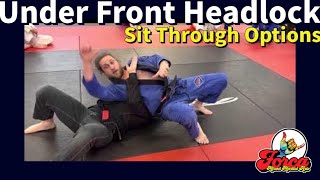
Sit-Through Overview from Under Front Headlock
Força Martial Arts & Fitness