Foundation: High Knee Shield Setup
The underhook half guard sweep begins with a high knee shield, which provides superior positioning for executing the underhook. This elevated knee position allows the practitioner to curl inward and reach under their own leg to access the opponent's torso. A high knee shield is preferable to a low shield because it prevents the opponent from easily blocking the underhook path.
Gaining the Underhook: Bridge and Curl
Rather than competing in a pummeling battle for the underhook, the practitioner should sit up and curl under their own leg to secure it first. The elbow leads the movement under the leg as the practitioner gains elevation. This proactive approach prevents the opponent from establishing a dominant underhook position.
High Underhook Placement: Critical Detail
The underhook must be placed high on the opponent's torso, reaching upward rather than around the waist. A low waist underhook is vulnerable to the opponent transitioning cross-body, which collapses the hook. The high placement maintains leverage and prevents this common escape.
Navigating the Corner: Movement Around the Opponent
After securing the high underhook, the practitioner must rotate around the opponent's side using their elbow, hand, or leg as posting points. This 'getting around the corner' movement positions the practitioner perpendicular to the opponent, making cross-body transitions impossible. Only after clearing this corner should the practitioner transition the grip to the far hip.
Chest-to-Chest Pressure and Hip Control
Once positioned at the corner, the practitioner must drive their chest forward and attach tightly to the opponent's far hip. Maintaining distance or a loose grip allows the opponent to escape or create space. This tight positioning ensures that any attempt by the opponent to disengage only pulls them further into the sweep.
Foot Transition: Creating Drive for the Standup
Before standing up, the practitioner must change their trapping leg from right to left by dragging their right foot toward their buttocks. This transition positions the right leg to generate drive while the left leg maintains the trap on the opponent's leg. Without this repositioning, the practitioner lacks the power needed to complete the sweep.
Standup Mechanics: Head Placement and Hip Drive
The practitioner stands by placing their head under the opponent's shoulder and driving through with their right leg while maintaining the left leg trap. The head placement lifts the opponent's shoulder, preventing them from establishing a strong base to resist. The practitioner then circles in front as they complete the driving motion to finish the sweep.
Technique Sequence Summary
The complete underhook half guard sweep consists of seven key elements: establish a high knee shield, sit up to gain the underhook, reach the hook high on the torso, navigate around the opponent's corner, apply chest-to-chest pressure with hip control, transition the trapping leg, and execute the standup with head placement and drive. Mastery of each phase ensures reliable sweep execution against resisting opponents.
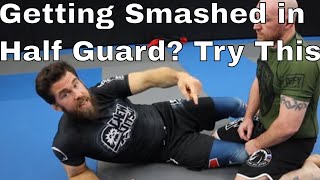
The main sweep to know from half guard (Lachlan Giles)
Key Takeaways
- •Foundation: High Knee Shield Setup
- •Gaining the Underhook: Bridge and Curl
- •High Underhook Placement: Critical Detail
- •Navigating the Corner: Movement Around the Opponent
This sweep using the underhook is the primary sweep you should look for when playing half guard, there are many follow ups you can use to create a half guard system. For more check out my courses based on half guard at https://submeta.io/@lachlangiles
Related Techniques
Frequently Asked Questions
What does this video teach about underhook half guard?
This video covers foundation: high knee shield setup, gaining the underhook: bridge and curl, high underhook placement: critical detail. It provides detailed instruction from Absolute MMA St Kilda - Melbourne.
How long does it take to learn underhook half guard?
The basic mechanics can be understood in a single session, but developing reliable execution requires consistent drilling over weeks of practice. This 8-part breakdown helps structure your training by isolating each phase of the technique.
What are the key details for finishing underhook half guard?
The practitioner stands by placing their head under the opponent's shoulder and driving through with their right leg while maintaining the left leg trap. The head placement lifts the opponent's shoulder, preventing them from establishing a strong base to resist. The practitioner then circles in front as they complete the driving motion to finish the sweep.
Related videos
29 Regular Half Guard Techniques In Less Than 12 Minutes (Part 1) by Jason Scully
Jiu Jitsu In Minutes by Jason Scully
60 Dog Fight Under-Hook Half Guard Techniques In Just 18 Minutes by Jason Scully - BJJ Grappling
Jiu Jitsu In Minutes by Jason Scully
How To Easily Break The Lock Down Half Guard
Matt Arroyo Jiu Jitsu
Half Guard: The Lockdown becomes even more effective with these tips!
Wim Deputter BJJ
How To Use Lockdown to Escape a Tight Half Guard Smasher in BJJ
Chewjitsu