Understanding the Lockdown Half Guard Problem
The lockdown half guard presents a significant control challenge, as opponents trap the practitioner's leg while transitioning from outside to inside position and extending their leg for maximum pressure. This extension neutralizes shoulder pressure and prevents head advancement, making traditional escape attempts ineffective. Most practitioners fail because they attempt upper body solutions against a lower body problem.
Repositioning: The Foundation of the Escape
Rather than fighting the lock directly, the practitioner must reset by placing both knees on the floor and walking down toward the opponent's hips. This lower body positioning transition is critical for accessing the proper escape mechanics and establishing control of the opponent's torso.
Securing the Grip and Body Position
The practitioner inserts their shoulder at the opponent's belly button with their head placed on the same side as the trapped leg. The hands lock beneath the opponent's hips using either a gable grip or double-leg takedown grip, with the entire body coiled tightly to maximize mechanical advantage and control.
The Critical Swivel Motion
The decisive escape technique involves rotating the chest to face the wall, creating a swivel position that dramatically increases the difficulty for the opponent to maintain the lockdown. This angular adjustment is the key step most practitioners miss and represents the transition from defense to offense.
Executing the Leg Extension Escape
From the swiveled position, the practitioner maintains upper body coil while explosively extending the lower body, effectively kicking out while using the strongest muscles in the body. The motion involves rotating on the knee while sliding the big toe down the mat, forcing the opponent to release the lock.
Preventing the Shrimp Escape and Maintaining Control
Upon freeing the leg, the practitioner must immediately shoulder-pressure the opponent and walk them down rather than rushing to pass guard. The practitioner maintains this control through multiple shrimping attempts, walking step-by-step until the opponent fatigues and stops advancing.
Climbing to Top Position and Establishing Dominance
Once the opponent ceases shrimping, the practitioner places the knee under their body, attempts to touch the knee to the elbow, and begins climbing toward top position. Only after reaching a dominant position should the practitioner attempt the final guard pass.
How To Easily Break The Lock Down Half Guard
Key Takeaways
- •Understanding the Lockdown Half Guard Problem
- •Repositioning: The Foundation of the Escape
- •Securing the Grip and Body Position
- •The Critical Swivel Motion
Matt Arroyo shows his tried and true way to easily bust out of anyones lockdown in the half guard . Enjoy! http://www.mattarroyo.com
Related Techniques
Frequently Asked Questions
What does this video teach about lockdown half guard?
This video covers understanding the lockdown half guard problem, repositioning: the foundation of the escape, securing the grip and body position. It provides detailed instruction from Matt Arroyo Jiu Jitsu .
How long does it take to learn lockdown half guard?
The basic mechanics can be understood in a single session, but developing reliable execution requires consistent drilling over weeks of practice. This 7-part breakdown helps structure your training by isolating each phase of the technique.
What are the key details for finishing lockdown half guard?
Upon freeing the leg, the practitioner must immediately shoulder-pressure the opponent and walk them down rather than rushing to pass guard. The practitioner maintains this control through multiple shrimping attempts, walking step-by-step until the opponent fatigues and stops advancing.
Related videos
Half Guard: The Lockdown becomes even more effective with these tips!
Wim Deputter BJJ
How To Use Lockdown to Escape a Tight Half Guard Smasher in BJJ
Chewjitsu
The main sweep to know from half guard (Lachlan Giles)
Absolute MMA St Kilda - Melbourne
29 Regular Half Guard Techniques In Less Than 12 Minutes (Part 1) by Jason Scully
Jiu Jitsu In Minutes by Jason Scully
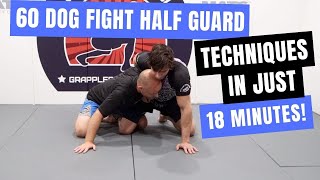
60 Dog Fight Under-Hook Half Guard Techniques In Just 18 Minutes by Jason Scully - BJJ Grappling
Jiu Jitsu In Minutes by Jason Scully