Introduction to Turtle Position Attacks
The turtle position—when an opponent is on hands and knees—presents multiple attacking opportunities in Brazilian Jiu-Jitsu. While this posture has legitimate applications in the sport, the instructor emphasizes understanding the vulnerabilities that allow systematic attack. The goal is to develop techniques for controlling and submitting opponents from this defensive configuration.
Strategic Framework and Available Attacks
When attacking turtle, the primary targets are the near-side limbs, particularly the legs, which are both closer and larger weapons than hand techniques. Rather than relying solely on back takes or leg-lock entries, the instructor outlines a comprehensive system addressing scenarios where standard attacks like the dabs or back control cannot be immediately achieved. The near-side leg presents the most accessible initial target for control.
Leg Entanglement Setup
The attacker enters by shunting the opponent's hips forward to create space, then drives their near leg inside and around the opponent's shin with a dorsiflexed foot position. Critical positioning requires keeping the elbow clamped tight against the leg to prevent the opponent from establishing an underhook and transitioning to half-guard. The attacking leg must remain in contact with the opponent's shin to maintain control.
Lock-Down Control and Hip Positioning
Once the initial shin control is established, the attacker steps their second foot between both opponents' feet and secures a two-on-one grip on the shin, then flexes both legs to establish the lock-down position. Proper hip alignment is essential—the opponent's hips must rest on top of the attacker's midsection rather than beside it, preventing the opponent from hip-escaping and exposing the attacker's back. The attacking foot should be kept close to the chest and face for maximum control.
Knee Separation and Finish Options
From the locked-down position, the primary attack is separating the opponent's knees by pulling them apart as though splitting a chicken wishbone. If knee separation is not immediately available, the attacker can alternatively apply a calf-slicer compression by bringing the legs down. From this controlled state, the attacker can also work toward back-take positions by establishing hooks on the opponent's legs.
Crucifix Arm Control Technique
When unable to secure leg hooks, the attacker can isolate an arm by driving their knee into the space between the opponent's femur and ribcage, then sliding down until the foot can be placed on the ground. Once the foot is planted, the attacker can clamp their knee inward and execute a back kick to establish a crucifix position where one leg controls the opponent's arm while the attacker remains perpendicular. This control opens multiple submission and positional opportunities.
Rolling Armbar from Crucifix
From the crucifix control, the attacker can transition to an armbar by keeping one leg clamping the controlled arm (through a hamstring curl) while the other leg steps over to hook the opponent's far-side arm. The attacker then executes a forward roll while maintaining knee pressure, which breaks the opponent's posture and creates a fully controlled armbar position. The roll's leverage makes this submission resistant to stacking escapes since control is structural rather than strength-dependent.
Armbar Entry and Defensive Mechanics
The rolling armbar's structural control means the opponent cannot successfully execute common armbar escapes such as stacking or the running-man motion. The attacker should maintain the thumb-up position on the hip rather than the abdomen to protect against groin injury if the opponent steps over during an escape attempt. The inherent positioning prevents the opponent from pivoting over their own arm, making the submission mechanically sound regardless of strength disparities.
How To Attack The Turtle Position
Key Takeaways
- •Introduction to Turtle Position Attacks
- •Strategic Framework and Available Attacks
- •Leg Entanglement Setup
- •Lock-Down Control and Hip Positioning
SALE SALE SALE OVER 50% OFF – BOX SET – ALL 4 COURSES 50% OFF CLICK HERE – https://bit.ly/2lAOHmp • The Blue Belt Super Series • The Kimura Attack System • The Trap Door Series • 14 Days to Better BJJ CLICK HERE – https://bit.ly/2lAOHmp PURCHASE SINGLE COURSES • The Blue Belt Super Series - https://bit.ly/2PvbrCo • The Kimura Attack System - https://bit.ly/2m3a1kF • The Trap Door Series - https://bit.ly/2DdTbX0 • 14 Days to Better BJJ - https://bit.ly/2kaavFc TESTIMONIALS ‘Started hitting the moves laid out in these courses the very next class...extremely uplifting to have such a quick improvement in my game’ - Houston, TX ‘I’m the only white belt in the academy doing these moves…I’m suddenly competing at a blue belt and above level…thanks Coach Tom’ - LA, California ‘Some of the best strategies you are going to see for control and submission’ - London, UK ‘The detailed way Prof Tom breaks down his moves into the absolute essentials is just next level for me. This is absolute gold‘ - Sydney, Australia ‘Most of the guys at my Academy, have about 60lbs on me, but since purchasing your ‘Kimura Attack system’ and ’14 days’ everything has changed. I feel much more confident, roll better and the guys on the mat have commented on the same. Thanks, Coach Tom’ – Dallas, TX ‘I know you have your names for your courses, but I’ve renamed them the ‘Zero to hero’ courses, I went from getting constantly owned, to now being completely dominant on the mat in no time at all’ - San Diego, California ‘I use the course material heaps, and just recently put it into action at a local comp, walked away with double gold. No one was more surprised than me! - Miami, Florida ‘As a new white belt, these classes have helped me so much, Prof Tom’s technique, the details, and his attitude. I love how Prof. Tom shows the ‘mistakes people make’ and then shows the correct way of doing things. The only one I have ever seen do this’ – New York, New York Great videos, great instruction. I just watch them for hours…Melbourne, Australia ‘The instructional saved me big time at a recent comp, my opponent was def more experienced, but that was ok, coz I had Prof Tom’s video in my brain. Nailed it and scored gold’ - Colorado, Denver ‘All of it. Everything you show in your awesome videos are now my ‘go to techniques’. Thanks for your vids Prof, Tom’ - Houston, TX ‘You really have to watch every second of the video because Prof, Tom drops these little nuggets of gold throughout the course. And they make ALL the difference. The only one doing this. Keep them coming Professor’ - NY, New York ‘If I could only be taught from one person, Prof Tom would be it. I can’t wait to train in person one day’ – Dallas, TX ‘Went to a recent competition with these videos fresh in my mind. I knew I had an edge and the confidence this gave me was unreal. Got the gold. All submission wins! – LA, California
Related Techniques
Frequently Asked Questions
What does this video teach about turtle position?
This video covers introduction to turtle position attacks, strategic framework and available attacks, leg entanglement setup. It provides detailed instruction from The Grappling Academy.
How long does it take to learn turtle position?
The basic mechanics can be understood in a single session, but developing reliable execution requires consistent drilling over weeks of practice. This 8-part breakdown helps structure your training by isolating each phase of the technique.
What are the key details for finishing turtle position?
From the crucifix control, the attacker can transition to an armbar by keeping one leg clamping the controlled arm (through a hamstring curl) while the other leg steps over to hook the opponent's far-side arm. The attacker then executes a forward roll while maintaining knee pressure, which breaks the opponent's posture and creates a fully controlled armbar position. The roll's leverage makes this submission resistant to stacking escapes since control is structural rather than strength-dependent.
Related videos
Escaping the Turtle Position
JM Modern Jiu Jitsu
Mounted Rubber Guard - 10th Planet Jiu Jitsu
Brandon Mccaghren
Boxing Stance | Learn Long Range vs Short Range Fighting
FightCamp
5 Tips For Fighting At Long Range
Warrior Martial Arts
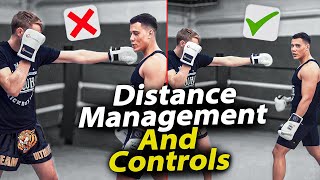
Be A Master Of DISTANCE MANAGEMENT: The Most Important Part Of Fighting | BAZOOKATRAINING.COM
Bazooka Joe Valtellini