Introduction to Mount Submissions
The video covers five high-percentage submissions executed from the mount position, intended for practitioners seeking to finish matches decisively. The instructor emphasizes these techniques are applicable in tournament settings and live rolling scenarios.
Instructor Background and Teaching Philosophy
The instructor, with over six years of jiu-jitsu experience and 50+ tournament appearances, prioritizes practical, immediately applicable techniques. The teaching approach focuses on submissions that practitioners can use in actual competition and training.
Position Priority Over Submission
The instructor stresses that maintaining positional control and accumulating points should take precedence over pursuing submissions when facing skilled opponents. This principle applies across dominant positions including mount, back control, and side control, particularly in high-level tournament competition.
Mount Stabilization Techniques
Proper mount stabilization involves grabbing the cross-face, crossing ankles underneath the opponent's legs, and maintaining close hip proximity to the opponent's head. Additional stability is achieved through arched back positioning, weight distribution on the opponent's chest, and extended hand posts.
Arm Triangle Choke
The arm triangle is executed by driving the forearm underneath the opponent's neck to grip their armpit, using the underhooked arm to walk their arm upward, and securing their head with the free hand. The submission is completed by driving the head to the mat while establishing a gable grip and shifting hips, applying pressure through the forearm and shoulder.
Americana Shoulder Lock
The Americana begins with a double-wrist grip without using the thumbs, forcing the wrist to the mat while positioning the elbow near the head. The bottom arm threads underneath the opponent's bicep to grip the wrist, bringing the elbow close to the hip before minimal rotation completes the submission.
Collar Choke from Mount
The collar choke involves cross-gripping the opponent's gi collar with the choking hand while driving the fist to the mat. The other arm wraps around to grab gi fabric near the neck, with the finish achieved by leaning forward and pulling both elbows down toward the waist.
S-Mount Armbar
Starting from high mount, the practitioner cups the opponent's head and drives the knees upward to trap their arm before transitioning to s-mount position. The submission is finished by underhoking the wrist tight to the body, stepping over the head, and driving the hips forward while maintaining top position control.
Mounted Triangle Choke
The mounted triangle begins with cupping the head and driving the knee forward, then grabbing the wrist and pushing it against the opponent's chest. The knee slides across and up to position the neck inside the knee, with the submission finished by shifting weight onto the knee and applying pressure on the chest.
The 5 best mount submissions
Key Takeaways
- •Introduction to Mount Submissions
- •Instructor Background and Teaching Philosophy
- •Position Priority Over Submission
- •Mount Stabilization Techniques
Here are the 5 best mount submissions (bjj) ranked from most safe to most risky Always be sure that you can maintain your position before you think about the submission! SUBSCRIBE FOR A NEW VIDEO EVERY MONDAY AND FRIDAY ON JIUJITSU AND FITNESS!!
Related Techniques
Frequently Asked Questions
What does this video teach about mount?
This video covers introduction to mount submissions, instructor background and teaching philosophy, position priority over submission. It provides detailed instruction from Jedi Does Jiujitsu.
How long does it take to learn mount?
The basic mechanics can be understood in a single session, but developing reliable execution requires consistent drilling over weeks of practice. This 9-part breakdown helps structure your training by isolating each phase of the technique.
What are the key details for finishing mount?
Starting from high mount, the practitioner cups the opponent's head and drives the knees upward to trap their arm before transitioning to s-mount position. The submission is finished by underhoking the wrist tight to the body, stepping over the head, and driving the hips forward while maintaining top position control.
Related videos
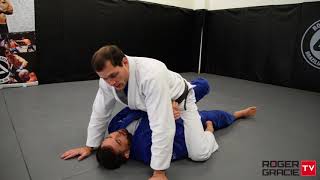
Concepts for Maintaining Mount
Roger Gracie TV
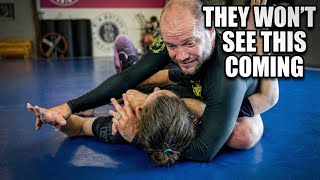
Mounted Rubber Guard - 10th Planet Jiu Jitsu
Brandon Mccaghren
Boxing Stance | Learn Long Range vs Short Range Fighting
FightCamp
5 Tips For Fighting At Long Range
Warrior Martial Arts
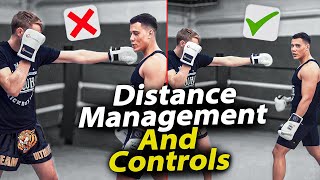
Be A Master Of DISTANCE MANAGEMENT: The Most Important Part Of Fighting | BAZOOKATRAINING.COM
Bazooka Joe Valtellini