Introduction to the Sacrifice Throw
The instructor introduces the sacrifice throw, a proven technique used successfully in tournaments by both the instructor and their students. This lesson will progress from ground-based drills to standing applications, building foundational understanding before advancing to full execution.
Ground-Based Drill Foundation
The technique begins with a butterfly guard sweep variation performed from the ground. This foundational drill allows practitioners to develop muscle memory and understand the mechanics before transitioning to standing techniques.
Grip Setup and Body Positioning
The practitioner establishes control by gripping the opponent's elbows while transitioning to their side rather than flat on their back. This critical positioning ensures the opponent's body extends when the practitioner leans back, creating mechanical advantage for the throw.
Shoulder Dip and Leg Loading
The practitioner loads a butterfly hook behind the opponent while executing a shoulder dip to generate power. This combination of leg positioning and upper body mechanics creates the force necessary for a successful throw.
Tactical Applications and Safety
The sacrifice throw serves as a low-risk offensive option, particularly against wrestlers, with the advantage that failed attempts still leave the practitioner in butterfly guard. The technique works effectively whether the opponent maintains upright posture or assumes a defensive back-bent position.
Grip Transitions and Circling
The practitioner manipulates the opponent's position by circling toward the arm controlling the opponent's elbow. Both straight and cross-collar grips are effective, with grip selection dependent on current positioning and situational context.
Execution: Step, Fall, and Pull
The throw executes in three connected movements: stepping in toward the opponent, falling back to the side while maintaining grips, and pulling the opponent's body downward. The key to success is committing fully to the pulling and whipping motion rather than hesitating.
Adaptation for Different Styles
The technique adapts to both Judo-style upright opponents and Brazilian Jiu-Jitsu practitioners who assume more defensive postures. Regardless of the opponent's stance, maintaining grip control and executing a committed lateral fall and pull ensures throw completion.
Sacrifice Throw for BJJ
Key Takeaways
- •Introduction to the Sacrifice Throw
- •Ground-Based Drill Foundation
- •Grip Setup and Body Positioning
- •Shoulder Dip and Leg Loading
www.Chewjitsu.net In this video I demonstrate a technique that I've used a ton over the years. My student's have also had a lot of success with it. I've been able to hit it against BJJ players, Wrestlers and Judokas successfully. Throw it in with your current takedown techniques and see how it works for you. What I like about this technique is even if we fail, most often you end up in butterfly guard with decent grips ready to attack. http://www.instagram.com/chewjitsu http://www.twitter.com/chewjitsu http://www.facebook.com/chewjitsu https://www.periscope.tv/chewjitsu Snapchat : Chewjitsu
Related Techniques
Frequently Asked Questions
What does this video teach about tkd sacrifice throw?
This video covers introduction to the sacrifice throw, ground-based drill foundation, grip setup and body positioning. It provides detailed instruction from Chewjitsu.
How long does it take to learn tkd sacrifice throw?
The basic mechanics can be understood in a single session, but developing reliable execution requires consistent drilling over weeks of practice. This 8-part breakdown helps structure your training by isolating each phase of the technique.
What are the key details for finishing tkd sacrifice throw?
The throw executes in three connected movements: stepping in toward the opponent, falling back to the side while maintaining grips, and pulling the opponent's body downward. The key to success is committing fully to the pulling and whipping motion rather than hesitating.
Related videos
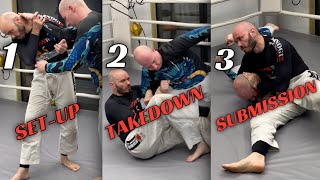
Takedown to instant Submission: Russian tie up to sacrifice throw to Bulldog choke
Ramsey Dewey
Drake Ayala Single Leg Takedown | Technique Tuesday
FloWrestling
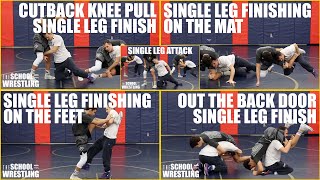
How to Finish a Single Leg Takedown | The School of Wrestling Technique
The School of Wrestling
Jordan Burroughs Blast Double Breakdown
RUDIS
Top 5 Wrestling Moves *DOUBLE LEGS*
Cayden Henschel