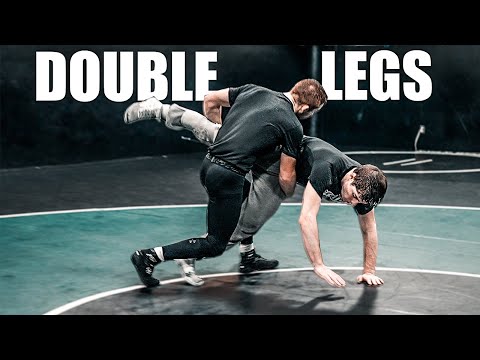
Jordan Burroughs Blast Double Breakdown
0
TKD Double Leg Takedown·RUDIS
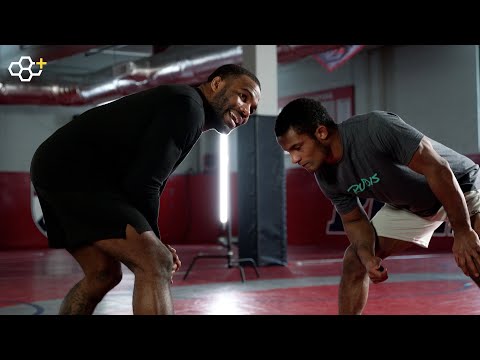
Refined and perfected over a decade, 6x World and Olympic Champion Jordan Burroughs breaks down the Double Leg Takedown …
Translation: Taekwondo double leg takedown
Cross-style technique adapted for modern combat sports. [1]
Effective in modern MMA and cross-style competition. [1]
Cross-style martial arts. [1]
Used in modern MMA and combat sports
No images yet for this technique.
Sign in to suggest an image.
Not yet documented
Refined and perfected over a decade, 6x World and Olympic Champion Jordan Burroughs breaks down the Double Leg Takedown …
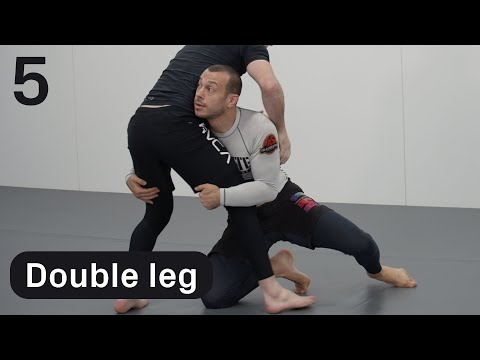
Top 5 Wrestling Moves is back! Here I go over my top 5 double legs you can do. Check out the Patreon! https://www.patre…
Full Course Playlist → https://youtube.com/playlist?list=PLDrQXekZsfYZfV1QZ4T5UkxLwFwQ12EbP Find the Introduction course…
The TKD double-leg takedown is a fundamental grappling technique taught across multiple disciplines with consistent core principles but distinct contextual variations. Absolute MMA St Kilda emphasizes the foundational mechanics for beginners: checking range by extending the hand to maintain distance, dropping level underneath the opponent's arms rather than attacking straight at the legs, stepping with the lead leg to cover ground quickly, placing the lead knee on the mat (not the back knee), and maintaining upright posture by stepping deep to prevent sprawls. Cayden Henschel's wrestling-focused approach presents five specialized variations—the drag double, blast double, Jordan Burroughs double (with striking setup), pass double, and pick double—each with distinct hand placement and footwork patterns suited to collar-tie positions and reactive counters. Jordan Burroughs' five-step breakdown (RUDIS) distills the technique into post, club, circle, level change, and penetration, emphasizing the importance of posting with one hand while keeping the other home for defense, circling to square the opponent's stance before the shot, and explosive penetration through the hips with locked hips and controlled arm mechanics. All three instructors agree on the fundamental importance of level change, deep step penetration, and finishing with structural control; they diverge primarily in setup complexity, with wrestling variants incorporating more dynamic hand-fighting and positional adjustments than the basic MMA version.
Synthesized from 3 instructors
No instructional courses yet for this technique.
Sign in to suggest a course.
Risk of injury to the person this technique is applied to
Technique varies by application
Skill level needed to execute this technique reliably
Whether this technique is allowed under major competition rule sets
Lukasz, T. Taekwondo Grappling Techniques: Hone Your Competitive Edge for Mixed Martial Arts.
[1] Lukasz, Taekwondo Grappling Techniques — technique description and application
Good timing
Explosive movement
The TKD double leg takedown is documented in Lukasz's Taekwondo Grappling Techniques — the fundamental wrestling takedown adapted with TKD-specific footwork and entry timing. (Lukasz, Taekwondo Grappling Techniques)
Jordan Burroughs emphasizes that you want your head to be at an equivalent level to your opponent's head or lower. Coming high exposes you to defense and counterattacks, so maintaining a low head position protects you while you execute the technique.
According to Jordan Burroughs, bring only one hand forward for a heavy post to knock your opponent off balance, while keeping your other hand back to defend your legs. This allows you to control the opponent without leaving yourself vulnerable.
You want to be just outside your opponent's reaching range. The Absolute MMA St Kilda instructors recommend testing range by extending your arm—if you can't reach your opponent, they can't reach you. Being too close allows them to block or strike; being too far requires you to cover too much ground.
Step with your lead leg rather than your trail leg, as Absolute MMA St Kilda explains. Your lead leg is already forward and will cover ground faster, and stepping deep with this leg maintains proper posture for the takedown.
The TKD Double Leg Takedown adapts the wrestling double-leg for taekwondo practitioners, entering from the longer kicking range with a penetration step.
Cross-style technique adapted for modern combat sports.
IJF: banned — Banned since 2010 leg grab prohibition — direct hansoku-make for touching opp…; IBJJF: legal — Legal at all belt levels, scored as takedown (2 points); UWW: restricted — Legal in freestyle (2-4 points), banned in Greco-Roman (no attacks below waist); Unified MMA: legal — Legal takedown technique; ADCC: legal — Legal, scored 2-4 points in second half of match; FIAS Sport Sambo: legal — Legal — all takedowns permitted; FIAS Combat Sambo: legal — Legal; NCAA Folkstyle: legal — Legal, scored as takedown (2 points)
Danger rating 4/10. Technique varies by application
The standard setup chain: Engagement → TKD Double Leg Takedown → Follow-up.
Standard counters include: Sprawl / Block / Counter-attack.
Used in modern MMA and combat sports
Top errors to watch for: Poor timing / Over-committing.
The TKD Double Leg Takedown is also known as Tekondō Ryōashi Takkuru, Taekwondo Double Leg, TKD Shoot.