Introduction to Longsword Guards
The longsword employs a systematic approach to positioning through guards. Historical sources, particularly Joachim Meyer's 1570 manuscript, document these foundational stances. Meyer expanded the traditional four main guards—Fool, Plow, Ox, and Day—into a comprehensive system of 14 total positions, including transitions and endpoints.
Meyer's Pedagogical Framework
Meyer's approach differs fundamentally from earlier medieval texts by organizing techniques around specific guards rather than techniques. Each guard serves as a conceptual anchor for understanding offensive applications, defensive principles, and tactical positioning. This structural method provides practitioners with clear mental models for fencing progression.
The Upper Guard (Oberhut)
The Upper Guard positions the sword above the head without exception. From this position, all principal strikes execute effectively, and secondary strikes (twere strikes) function with equal reliability. Meyer recommends this as a primary guard for initiating attacks rather than the more commonly used Plow.
The Ox Guard
The Ox Guard directs the point toward the opponent's face, establishing a continuous thrust threat while protecting the upper target area. This mid-range position permits execution of all major strikes, secondary strikes, and thrusts. The Ox serves as a natural response when engaging in the bind with an opponent.
The Plow Guard
The Plow Guard emerges as a versatile position combining defensive and offensive capabilities. Primary threats from this guard include rapid thrusts and cuts to the hands and arms. The position facilitates swift parrying of incoming attacks while enabling quick counteroffensive actions.
The Fool Guard
The Fool Guard deliberately exposes high openings to provoke opponent attacks. Practitioners counter these attacks with powerful upward strikes using either the long or short edge. While opponents initially exploit this apparent vulnerability, experienced use of the Fool Guard conditions cautious opponent behavior.
The Zorn (Wrath) Guard and Transitions
The Zorn Guard, named for its aggressive appearance, generates powerful strikes from a dynamic transitional posture. Rather than a fixed static position, it functions as a movement through which practitioners can intercept incoming head attacks. The Zorn flows naturally into the Change position, enabling continuous offensive sequences.
The Side Guard and Secondary Positions
The Side Guard serves as the natural endpoint of upward strikes and proves particularly effective for executing crooked cuts. Additional positions including the Unicorn Guard, The Key, and the Hanging Point each provide specific tactical advantages. The Iron Gate, positioned above the knee with point directed forward, functions as a protective stance adapted from Meyer's rapier methodology.
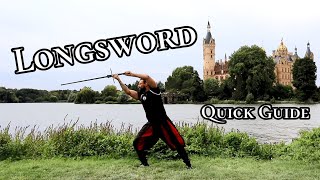
Learn the Art of Combat: Longsword Guards - Beginners Guide
Key Takeaways
- •Introduction to Longsword Guards
- •Meyer's Pedagogical Framework
- •The Upper Guard (Oberhut)
- •The Ox Guard
Knowing the guards in the long sword, knowing which techniques and concepts to apply from each posture, and being able to make our fencing dynamic and intuitive. 0:27 Intro (What is a guard?) 2:34 Upper Guard (Vom Tag) 3:12 Ox (Ochs) 4:00 Plow (Pflug) 4:44 Fool (Alber) 5:31 Wrath Guard (Zornhut) 6:20 Change Guard (Wechsel) 7:16 Side Guard (Nebenhut) 7:54 Unicorn (Eynhorn) 8:30 Key (Schlüssel) 9:14 Hanging Point (Hangetort) 9:55 Iron Gate (Eysenport) 11:12 Middle Guard (MIttelhut) 12:00 Longpoint (Langenort) 12:58 Break Window (Brechfenster)
Frequently Asked Questions
What does this video teach about unterhau?
This video covers introduction to longsword guards, meyer's pedagogical framework, the upper guard (oberhut). It provides detailed instruction from Björn Rüther.
How long does it take to learn unterhau?
The basic mechanics can be understood in a single session, but developing reliable execution requires consistent drilling over weeks of practice. This 8-part breakdown helps structure your training by isolating each phase of the technique.
What are the key details for finishing unterhau?
The Zorn Guard, named for its aggressive appearance, generates powerful strikes from a dynamic transitional posture. Rather than a fixed static position, it functions as a movement through which practitioners can intercept incoming head attacks. The Zorn flows naturally into the Change position, enabling continuous offensive sequences.
Related videos
Lesson 3, Oberhau & Unterhau
Sword Carolina
Longsword Techniques: ZornhauWinden Duplieren Mutieren
Adelaide Sword Academy
Learn the Art of Combat: Longsword Guards - Beginners Guide
Björn Rüther
Zwerchhau, Basics and Counters: Longsword Lesson 9
Sword Carolina
Zwerchhau, Slices and Throw: Longsword Lesson 10
Sword Carolina