Longsword Techniques: ZornhauWinden Duplieren Mutieren
0
Zornhau·Adelaide Sword Academy
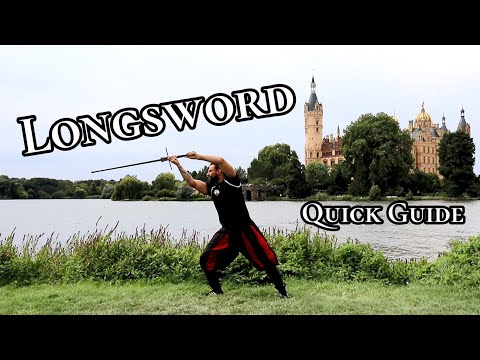
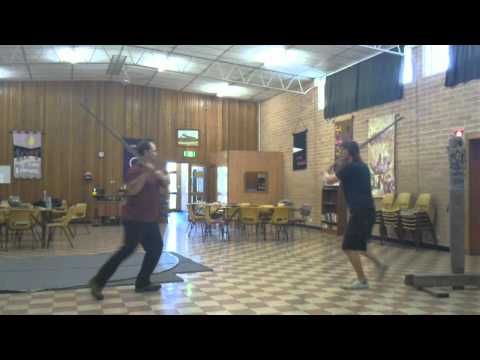
taken from jan 2011 training. We have since moved back to a zornhau that "punches" out more and clears the centre line, …
ツォルンハウ(Tsorunhau)
TransliterationTranslation: zornhau (wrath cut)
The Zornhau (wrath cut) is the first and most important of Liechtenauer's five master cuts — a powerful diagonal descending cut from the dominant shoulder to the opponent's opposite side, delivered with an aggressive step forward. [1] The Zornhau is not simply a strong cut; it is designed to simultaneously attack the opponent and displace their incoming cut by crossing their blade en route to the target. [1],[2] From the Zornhau bind (where the swords cross), the fencer transitions into winding, thrusting, or further cutting based on the opponent's reaction. [2],[3]
The Zornhau is the first master cut described in the Liechtenauer tradition, glossed extensively by Ringeck, von Danzig, and other commentators as the gateway to understanding the entire system. [1] Ringeck writes that the Zornhau 'breaks' all other cuts, making it the foundation of German longsword. [2],[3]
The Zornhau (Wrath Cut) is the first and most important of the five Meisterhäue (master cuts) in Liechtenauer's tradition. [1] It is a powerful diagonal descending cut from the right shoulder that simultaneously strikes and displaces the opponent's blade if they attack with a similar cut — Liechtenauer's texts state that the Zornhau 'breaks' all Oberhäue (upper cuts). [2] Its effectiveness lies in its dual function as both attack and defence: when executed against an incoming cut, it creates a bind (Winden position) from which the fencer can immediately thrust, wind, or displace. [3]
The Zornhau is documented in the earliest known Liechtenauer gloss (MS 3227a, c. 1389) and in all subsequent Liechtenauer-tradition manuscripts, including Sigmund Ringeck's, Peter von Danzig's, and Pseudo-Peter von Danzig's commentaries. [1] It is the opening technique of the Zettel and the foundation upon which the other four master cuts are built. [2]
The Zornhau and its derivative the Zornhau-Ort (Wrath Cut Thrust) are among the most frequently observed techniques in HEMA longsword tournaments, used as both opening attacks and counters. [1]
No images yet for this technique.
Sign in to suggest an image.
taken from jan 2011 training. We have since moved back to a zornhau that "punches" out more and clears the centre line, …
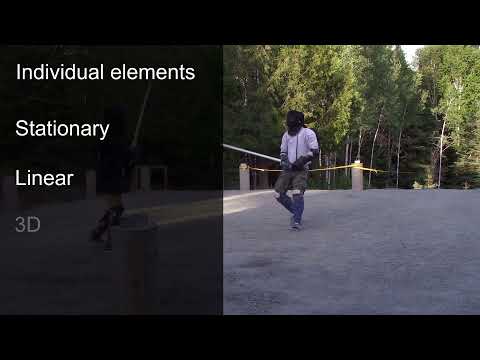
Knowing the guards in the long sword, knowing which techniques and concepts to apply from each posture, and being able t…
90% may be an exaggeration but when the swords contact and the points are still in play then you'll be choosing somethin…
The Zornhau (wrath cut) is foundational to Liechtenauer longsword technique and represents a centerline-focused offensive and defensive cut whose principles encompass approximately 90% of typical exchanges, according to SuperiorHEMA. The technique is executed as a broad diagonal cut that crosses and controls the opponent's sword while activating hip drive; it can be performed extended into long point or retracted into a hanging guard depending on distance and context. SuperiorHEMA emphasizes that the Zornhau functions both offensively—as an initial attack taking the centerline—and defensively, as a counter-cut or response to an opponent's aggression. Practitioners should maintain extended arms and diagonal alignment throughout. The cut can transition into thrusts, windings into the upper guard, or follow-up cuts to alternate sides (umschlag or striking around) when the initial line is disrupted. Björn Rüther contextualizes the Zornhau within Meijer's 16th-century guard system, noting it as a principal strike executable from multiple guards including the upper guard, ox, plow, and fool, with transitions flowing through positional changes that maintain offensive threat. All three instructors implicitly agree on the technique's importance and versatility, though SuperiorHEMA provides the most detailed progressive drill methodology, while Rüther emphasizes historical guard integration and Adelaide Sword Academy's contribution focuses on contextual combinations with winden, duplieren, and mutieren sequences.
Synthesized from 3 instructors
No instructional courses yet for this technique.
Sign in to suggest a course.
Risk of injury to the person this technique is applied to
Edged weapons cause fatal lacerations; historical battlefield mortality rates >30% (Amberger 1999)
Skill level needed to execute this technique reliably
Whether this technique is allowed under major competition rule sets
The Art of Combat (Joachim Meyer, 1570)
Alias sources — [1] Sigmund Ringeck's Knightly Arts of Combat [2] Sigmund Ringeck's Knightly Arts of Combat [3] Sigmund Ringeck's Knightly Arts of Combat
Effectiveness sources — [1] Forgeng, J., The Art of Combat (Palgrave Macmillan, 2003) [2] Tobler, C., In Saint George's Name (Freelance Academy Press, 2010) [3] Tobler, C., Fighting with the German Longsword (Freelance Academy Press, 2004)
Standard katakana transliteration of Western martial arts terminology (外来語) — used in Japanese MMA, boxing, and BJJ communities
Alias sources — [1] Sigmund Ringeck's Knightly Arts of Combat [2] Sigmund Ringeck's Knightly Arts of Combat [3] Sigmund Ringeck's Knightly Arts of Combat
Effectiveness sources — [1] Forgeng, J., The Art of Combat (Palgrave Macmillan, 2003) [2] Tobler, C., In Saint George's Name (Freelance Academy Press, 2010) [3] Tobler, C., Fighting with the German Longsword (Freelance Academy Press, 2004)
wrist control for edge alignment, grip endurance, footwork precision
quick wrists, strong forearms, good posture
forearm extensors/flexors, deltoids, core, calves
Timing becomes increasingly important, and you'll notice if your structure is poor because it will impact your sword. Keep your arms extended, maintain the diagonal cut, and always keep your movement multiple choice.
Wind into your upper hanging, bringing your strong to their weak, and thrust. When both points remain centered after a hard parry, a straight thrust will deviate and cutting around becomes very unsafe, making the winding counter-thrust the safer option.
Never change your guard without an idea or intention behind it, otherwise your opponent will have many more options to attack the openings you create while you're foolishly spinning around.
The Zornhau (wrath cut) is the first and most important of Liechtenauer's five master cuts — a powerful diagonal descending cut from the dominant shoulder to the opponent's opposite side, delivered with an aggressive step forward. The Zornhau is not simply a strong cut; it is designed to simultaneously attack the opponent and displace their incoming cut by crossing their blade en route to the target.
The Zornhau is the first master cut described in the Liechtenauer tradition, glossed extensively by Ringeck, von Danzig, and other commentators as the gateway to understanding the entire system. Ringeck writes that the Zornhau 'breaks' all other cuts, making it the foundation of German longsword.
Traditional martial arts: legal — Practiced in traditional kata/forms and weapon-specific competition under var…; IWUF: legal — Legal in wushu taolu if applicable; HEMA: legal — Legal in applicable historical weapon categories
Danger rating 9/10. Extreme — edged weapons cause fatal lacerations; historical battlefield mortality rates >30% (Amberger 1999)
The standard setup chain: Assume Guard (Kamae/Hut) → Measure Distance (Ma-ai) → Initiate Cut/Thrust → Follow Through (Zanshin).
Standard counters include: Parry (Absetzen) — deflect the incoming blade with a counter-displacement / Void (Step Back) — withdraw from measure to avoid the cutting arc / Counter-Cut (Nachreisen) — strike into the opponent's opening during their attack.
Common variants: Standard cut (primary cutting angle from the ready stance); Thrust (tsuki) (straight thrust targeting the throat, chest, or face); Rising cut (kiri-age) (upward diagonal cut from low to high); Diagonal cut (kesa-giri) (downward diagonal cut following the kimono line).
The Zornhau and its derivative the Zornhau-Ort (Wrath Cut Thrust) are among the most frequently observed techniques in HEMA longsword tournaments, used as both opening attacks and counters.
Top errors to watch for: Cutting too wide with the Zornhau — the cut should travel through the centreline, not sweep around the body / Not following the Zornhau with the Ort (thrust) — the natural follow-up thrust must be drilled as part of the technique / Using the Zornhau as a committed single attack — it is the beginning of a sequence, not a standalone technique / Cutting without edge alignment — the edge must be aligned with the direction of the cut for effectiveness.
The Zornhau is also known as Tsorunhau, Wrath Cut, Zorn-Haw, Anger Strike.