Introduction to Longsword Guards
The longsword employs a systematic guard structure documented in late medieval fencing manuscripts. Historical sources typically identify four primary guards—Fool, Plow, Ox, and Day—though additional transitional and endpoint positions exist. Joachim Meyer's 1570 manuscript expanded this framework to 14 total guards, using them to organize techniques and structure the fencer's conceptual approach to combat.
The Upper Guard (Oberhut)
The Upper Guard positions the sword directly above the head without exception. From this high position, the fencer can execute all principal strikes and Zwerchau cuts effectively. This guard provides strong offensive capability while maintaining head protection.
The Ox (Ochs)
In the Ox guard, the sword point directs toward the opponent's face, creating continuous thrust pressure while protecting the head. All primary strikes, Zwerchau cuts, and thrusts execute seamlessly from this position. The Ox serves as an effective medium-distance guard and common transition point when engaging in blade contact.
The Plow (Pflug)
The Plow guard excels at generating threats through thrusts and rapid hand and arm cuts. Its primary strength lies in quick parrying reactions to incoming strikes, making it a versatile guard that balances offensive threat with defensive capability and speed.
The Fool (Alber)
The Fool guard invites high attacks by exposing upper openings, but these attacks are immediately countered with upward strikes using either the long or short edge. Once opponents recognize this trap, they become more cautious. This guard also effectively protects the legs, similar to Bastard sword techniques.
Wrath Guard (Zornhau) and The Change (Zucken)
The Wrath Guard derives its name from its aggressive appearance and generates powerful strikes from an extreme position. Rather than a static stance, it functions best as a dynamic transitional posture for intercepting incoming head attacks. The Change serves as the conclusion of Wrath Guard sequences, from which the fencer executes driving techniques and powerful cross-strikes while transitioning through the Upper Guard.
Side Guard and Unicorn Guard
The Side Guard emerges naturally after executing a full Wrath cut into the Change, then rotating the blade. It proves particularly effective for executing crooked cuts. The Unicorn Guard, characterized by its upward-pointing tip, represents the ending position of under-strikes and enables strong crooked cuts from a well-extended distance.
The Key (Schlussel) and Hanging Point
The Key guard disrupts opposing guards through centralized thrusts, forcing the opponent to react and create openings for follow-up techniques. The Hanging Point resembles the Ox but exposes the hands and head slightly, inviting opponent attacks that the fencer counters with principle strikes. Both guards emphasize controlling the engagement through opponent reaction.
Iron Gate (Eisenpfort)
The Iron Gate functions primarily as a protective guard with the blade positioned above the knee and point directed toward the opponent. Also called Scranghout in older manuscripts, this position appears in Meyer's rapier section and provides defensive coverage during long-distance engagements.
Learn the Art of Combat: Longsword Guards - Beginners Guide
Key Takeaways
- •Introduction to Longsword Guards
- •The Upper Guard (Oberhut)
- •The Ox (Ochs)
- •The Plow (Pflug)
Knowing the guards in the long sword, knowing which techniques and concepts to apply from each posture, and being able to make our fencing dynamic and intuitive. 0:27 Intro (What is a guard?) 2:34 Upper Guard (Vom Tag) 3:12 Ox (Ochs) 4:00 Plow (Pflug) 4:44 Fool (Alber) 5:31 Wrath Guard (Zornhut) 6:20 Change Guard (Wechsel) 7:16 Side Guard (Nebenhut) 7:54 Unicorn (Eynhorn) 8:30 Key (Schlüssel) 9:14 Hanging Point (Hangetort) 9:55 Iron Gate (Eysenport) 11:12 Middle Guard (MIttelhut) 12:00 Longpoint (Langenort) 12:58 Break Window (Brechfenster)
Frequently Asked Questions
What does this video teach about zwerchhau?
This video covers introduction to longsword guards, the upper guard (oberhut), the ox (ochs). It provides detailed instruction from Björn Rüther.
How long does it take to learn zwerchhau?
The basic mechanics can be understood in a single session, but developing reliable execution requires consistent drilling over weeks of practice. This 9-part breakdown helps structure your training by isolating each phase of the technique.
What are the key details for finishing zwerchhau?
The Key guard disrupts opposing guards through centralized thrusts, forcing the opponent to react and create openings for follow-up techniques. The Hanging Point resembles the Ox but exposes the hands and head slightly, inviting opponent attacks that the fencer counters with principle strikes. Both guards emphasize controlling the engagement through opponent reaction.
Related videos
Zwerchhau, Basics and Counters: Longsword Lesson 9
Sword Carolina
Zwerchhau, Slices and Throw: Longsword Lesson 10
Sword Carolina
Drills for the Zornhau/Centerline
SuperiorHEMA
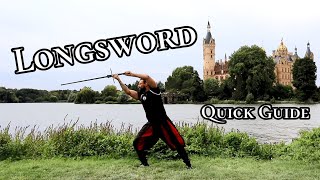
Learn the Art of Combat: Longsword Guards - Beginners Guide
Björn Rüther
Longsword Techniques: ZornhauWinden Duplieren Mutieren
Adelaide Sword Academy